Presentation

Korean Title: 시지프스
Aired in: 2021 (16 episodes)
Channel: JTBC
Grade: 10/10
Actors: Cho Seung Woo and Park Shin Hye
For more…
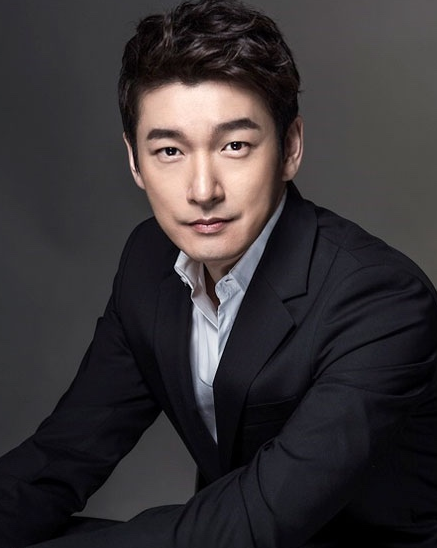


Cho Seung Woo:
– Stranger 1&2
– Life
– God’s Gift – 14 Days
Park Shin Hye:
– You’re Beautiful
– Pinocchio
– Doctors
– Memories of the Alhambra
Energetic action dramas:
– Healer
– W
– City Hunter
– The K2
Analysis
Synopsis
Han Tae Sul is a genius, who is about to create a time machine. A month before finishing it, several people try to kill him. However, he is saved by a young woman, Kang Seo Hae, who claims she came from the future to protect him. Meanwhile, a mysterious institution called the Control Bureau chases after Han Tae Sul and Kang Seo Hae.
My Opinion (No Spoilers)
Excellent drama! First, I have to say that science fiction has always been an interesting theme in dramas. The plots are very often thrilling and the scenes full of action, though it can sometimes mess up with your brain.
Despite all that, Sisyphus manages to create anticipation, mystery and romance all at the same time! A well-made drama that I highly recommend!
Analysis (Spoilers Alert)
Characters:
Han Tae Sul (Cho Seung Woo) is the genius CEO of Quantum & Time. At first, the company consisted in his brother and him, but it eventually grew afterwards. The bigger the company was getting, the more distance there was between both brothers. Indeed, Tae Sul became very arrogant and scornful, especially towards his brother. We don’t know much about their relationship at the very beginning of the drama, only that Han Tae San (Heo Joon Seok) is dead, which destroyed completely Han Tae Sul. Therefore, he became quite reckless and fearless, addicted to medication and completely oblivious of his surroundings (his company and friends) and of himself.
Han Tae Sul appears as this lost character, grieving and hurting (he even has hallucinations of his brother many times), unable to overcome his own guilt towards his brother, because of the mean things he said to him before his death. He is in fact so centered on his pain that he doesn’t even realize that his company is in danger and that some people around him, like Eddie Kim (Tae In Ho) and Chairman Kim Han Yong (Jeon Kuck Hwan) want to strip him away from his position.
Despite all that, he remains a sort of heroic character, saving hundreds of people from a plane crash, and an extraordinary genius. At some point, I really had the impression that I was witnessing Steve Job’s life, him being a genius and others trying to steal his company away from him. Except that when a company depends on the genius of one person to survive, you just can’t get rid of that person and make it work. A tough lesson that real life and the drama managed to give! Anyway!
As we get to know more about Han Tae Sul, we actually see how loving he is. It may be difficult for him to trust others or to create a real bond, but once it’s done, he is willing to go to great lengths to protect those he loves. This includes his brother, Seo Hae and to a certain extent, even his bodyguard. His honesty and sincerity are perfectly combined with his rationality. He is not the typical genius. Indeed, he is like an open book, constantly showing his emotions, but he is also always many steps ahead of everyone. All of this makes him even more interesting as a character!
Finally, I think that in order to understand Han Tae Sul fully, we need to analyze his relationship with his brother. Thankfully, an entire episode of the drama is dedicated to this exploration of his past. In my opinion, this episode was really useful in order to grasp Tae Sul’s character. Both brothers led a difficult life: their parents died when they were still children; their uncle stole their inheritance; they had to live in the streets and Tae San had no other choice but to take responsibility for his younger brother. He protected and fended for him all his life. Thus, Han Tae Sul owes him his success. Let’s not forget either that Han Tae San has been a constant support in Tae Sul’s achievements. They only had each other, that’s why Tae Sul feels completely overwhelmed when Tae San dies. He didn’t manage to provide his brother with the same trust, support and love, Tae San had always showed him, which aggravated Tae Sul’s guilt.
Kang Seo Hae (Park Shin Hye) is a young woman from the future. She was only a kid when the war started (around 10-11) and has had to adapt to this entirely new environment. Her mother died the day of the attack, so she was left with her father. Over the years, Seo Hae had to toughen up, learn how to shoot, kill, escape and fend for herself. Her father, who happens to be a police officer, turned her into a sort of courageous warrior. However, this doesn’t prevent her from being a girl, a woman, an innocent and naive person. Indeed, her favorite color is pink (see all of her guns for example), she is a fan of BTS and she loves attraction parks. Once again here, I think the character is very-well balanced. Her strength and past made her who she is today, yet the nuclear catastrophe didn’t take her soul, if I may say so. When Hae Tae Sul represents the brain in the story, she is the body, the physical strength.
Just like Han Tae Sul, we learn a bit more about Seo Hae’s life in each episode. This allows us to have also a glimpse of the future and the environment in which she grew up. Even though she managed to survive the bombing by hiding in a bunker, she still encounters numerous dangers outside afterwards (a gang of killers, finding medicine and food…). These dangers forged Seo Hae and taught her everything she actually needed to know before going back to the past.
I really found it interesting to see that she shared a lot of common points with Tae Sul. One in particular was her will to protect those she loves, either it’d be Tae Sul, her father or Choi Jae Sun (Chae Jong Hyeop).
Love story: I couldn’t talk about the main leads without tackling their romance! They were really adorable, always having each other’s back, while trying to protect the other. Though it started with a certain tension (Seo Hae kind of kidnaps Tae Sul), they eventually strike an alliance in order to save the world and a romance later on. Both understand the stakes and know that their respective lives are in danger, but they don’t care that much. I mean, for Han Tae Sul it can’t get worse than losing his brother, for Kang Seo Hae it is either that or the nuclear war. That being said, I think they just decided to fight for the better outcome.
Moreover, I really had the impression that they were a duo, more than just a couple. Of course, they were in love and desperately trying to save one another, but they were great “partners in crime” as well. Each one was compensating for the other’s fault(s), enabling them to really take on the world and save it. Had they not been so compatible in all aspects, I believe they never would’ve been able to defeat Sigma.
Finally, I have to say that I was pleasantly surprised to see how close they were to each other. There was constant skinship, hugs, or anything that would prove that the other was real and having your back. Exceptional!
Sigma/Seo Gil Bok (Kim Byung Chul) is the incarnation of the villain. He is obsessive, has no compassion and is extremely witty as well. His only goal throughout the drama is to destroy the world (or at least the Korean peninsula) and get his revenge on everyone who despised him. Just like for the main leads, Sigma also gets a flashback, in which we discover his atypical gift (he can draw the future), his dysfunctional household (his alcoholic father beats him constantly) and his developing obsession with Han Tae Sul.
I kind of empathized at first with Gil Bok’s childhood. He was just a kid but was being rejected by everyone, lacked affection and care and was thus distrustful of everybody. He judges others responsible for his unhappiness, which is partly true considering his family, and his life didn’t get better after.
As an adult, Gil Bok is a poor and failed artist, he is miserable and rejected by society. Even when he is actually telling the truth, the police doesn’t believe him. For example, when Tae Sul attempts to kill him. He lost faith in the system, in society and life itself. Yet, he seems to be miraculously rescued by the bombing, which turns his life upside down. He then turns into this horrible person, who doesn’t care about human life and whose only purpose is destruction. He wants to inflict as much pain to others as he received from then. Obviously, he didn’t take into account two important points: first, not everyone is responsible for his suffering, second people tend to fight back when you try to kill them all. A lesson that he eventually learns at the end (or maybe not?).
Finally, I have to mention Kim Byung Chul’s amazing acting skills. If Sky Castle was not enough to wow you, then Sisyphus will do the job!
Ambiance: The atmosphere of the drama oscillates constantly between action, sadness, romance and of course lots of humor. It is a roller coaster of emotions, which will make you addicted to the story. I still can’t get over Sung Dong Il’s catchphrase: “Welcome to Mirae (future in Korean)”!
The making-off:
I usually don’t analyze the making-off of dramas, because this would then make a very long review, but this one deserves some credit. A lot actually! So let’s get into it a bit.
The direction: Like I said previously, action in that drama is literally everywhere. But what’s even better is how beautiful the drama actually is. Two wonderful scenes come directly to my mind when I think about Sisyphus.
The first one is the entire sequence showing Seoul being nuked. I really felt like I was watching a US apocalyptic movie, with people panicking everywhere, bombs exploding, main leads trying to flee and stress at its maximum. There was so much tension during that long sequence, that I had the impression I was with Seo Hae’s family, in her car and then in the streets. We know that Korean movies are capable of delivering effective and powerful catastrophic scenes (in zombies movies like Train to Busan, #Alive for example) but I never thought I would actually see it in a drama!
The second scene has less stamina but remains one of the most beautiful scenes of the drama. In episode 16, Tae Sul and Seo Hae finally succeed in defeating Sigma. They are in a church, Han Tae Sul is on the floor, stunned, while Sigma is strangling Seo Hae on the altar. When she is about to die, a mysterious figure shoots Sigma twice. Seo Hae is unable to see who that figure is, because she is upstairs and bathed in the sunlight. When Seo Hae finally stands up, the mysterious figure has disappeared.
There are two reasons as to why this scene it impeccably directed: first, the way it is filmed really gives the impression that Sigma received God’s punishment. The implication of a divine force in that scene is not to be left aside. Indeed, the scene takes place in a church, Sigma thinks he is God himself, able to decide who dies, who lives and everyone’s fate and the sunlight is just another indication that some godlike figure intervenes here. We’ll see later that an entire mythology is also at play in that scene.
Second, the entire disposition of the characters and the unfolding of the action are in fact intrinsically related to the plot itself. This, in my opinion, makes the sequence even more (in)credible. Indeed, the mysterious figure who shot Sigma is none other than Seo Hae herself. After saving herself, she and Tae Sul travel through time in order to save their own lives. The reason as to why Seo Hae has to be hidden in the light is that she can’t be seen by her doppelgänger without risking to create a time paradox. The latter would indeed make her disappear for good, because two versions of herself can’t coexist at the same time and place. Moreover, it was really satisfying to see that Sigma, who acts like God, being beaten by those he wished to trample. If that is not a divine punishment, what is it?
The introduction of each episode: The overall construction of the drama was also quite refreshing. Each episode began with a small introduction, teaching us more about either characters or the future, essentially through flashbacks. I really liked it because it really created anticipation and suspense. Each introduction was indeed connecting to a later part of the story and allowed the plot to evolve progressively.
The apocalyptic future: I know I mentioned that extraordinary scene of Seoul being nuked, but I actually think that the entire drama deserves a huge thumbs up. The crew responsible for the special effects has done an incredible job at inventing an apocalyptic future. Each detail had its importance and I can’t tell you how amazed I was to see Seoul’s stadium destroyed, nature reclaiming its rights and long empty roads full of deserted cars. Beautiful!
Plot twists: Sisyphus was full of plot twists that turned the action upside down all the time. Apart from the sudden appearance of characters from the future playing an essential role in the drama like Agnes/Kim Seo Jin (Jung Hye In) or Han Tae San, the drama was built on a series of unexpected shifts, making the story even more interesting episode after episode.
To quote some, there are: Han Tae Sul’s bodyguard traveling back in time after reading a message left by Tae Sul at school; Seo Hae’s bunker being redesigned by Han Tae Sul and him trapping her inside; Eddie Kim turning into the villain in the final scene; Choi Jae Sun surviving thanks to Tae Sul’s time travel and of course Bing Bing (Lee Si Woo), who happens to be Park Hyeong Do (Sung Dong Il)’s daughter! And the list goes on!
More than the plot twists, the logic of the story remained, which is generally really hard in dramas on that topic. The use of time paradoxes was relevant and helped the story a lot. Kang Seo Hae for instance discovers her own body in the rubble and her own notebook, which pushes her into saving Tae Sul; Tae Sul’s bodyguard gives him his own ashes, allowing Tae Sul to see the future and thus changing it.
Ending: I can actually understand that some people may be disappointed with the ending. However, it was in fact unavoidable and the love story was doomed from the very beginning. Though Tae Sul and Seo Hae love each other, the fact that they don’t belong to the same timeline was reason enough to expect an “unhappy” ending.
At the end, everything is reset because, technically, the nuclear war never took place. The only little detail that changes is that Tae Sul is able to remember Seo Hae, despite the fact that he is not supposed to have met her. She exists in his memories (Seo Hae asked him to remember her) and he is willing to live with it.
The only problem at the end is that Sigma doesn’t seem to be willing to let go. He is ready to destroy the world once again, choosing a different target this time. Strangely, he also seems to remember everything especially Tae Sul, as he looks at his painting intensely.
Things are far from being over, judging by this ending!
OSTs: If you have not listened to it, go check GSoul’s OST “Stay”, it’s excellent!
What are the themes tackled?
The Greek myth: For those who wonder where the title of the drama comes from, it is actually a reference to the Greek myth of Sisyphus. In the mythology, Sisyphus is the king of Ephyra (aka Corinth). He is greedy, avaricious and a criminal, killing travelers and guests.
In exchange for an inexhaustible river, Sisyphus reveals to Asopos where his daughter is. She has indeed been kidnapped by Zeus, God of the Gods. Furious with Sisyphus for ruining his plan, Zeus sends Thanatos (the God of Death) to take Sisyphus to the Underworld. But Sisyphus is clever. He cheats death by tricking Thanatos into trying handcuffs. Thanatos is trapped and Sisyphus runs away.
Because Thanatos is trapped, no one can die anymore. Realizing that, Zeus sends Ares (God of War) to deliver Thanatos and arrest Sisyphus. Once he arrives to the Underworld, Sisyphus uses his wit again and convinces Hades (God of the Underworld) to let him go back to his wife, who didn’t organize a decent funeral for her husband. The trick works once again and Sisyphus regains the world of the livings. Naturally, he refuses to go back to the Underworld even after the funeral, forcing Thanatos to get him back.
Sisyphus is thus punished by the Gods for having defying them. He will have to roll a boulder up a mountain, that would go back to its starting point when it reaches the summit. Forever.
I guess that now the story makes more sense for you and you get to see how it is connected to our story!
There are several ways to interpret that punishment, each one valid for the drama as well. The naturalists think that Sisyphus pushing his boulder represents the sun, coming up and down for everyone. If you look at the final scene in the church I previously mentioned, it could potentially fit. Moreover, it could definitely match the kind of “Carpe Diem” (Seize the day) and “Tomorrow is another day” messages that the drama conveys.
From a moral perspective, Sisyphus’ has been punished for his hubris (greed) and insolence towards the Gods. This kind of interpretation could also fit with the drama considering Han Tae Sul’s arrogant personality at the beginning. He founded his company and then completely neglected his brother. He himself admits that he was a distasteful person in the flashback/dream episode. Therefore, he has been punished and forced to relive constantly the same events, to push his own boulder (saving the world). Plus, Han Tae Sul cheated death so many times in that drama that I don’t see how it couldn’t be related to the myth.
Not only Han Tae Sul, but also Sigma could be seen as the Sisyphean character. Indeed, he cheated death (he tried to commit suicide but survived) and thought he was God by deciding who dies and who lives. For his hubris, he was punished (shot dead) by none other than a godlike figure, within the church.
Finally, the existentialist theory (best depicted by Albert Camus in his eponymous book) says that Sisyphus is the actual embodiment of life itself. Nothing is more absurd than doing vain work. In Han Tae Sul’s case, it could be his desperate attempt to save the world, when everyone else considers it doomed. Sisyphus is a clever, if not a genius man, who is forced to repeatedly do the same pointless task, over and over again. Isn’t that a bit true in the drama? The brilliant Han Tae Sul looks constantly for ways to escape death and change the world, when the end of the world is inevitably bound to happen (what the ending actually tells us, with the story repeating itself).
That being said, we can see that the Greek mythology is extremely present in the drama and wonderfully incorporated to the scenario, leaving several open doors to our own interpretation.
By the way, what is more obvious than a Greek letter “Sigma” to introduce the mythology?
The cycle(s): Now that we have explained the importance of the mythology in the drama, let’s focus on a particular geometric form: the circle. First, we can link it to mathematics and Tae Sul’s evident genius, but also of course to the myth itself. The circle represents eternity and repetition, which is clearly present throughout the entire drama.
First cycle: By the time you watch the last episodes, you can clearly see that the first scenes of the drama (Seo Hae taking the uploader and Tae Sul in the plane) reappear. The episodes in-between enable viewers to better understand them and to connect the dots as well. They also form a cycle, connecting the beginning and end of the drama, which highlights the fact that this cycle (Seo Hae and Tae Sul’s) is coming to and end.
Second cycle: This brings me to the second cycle drawn by the drama. It is related this time to the plot, as Sigma at the end is willing to start is evil campaign against the world, one more time, but with a different target this time. We expect the story to repeat itself again: the end of a cycle signifies here the beginning of a new one.
This is also quite ironic in my opinion, considering the fact that the circle is supposed to represent harmony and that instead it is related to chaos, war and destruction.
Can we change our fate? Interestingly, the drama provides us with existential (and existentialist) reflections. Are we bound to forever repeat the same mistakes? Does fate exist? Are our lives already set in stone? Do we have free will? Are our actions the product of our decisions or just another pebble on an already-planned road? If we are not actors of our lives but simple bystanders, is it really worth it to try to change them in vain? Can we escape our fate?
Sisyphus actually so many philosophical debates that you can’t NOT think about them as well. Even though Tae Sul and Seo Hae’s actions seem to have an impact on the future and eventually save the world, the ending of the drama suggests otherwise.
I will let you meditate on the sentence: “The future is already here. We just don’t know yet”.
Reflection on human nature: This entire reflection on fate and whether or not we can change it has to be linked with a deeper reflection on human nature.
Indeed, in the drama people are able to travel through time, allowing them to make up for their past mistakes, to make amends, atone and, to a certain extent, change their current lives.
Many times in the drama, Seo Hae actually explains that people who go through the uploader are those with regrets, who are unable to overcome their pain, guilt, grief… From that point of view, going through the uploader appears to work as a soothing tool, a therapy session in itself, helping anyone who wishes to get better (at your own peril of course). The possibility of time travel is in fact very useful in order to convey an essential message: live in the present, do good around you, be good to those you love, do your best not to have regrets aka be a good person and life will treat you well. A little idealistic of course, but the drama clearly showed that not all people behave that way.
The best epitome of this is probably Seo Hae’s father’s generosity, when he founds a miserable Sigma. Instead of attacking him (which is the reaction expected by Sigma himself), he reaches out to him, offering him his hand to help him stand up. A simple act of kindness, that has great consequences on the story, Sigma’s personality and the rest of the world. This gesture not only saved the world, but gave a little bit of hope to the villain of the story. So remember: one simple act of kindness can mean a lot (to many people).
Of course, human nature is not just kind and generous like Seo Hae’s father’s. Humans are also selfish, greedy, jealous and full of insecurities, which can also have terrible consequences. Take for example Seo Jin’s selfish acts or worse Eddie Kim’s complex of inferiority and jealousy, that lead to Seo Hae’s death and Tae Sul’s suicide in episode 16.
All in all, Sisyphus delivers a very good portrayal of human nature.
Domestic violence: I couldn’t finish that review without mentioning this topic, which essentially revolves around Hyeong Do’s character (Sung Dong Il). He is an alcoholic, abusive and jealous man, who beats his wife up. After the war, he took the uploader, hoping to find his wife and daughter again. He is an ambivalent character I have to say, he is very helpful and protective of his crew. Yet, he is untrustworthy and can betray you anytime.
Sung Dong Il did an excellent job at portraying this two-sided character, who eventually repents himself at the end and proving that people can definitely change. All they need is a big push (and, in that case, a nuclear war!)
P.S.: Am I the only one, who thought about the German series Dark and the second episode of SF8 Manxin, while watching the drama?
 Once Upon a Drama