Presentation
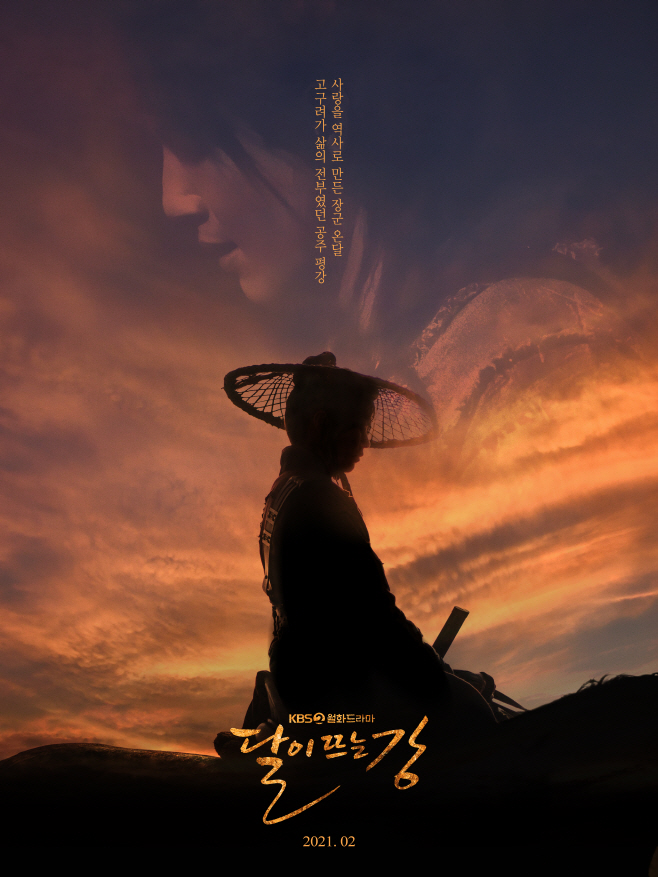
Korean Title: 달이 뜨는 강
Aired in: 2021 (20 episodes)
Channel: KBS2
Grade: 10/10
Actors: Kim So Hyun and Na In Woo
For more…


Kim So Hyun:
– Love Alarm 1&2
– Ruler: Master of the Mask
– Page Turner
– Radio Romance
Na In Woo:
– Mr Queen
– My Unfamiliar Family
– Mystic Pop-Up Bar
Dramas with beautiful battle scenes:
– My Country: The New Age
Analysis
Synopsis
When she was still a child, Princess Pyeonggang of Goguryeo was abducted and lost her memories. She was raised by assassins and became one. One day, she meets a young man On Dal, who rescues her. As they fall in love, Pyeonggang recovers little by little her memory and discovers her fate his greater than she thought.
My Opinion (No Spoiler)
Despite the ups and downs the drama went through because of Ji Soo’s controversy, I was delighted that they didn’t cancel the show. Frankly, it is an excellent Sageuk (historical drama), with many twists, a lot of emotions and an incredible realistic vibe!
Though I was not sure Na In Woo would fit as On Dal, I was really surprised by his performance. He literally stole the spotlight and embodied the character perfectly. The narrative was really solid and made a lot of sense, compared sometimes to some other historical dramas. All in all, River Where the Moon Rises was excellent in all aspects and I clearly recommend it!
Analysis (Spoiler Alert)
Characters:
Contrary to most Sageuk, which alas focus only on love triangles and palace intrigues, River Where the Moon Rises managed to provide viewers with a great balance between power struggle, romance and strategy. Most of the characters stood out, as they didn’t necessary fit the typical mold for this kind of dramas. This freshness is the reason why the show is so addictive in my opinion and why characters are so endearing. It was never too much, never too little. They just perfectly depicted human nature.
Let’s have a look at these many, yet different characters!
Pyeonggang/Yeom Ga Jin (Kim Soo Hyun): Right from the beginning, Princess Pyeonggang is portrayed as a self-confident, determined and bold young girl. She claims she wants to become the next King, despite her gender, and seems to be willing to do anything to achieve her goal. However, she is reckless, immature (I mean she is a kid) and a bit of a daredevil. She is not fully aware of the inner workings of the palace and the power struggle within it. That’s why, she doesn’t tell her mother Queen Yeon (also played by Kim So Hyun) that Go Won Pyo conspired with the King’s Concubine to take her down. Unfortunately, she informs her mother, when it is already too late, causing indirectly her death and that of the Sunno Tribe, loyal to Queen Yeon.
Of course, Pyeonggang can’t really be blamed for Go Won Pyo’s treason. Yet, this serves as an excellent lesson for the young Princess. Later on, she will remember how sneaky Go Won Pyo is and use his method against him. A long-awaited but satisfying revenge if you want my opinion!
By the time Pyeonggang returns to the palace, that is years after her mother’s death, she has had time to mature and grow up a lot. Indeed, she was kidnapped and turned into a remarkable assassin, she learned how to fight and fend for herself, how to strategically attack the enemy, as well as bravery, improvisation and loyalty. All of these qualities are actually of great importance in her future role in the palace. She constantly uses everything she has been taught and use it to her advantage, while adapting methods and skills to her hostile environment. I really think that Princess Pyeonggang is one of the best historical female characters I have seen in a drama. She actually reminded me a lot of Empress Ki! (I don’t know about you).
Upon her return, Pyeonggang embodies the perfect strategist and war general. She has it all: Rationality, courage, composure, wits, fighting skills. On top of that she happens to be very charismatic, dignified and wears this majestic aura, proving to be a force to be reckoned with. If this was not enough, she is also faithful and loyal to her one and only true love, On Dal (Na In Woo).
In a few words, she is the perfect princess, perfect general and could’ve been the perfect ruler as well.
It is true that Pyeonggang is not waved by power. She just wishes for her kingdom to be at peace and to lead a normal life with her husband. Even though she seems to have forgotten the reason for her return mid-drama, On Dal’s departure acts like a wake-up call and a reminder of what she is truly fighting for.
All in all, Pyeonggang remains true to herself throughout the entire drama and doesn’t let power change her! What an amazing character!
On Dal: This character is probably the epitome of a pure soul. He is kind, selfless, loyal and devoted. Just like Pyeonggang, he has gone through a lot as a child. His father was the general and leader of the Sunno Tribe, who was killed along Queen Yeon by Go Won Pyo. Thus, most of his people were killed and his tribe decimated. After his father’s death, he was raised by his nanny, who willingly blinded herself to prevent him from avenging his tribe. He respected her sacrifice and his father’s last words by accepting defeat and moving on with his life. Accompanied by the last Sunno Tribe’s survivors, he created the Ghost Village. This place acts like a refuge for those who have lost it all and is almost unattainable (it is hidden deep in the forest).
So On Dal has led his life according to his Tribe’s wishes. He doesn’t know how to fight, doesn’t meddle with Goguryeo’s power strife and avoids conflict with the exterior world. Despite that, he is clever and full of resources. No wonder when you live a secluded life!
However, everything changes when he meets assassin Yeom Ga Jin (or Princess Pyeonggang if you prefer). On Dal rapidly falls in love with her and doesn’t hide his feelings at all. He is actually the main trigger of Ga Jin’s decision to go back to the palace, because she doesn’t want her adoptive family in Ghost Village to suffer because of her royal status. On Dal naturally refuses to let her go on her own. His lover eventually ends up leaving, but he shortly follows her to the capital. From then on, the couple is inseparable. On Dal’s love and devotion for Pyeonggang is incredible. He becomes her husband, an equal, a fighter and a support in all aspects (mentally, at war, against her enemies in the palace…).
What I thought was really heart-warming is the fact that On Dal, like Pyeonggang, remains most of the time true to himself, his principles and his promises. His nanny’s death by the end of the drama is too difficult for him to bear, so he leaves. Yet, I can’t help thinking that this was in fact the only way for On Dal to remain sane. He needed to get away from death and war, in order not to resent Pyeonggang for it and keep intact his real nature. He is so empathetic and generous that constant destruction and grief is too much to handle at some point. Moreover, he doesn’t have any interest (and that from the get go) in the throne. Like I said, he just came to the palace for Ga Jin’s protection.
Just like Pyeonggang, On Dal is definitely a well-written character, who clearly escapes the usual stereotypes: nice guy don’t always turn bad, even in historical dramas!
Romance: On Dal and Pyeonggang are certainly star-crossed lovers. Their fates got intertwined when they were still kids and later on as grown-ups. In spite of the many difficulties on their road, they embrace their destiny and choose to stick together, for better and for worse. Even though they lost touch for 4 years (for obvious reasons of course), they never really parted from each other.
From episode 1 to 20, their love is undeniable (and the actors’ chemistry as well). Not only do they stand out individually, but they are as amazing as a pair. Together, they balance Go Won Pyo’s evil schemes and influence on the palace and Goguryeo. That is only possible because Pyeonggang and On Dal share the same vision of the world (fair, free and peaceful), as well as compensate each other’s faults. For instance, Ga Jin’s dangerous desire to destroy the enemy is balanced by On Dal’s down to earth reasoning. On the contrary, On Dal’s uncontrolled emotions are most of the time tamed by Pyeonggang’s calm and rational mind.
The drama makes it clear from the first episode that their romance is not common. On Dal lies on the battlefield, wounded and whispers to Pyeonggang: “You are my Kingdom”, elevating their love to a greater dimension. The drama is also constantly punctuated by On Dal’s reminders to Pyeonggang that he is merely an instrument at her disposal (“I am your sword, use me”), illustrating his selflessness and devotion, as well as the Princess’ mission to protect the Kingdom.
Go Geon (Lee Ji Hoon): This character could’ve been the stereotypical character of the drama, but he was definitely rescued at the last minute! Go Geon used to be Princess Pyeonggang’s master, who taught her how to fight. He is the son of Go Won Pyo, but doesn’t share his thirst for power. He is also in love with the Princess, but it is not reciprocated.
Years after the Princess’ disappearance, he is informed that she is still alive. He goes to her “rescue” (she is not really in danger with On Dal) and unfortunately discovers that she has fallen in love with another man, she has just met and who is a simple country pumpkin. At first, he doesn’t take On Dal seriously and tries to win over Pyeonggang’s heart, but it is already too late. Matters get worse when he finally realizes that she will never choose him. Blinded by jealousy and hurt, Go Geon decides to turn on the Princess and join his father’s terrible plan to overtake the throne.
This decision forces him to fight against Pyeonggang and On Dal and to become a traitor. When all seems lost for Go Geon, he is saved by Mo Hae Yong. Both escape to Silla, where they stay for 4 years. Until the time jump in the drama, I really believed that Go Geon’s character had been kind of “botched”. Why do all dramas have to turn second leads into jealous and ill-intended characters, when they are rejected by their crush? Worse, Go Geon appears in the drama as a rational and brilliant fighter and strategist. He is very similar to the Princess, which explains why they get along so well. They are tremendous partners and together could’ve easily overturned Go Won Pyo’s scheme and avoided a bloodbath. So, I was really disappointed to see this great figure going to waste.
That was until the 4-year gap! When Silla, the neighboring Kingdom, is planing on attacking Goguryeo and kill the Princess, Go Geon has a sort of wake-up call. He fully understands that his life has no meaning anymore, he doesn’t have a country to defend, is considered as a traitor by his peers, has lost his only family and the woman he loved. He is in constant pain and has no real purpose. That’s why he chooses to atone for his sins and redeem himself in the last episode. He sacrifices himself in order to save Pyeonggang and his Kingdom. This allows him not only to be forgiven by others, but also to forgive himself for having betrayed his beliefs and principles. Though he dies at the end, he actually never drifted far away from his original self. Let’s just say he got lost along the way.
Mo Hae Yong (Choi Yu Hwa): This female second lead is probably the most outstanding character of the drama. She is quite the opposite of Pyeonggang but is as amazing as the Princess. At first, she is this mysterious merchant, who knows all the gossips in town. She runs an underground business, collecting and selling information, which makes her position quite unsure at the beginning. Indeed, she navigates between sides, without taking one in particular. The more we see of her, the more complex she becomes. Indeed, she is a spy from Silla, sent to gather information on Goguryeo. She is also the adoptive daughter of one the most influential and wealthy men of the Kingdom. Though she was adopted, it is clear that she has a lot of respect and filial love for her savior. This proves that she is not a Manichean character, forced to choose between Silla and Goguryeo. A bold and unexpected character, whose many identities were totally worth the watch.
Moreover, I realized that this character is actually responsible for a certain number of twists in the drama. Her chameleon identity is the reason why the Princess can come back to the palace and bring On Dal, but also why Go Geon survives.
Interestingly, Mo Hae Yong is to Go Geon, what he is to Pyeonggang. Their unreciprocated love and desire to protect the other are often responsible for bloody fights in the Kingdom. Yet, they don’t seem to care who they serve, as long as the their other half is safe.
Mo Hae Yong was in my opinion a very original character, whose unyielding love was praiseworthy. She never let go of Go Geon’s hand, even in death. Though she survived and he didn’t, she never betrayed herself. Plus, she resembled a lot Kim Hwa Gun (Yoon So Hee) in Ruler: Master of the Mask, don’t you think?
Romance: The love interest between Go Geon and Mo Hae Yong is rather atypical. Indeed, it actually has an important role to play in the drama, but it doesn’t bear any fruits (if I may say so). Mo Hae Yong loves Go Geon, who loves another.
However, I want to believe that Go Geon found at least a bit of comfort in Mo Hae Yong’s affection. At the beginning, he clearly uses and manipulates her to avenge himself. Still, the relationship is more confused afterwards. Personally, I think that Go Geon has had feelings for Hae Yong (hence their final dialogue). However, he was so blinded by his negative emotions that he couldn’t really focus on her. His incapacity to let go of the past hindered his potential happiness with her. Mo Hae Yong was aware of the situation but tried her best to deal with it. And she did an excellent job!
It was a bit saddening to see their tragic ending. They really could’ve been a great couple, had they given their relationship a shot. The only conclusion is that they were actually not meant to be. Still, they learned a lot about themselves and matured (especially Mo Hae Yong), even if love was not fulfilled at the end.
I would add that it was quite pleasant to have two (to three with Pung Tae and Jin’s love) romances in a historical drama, replacing the usual (and annoying) love triangle!
King Pyeongwon (Kim Pub Rae): The King of Goguryeo is an ambivalent figure. For every good deed he makes, he also makes a bad one. His inconsistency and incompetence led his wife Queen Yeon, his children and many people to their doom. His jealousy, lack of self-confidence, fears and greed are responsible for the disaster at the beginning of the drama. The long period he spends alone on the throne, drugged and drunk appears to be his punishment for having failed so many subjects.
Like other characters in the drama, he is lost. Indeed, his guilt consumes him and he is burdened by resentment. However, he comes back to his senses with Pyeonggang’s arrival. She enables him to stand back on his feet and to counterattack. The King’s evolution mirrors somehow that of Go Won Pyo’s, but in reverse: From failure to repentance for the King; from glory to doom for Go Won Pyo.
Go Won Pyo (Lee Hae Young): The antagonist of the drama, Go Won Pyo, can be described as such: he is greedy and blinded by power. His one and only goal in life is to become King. Therefore, he is more than willing to kill innocent people, manipulate his son and betray the actual King. However, he is very loyal to his Kingdom. That being said, it appears normal that he despises Go Geon for having made an alliance with Silla’s spy, Hae Yong.
Go Won Pyo is very bright and has a lot of experience when it comes to strategically using his pawns. Thus, he is a ruthless and dangerous opponent. The power he has gathered over the years and his control of Goguryeo made Pyeonggang’s victory even more satisfying. Indeed, at the end of the drama the Princess finally kills him, fulfilling her well-deserved revenge.
King YongYang (Kwon Hwa Woon): As the young Crown Prince, Won seems very isolated and lonely. He grew up in the palace, separated from his supposedly dead sister and with his crazy father. We understand rapidly that life must have been tough for him. That’s why he often remains in the shadow. He has learned to survive in the palace, but has never really dared to confront Go Won Pyo. When his sister comes back, he is able to mature as well. He bonds with On Dal, whom he respects and admires, trusts and loves Pyeonggang and even protects his little brother.
The plot thickens after the 4-year time jump, as the new King feels shadowed by Pyeonggang. Since his arrival on the throne, he lacks self-confidence and it seems as if he had an inferiority complex toward his sister, exacerbated by her constant military achievements. He has troubles leading, which places him in a dangerous position. Yet, there is actually more to that expected appearance. Indeed, King YongYang dreams of unifying the three Kingdoms. According to him, this can only be achieved if General On Dal comes back, a possibility that Pyeonggang categorically rejects. Knowing that On Dal would do anything to save Pyeonggang, the King willingly orchestrates her execution. At the last minute, On Dal intervenes. This move was actually a brilliant one coming from King YongYang. Not only did he succeed in convincing his brother-in-law to return, but he also proved to be quite the tactician. This unique action was enough to illustration his potential as ruler.
Jin Bi (Wang Bit Na): Queen Jin Bi started as a concubine in the palace. She was jealous of Queen Yeon and the affection she garnered from the King. Once again, she could be considered as a very monolithic character, who only wishes to be Queen and make her son King. But there is more to her story in fact. She and Go Won Pyo have been involved (strategically and romantically) for a long time. Together, they form an interesting duo, as they use each other to fulfill their ambitions. Yet, the Queen seems to have formed a stronger attachment and by the end of the drama she reveals to have loved Go Won Pyo. This humanizes her and gives her more depth. On top of that, the drama emphasizes her maternal instinct. She is the epitome of motherhood, always protecting her son and thinking about what is best for him. The only fact that her son is the King’s real child, and not Go Won Pyo’s, is proof enough that she wouldn’t do anything to hinder her son’s fate, starting with his royal heritage.
On Hyeob (Kang Ha Neul): First of all, I have to admit that Kang Ha Neul’s cameo was excellent. He was very credible as On Dal’s father On Hyeob. Though his presence on screen was minimal, his influence on On Dal’s personality, beliefs and life is undeniable. Indeed, he was one of Goguryeo’s greatest general. He was held in high regards, respected and loved. He was a fair and good man and general. Yet, he was also broken and in pain because he felt responsible for his lover’s death. He was incapable to save On Dal’s mother, when she needed him the most. Since then, he has borne the weight of the past on his shoulders. He realized too late that there is no purpose in wielding a sword, when you can’t protect those you love. A maxim that On Dal will remember all his life, until the very last moment.
The title: River Where the Moon Rises is actually a very meaningful title, when we know the story a little. The drama is an adaptation of On Dal’s Chronicles and depicts the atypical fate of that great general. To that, the drama added poetry and romance with Pyeonggang. An addition that is visible even in the title.
River in Korean is “Gang” like in “Pyeonggang” and Dal means “Moon”. The single translation of the title introduces already both lovers. Moreover, the drama also revolves around Dal and Ga Jin’s connection with the moon. Whether they are together or apart, the moon is the constant element which binds them together. This highlights their destiny somehow, showing that they can’t get away from it.
Finally, the title is quite significant for the story as well. Pyeonggang is a princess with a line of duty she can’t escape from. Before meeting On Dal, she is kept in the dark and has lost her way. It is thanks to her encounter with On Dal (her moon) that she can fulfill her destiny. As for On Dal, he is just a country pumpkin in episode 1 and progressively turns into Goguryeo’s greatest general. Once again, this wouldn’t have been possible, if he hadn’t met Ga Jin. It is obvious that either metaphorically or in real life, their relationship is solid, mutual and meant to last.
The depiction of a tumultuous time period: The drama did an excellent job at reproducing the tumultuous days of Goguryeo, before the unification of the three Kingdoms. Indeed, there were constant intestine wars, power strifes and internal conflicts at that time, which weakened and destabilized the Kingdom. No wonder there are so many battles in the drama and twists in the palace intrigues. Everyone is usually driven by greed, ambition, jealousy, vice in general. The most powerful and wealthiest always put their personal interests before the Kingdom’s peace and people’s well-being. All of these elements were quite present and truthful in the drama, giving it a strong and appreciable realistic vibe.
Direction: I am not going to lie, the direction of the drama was really beautiful. First, the costumes and settings were incredible, especially Kim So Hyun’s. I could really feel that the crew had put a lot of efforts in paying attention to all details. Moreover, I am generally used to Sageuk taking place during the Joseon period. Apart from Hwarang (in Silla), there are not a lot of historical dramas occurring during that time. In my opinion, it really created freshness and novelty to see new accessories.
Second, the battles scenes were awesome. The drama actually started and ended with one and others punctuated the action. Honestly, it was pleasant to have them every now and then. It really added rhythm to the action and happened as a natural consequence of characters’ choices. They were never forced or coming out of nowhere, were brilliantly executed and always had a purpose. For that reason only, the drama deserves my respect. I can’t express how annoyed I am when a drama only revolves around palace schemes, love triangles and failed coups.
In that matter, River Where the Moon Rises reminded me a bit of My Country, another excellent drama with battle scenes on top.
The ending: Normally, we shouldn’t have had this happy end that we got. Indeed, the production confessed that fans influenced the final verdict. And we are very happy about that, right?
In the final scene, On Dal dies trying to protect Pyeonggang from the remaining Silla warriors. He is pierced by so many arrows that I couldn’t even count them. He dies, leaving Pyeonggang and his friends devastated. But at least he fulfilled his father’s wish: “If you wield you sword, make sure it is to protect the woman you love”.
The story could’ve ended on that sad note. Yet, On Dal had a great joker in his pocket. Indeed, he trained with a monk in his village before going back to the palace. The monk, who also happened to be Queen Yeon’s old ally, taught On Dal how to fake death. He then used this technique on the battlefield to preserve himself.
Because of that, everyone thinks him dead and Pyeonggang decides to leave the palace, as promised before her last battle. She goes back to Ghost Village, where she meets On Dal again. She is shocked and confused at first. The monk explains what happened and the fact that On Dal lost his memory because of his fake death. Fortunately for Pyeonggang, a few hours in On Dal’s presence are enough to bring him back (the moon, Pyeonggang’s familiar smell and even their couple bracelets are enough to make him remember).
On Dal’s fake death was an excellent strategy. By doing so, he managed to quietly get away from his duty as a general. He also freed Pyeonggang from hers and they were finally able to fulfill their dream: live a normal life together, away from power and war.
As a viewer, I couldn’t help but wish for their happy ending. After a roller coaster of emotions, they were finally given the peace they deserve.
P.S.: What did you think of Na In Woo’s performance as On Dal?
 Once Upon a Drama