Presentation
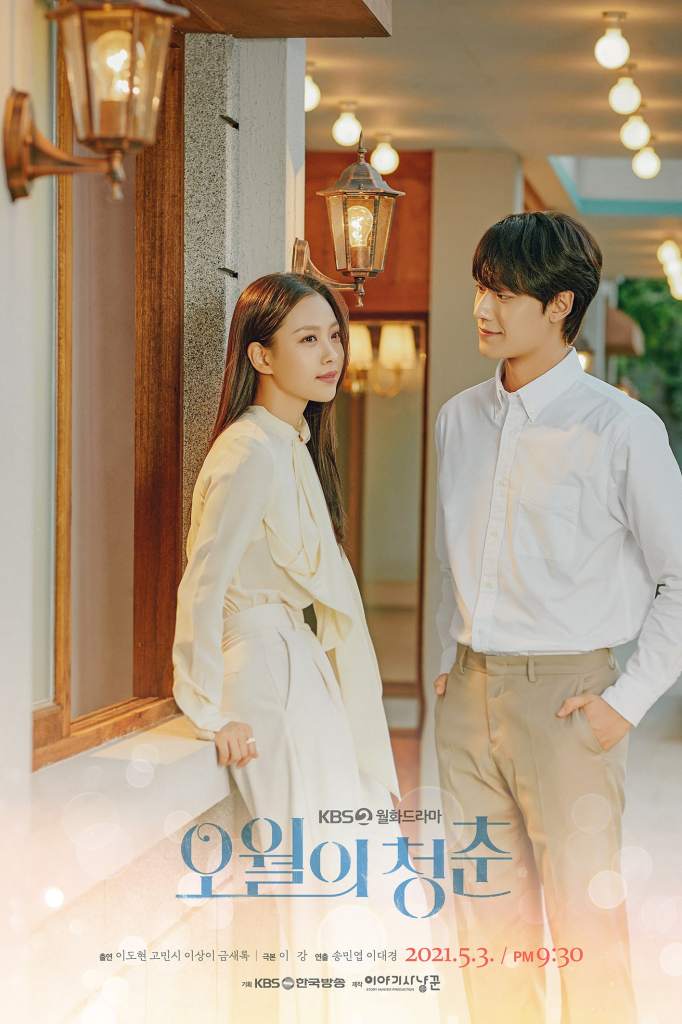
Korean Title: 오월의 청춘
Aired in: 2021 (12 episodes)
Channel: KBS2
Grade: 8/10
Actors: Lee Do Hyun and Go Min Si
For more…
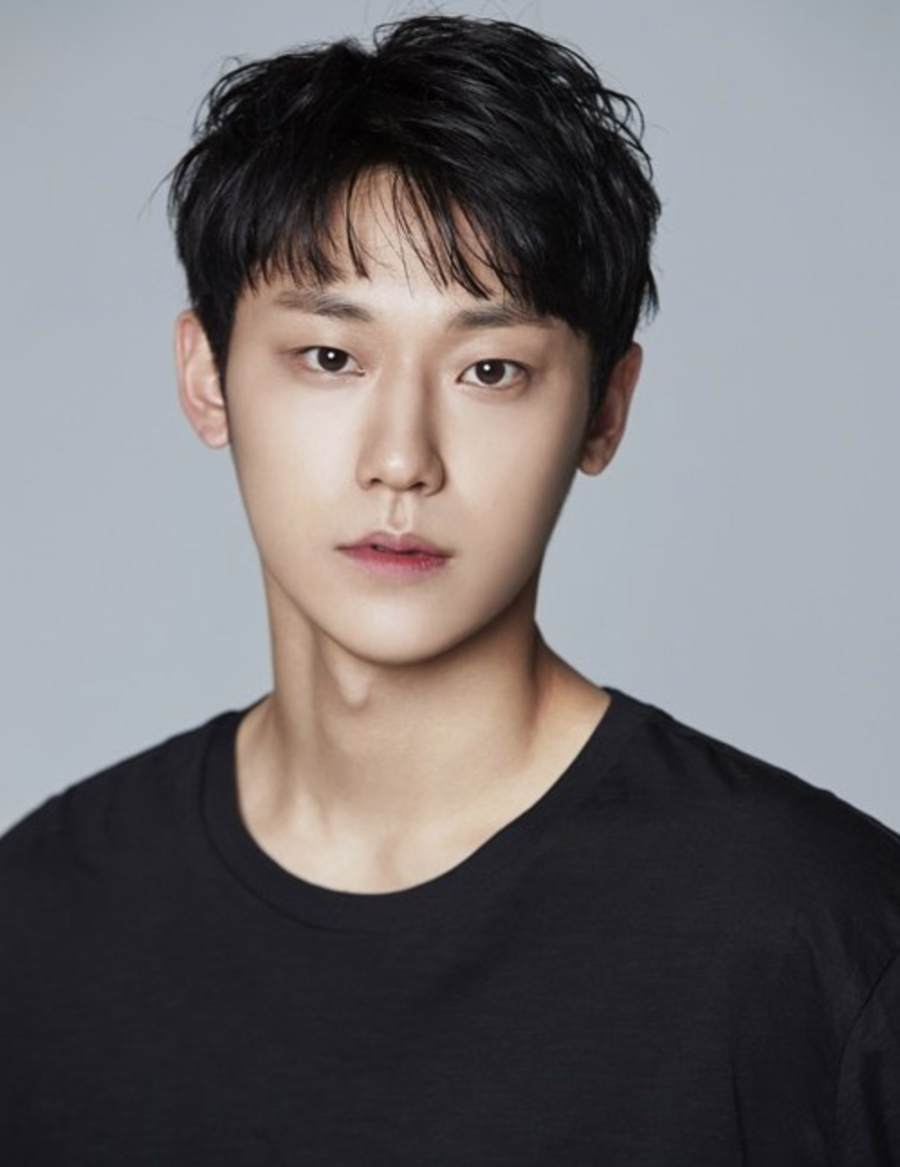


Lee Do Hyun:
– Hotel Del Luna
– 18 Again
– Sweet Home
– Beyond Evil
Go Min Si:
– Sweet Home
– Love Alarm 1&2
– Secret Boutique
– The Smile Has Left your Eyes
Modern historical dramas:
– Girls’ Generation 1979
– Reply 1988
– Reply 1994
– Reply 1997
Analysis
Synopsis
Hwang Hee Tae and Kim Myung Hee meet in May 1980 in Gwangju. They fall in love without realizing that the turbulent times and the upcoming chaos will forever change their fate.
My Opinion (No Spoiler)
I have mixed feelings regarding this drama. The romance and the melodramatic, if not tragic, atmosphere were sweet and poetic. Moreover the depiction of Gwangju Uprising was amazingly portrayed and showed. However, the episodes right in the middle related to the love triangle/square were annoying and quite predictable. So I was a bit disappointed on that part.
Despite that, if you are looking for a drama perfectly combining real-life events and star-crossed lovers, you should go for it!
Analysis (Spoiler Alert)
Characters:
Hwang Hee Tae (Lee Do Hyun) is the epitome of kindness. He is empathetic and altruistic, always willing to help others in need. He is from Gwangju but moved to Seoul for his medical studies. He returns to his hometown in spring 1980 after an incident back in the capital, involving rebellious students (his friends) protesting against the government. One night, his friend Kim Kyung Soo (Kwon Young Chan) knocked on his door, carrying on his back his girlfriend Seok Chul. As Kyung Soo rushed out to get a doctor, Hee Tae ended up alone with a dying Seok Chul. He barely saved her but Kyung Soo was arrested before he could get to a doctor. He was sent to the military as a punishment. Both friends will reunite in Gwangju during the protest, on opposite sides unfortunately.
Because doctors’ prognostic regarding Seok Chul’s live is bad, Hee Tae decides to bring her back to her hometown: Gwangju. This decision will not only changed Seok Chul’s life but also alter Hee Tae’s fate forever. When he arrives there, Hee Tae is traumatized. Since the accident, he is incapable of practicing medicine. Yet, he doesn’t show it and take it as a good chance for him to try out another passion of his: music. Indeed, music represents for him a way to express his feelings and to communicate. An important way to let go of some harsh emotions, especially if we consider Hee Tae’s background. His father Hwang Gi Nam (Oh Man Seok) is the Head of the Anti-Communist Party in Gwangju. He is fierce, cruel and has no empathy. Later on there is still a glimpse of hope when his second son Hwang Jung Tae (Choi Seung Hoon) is shot. That is the only moment when we see humanity in his eyes. Unfortunately for him, it is too late.
Hwang Hee Tae doesn’t have a good relationship with his father. He is actually his extreme opposite I would say. Hee Tae is soft, kind, warm, tender and never forces his decisions on anyone, whereas his father is authoritarian, violent, selfish and strict. Of course, I think we can try to understand Hee Tae’s father a little bit considering the historical background. Indeed, the story takes place in 1980 which means that his father has probably been raised (in poverty?) after the Korean War (1950-1953) or may have experienced it himself as a very young kid. As for his education he may simply be reproducing his parents’ behavior towards him. Children, women had no say in anything at that time and family heads were generally educating their children violently. If on top of that we add hunger, poverty and the total destruction of the country at that time, I can’t help to think that Hwang Ki Nam also had a cruel upbringing. Of course, this doesn’t mean that it is okay to treat his children the same way, it’s just that times in 1980 were changing and the old generation was in total disconnect with the new one. As we transition from one mindset to another, it is expected to see the old and new systems crash into each other.
Moreover, Hwang Hee Tae doesn’t seem to have a strong bond with the rest of his family either. Indeed, he is the son of a mistress which places him in a difficult situation with his stepmother and his stepbrother. Despite that, the brotherly relationship evolves and progresses towards an affectionate bond by the end of the drama. Both brothers are finally able to communicate and understand that each one wants to be there for the other. Even Hee Tae’s stepmother at some point realizes that she has to muster her courage and rebel against the husband she is so afraid of. This is the only way she can protect her son Jung Tae.
I really appreciated the mother’s evolution, though it really stayed in the background. She goes from being docile, blindly obedient to her husband’s orders and frightened to standing up for herself and her son in front of Hwang Ki Nam. She broke free in the last episode, criticizing her husband’s cruel actions in order to protect his family (or so he says). Even if it was brief, this transition was also a brilliant way to illustrate societal changes for all genders, ages and social classes.
Kim Myung Hee (Go Min Si) has the same main problem as Hee Tae. She never expresses her feelings clearly. Worse, she always gives up on her desires and puts others’ forward. This habit of suppressing herself is linked with a past incident. When she was still in high school her best friend Lee Soo Ryeon (Geum Sae Rok) asked her to distribute flyers. She was arrested and had to admit she was the instigator of that action. Lee Soo Ryeon was let go because of her connections, while Myung Hee suffered in silence the injustice. If the situation was not unfair enough, Myung Hee’s father Kim Hyun Chul (Kim Won Hae) told her right away to confess even if it was false. She was abandoned by her own father that same day and resented him thereafter. As the drama progresses, we get to know more about Myung Hee’s family. After discovering that his father had been tortured and branded as a communist in his youth by Hee Tae’s father, his previous reaction with his daughter then makes more sense. In spite of his efforts to protect her, he unwillingly did the opposite.
Since then Myung Hee has led her life like a robot, taking others’ shift at the hospital, overworking herself, pleasing others but not herself, obeying to their orders and suppressing her own desires. I think that Myung Hee and Hee Tae are actually quite alike. They have an awkward relationship with their parents, but kind of get along well with their brothers. They are both kind and empathetic, always respecting the other’s decisions. Finally, they have at heart to protect those they love no matter the cost. A mindset that leads Myung Hee to her death in the final episode, as she jumps in front of the gun to protect her runaway brother in the woods.
Lee Soo Ryeon is an ambivalent character. I loved how implicated she was in the defense of values like freedom and justice. She is a fighter against the government, a rebellious leader who disagrees with authority. Moreover, she is stubborn, resilient and reckless, which leads her sometimes to jail. Yet, she also gets out thanks to her wealthy family. The complexity of her character comes from the fact that she takes advantage of the exact same system she protests against. Indeed, when she is incarcerated with her friends, only she is able to get out. This favoritism is the reason why most of her ‘teammates’ dislike her. Her familial background embodies everything they abhor. Even in terms of personality, Lee Soo Ryeon carries this two-sidedness. She mixes perfectly well with other social classes (like Myung Hee’s), is willing to use her father’s company, money and connections tu support the cause she believes in and isn’t scared of getting her hands dirty. However, she is also capricious and selfish, especially towards Myung Hee, considering that her family should come first, even if it means destroying other people’s lives.
I personally hated Lee Soo Ryeon. Her selfishness made my blood boil and I had the impression to witness a child’s whim! Indeed, she is the reason why Myung Hee and Hee Tae start dating in the first place. She was supposed to have a blind date with Hee Tae but sent Myung Hee instead, promising her to give her money for her plane tickets in exchange. Even if it is clear that both leads would’ve met anyway, Soo Ryeon never admits her responsibility in the game. It is only when she is cornered by her family that she finally confesses. The rest of the time, she lets both Myung Hee and Hee Tae bear the burden, letting them suffer emotionally and be physically tortured. No wonder Hee Tae doesn’t want to have anything to do with her when they go to Seoul mid-drama.
Thankfully, the character’s selfishness dissipates in the chaos and leaves room for the romance to bloom. It was actually the only time I felt as if Gwangju Uprising was useful: it broke the lie and separated Lee Soo Ryeon and Hwang Hee Tae for good.
Lee Soo Chan (Lee Sang Yi) is innocence incarnate. His naivety even in this troubled times proves how politically unaware he actually is. Like Hwang Ki Nam he stands for the old regime, but not the same side. Lee Soo Chan seems to live in a parallel and blissful world, in which he runs a prosperous company. He is kind and thinks that the rest of the world experiences that same happiness. His family is sheltered, they have money and perspectives for the future. Yet, the Gwangju Uprising and thus reality slap him right in the face. It is a wake-up call for Lee Soo Chan and a tough reality check. He is imprisoned for having tried to help a high school student, who was being beaten up. As Soo Chan was unable to grasp the situation at that moment, he ends up tortured and beaten up as well. The only reason he is able to go out is because of his father’s connections, the last vestige of the ‘old regime’.
Lee Soo Chan harbors feelings for Myung Hee too and though he didn’t represent a real obstacle in her love story with Hee Tae (compared to his sister), he still acted sometimes like this annoying and stereotypical second lead.
Ambiance: Youth of May is obviously a melodrama, depicting the tragic love story oft young people separated by history. In terms of sad atmosphere I really felt like the drama was perfectly balanced. It was tender, slow-paced and bloomed as slowly as the spring flowers of May. The first episodes did an excellent job at preparing viewers for future events and the ending was simple, poetic, natural and (bitter)sweet. Of course, Myung Hee’s death prevented us from having a happy ending. Still, right from the start viewers were warned.
The fact that the drama is made up of 12 episodes is great in my opinion. It was not too long nor too short. I have to say that the last 4 episodes (from 8 to 12) really captivated me and were probably the best ones. Viewers are immersed in the chaos that reigns in Gwangju. The slow-paced romantic involvement is replaced by tension until the climax in the final episode and the bittersweet end. Interestingly, the events in Gwangju enabled the two main leads to reunite and to stand stronger than ever (they decide to get married). This is even better that from the very beginning the drama is punctuated by a certain mystery regarding the homeless man’s identity from the 1st episode and the owner of the watch. Up until the very end, Kim Myung Hee’s unfortunate death in the woods remains well concealed. The watch of Myung Hee’s father goes from one hand to another, making it difficult to guess. Even the time jump showing older characters doesn’t give enough clue. The only sure thing is that either Myung Hee or Hee Tae dies.
The solving of the mystery adds up to the melodramatic tension in the last episode, when Myung Hee and Hee Tae are confronted with two roads in the woods: one leading to death, the other to life.
Despite all that, I was still a bit disappointed with episodes 4 to 7. I couldn’t stand the narrative and the plot was going in circles, with characters unable to make clear decisions. Lee Soo Ryeon’s selfishness was predictable, Myung Hee and Hee Tae’s unrealistic and illogical behaviors were annoying. I was bored during those times, fortunately the historical depiction raised the overall level of the drama.
The historical background: Youth of May takes place in May 1980 in Gwangju. It is an important and sad date in South Korean History because of the Uprising associated with it. Briefly explained, President Park Chun Hee was assassinated in 1979 and Chun Doo Hwan implemented a dictatorship in the country. Many citizens, especially students, decided to protest against the regime, which led to riots in the entire country.
Gwangju became the center of attention in May 1980 when the military launched an attack on civilians. The dictatorial government pretended that Gwangju was full of Communists and that the military was simply eradicating them. Yet, it was just a way to justify the oppression of democratic voices in the city. Led by students, a great number of citizens protested against the martial law in action (supposed to clean the city of Communists). They were met with guns and violence. Hundreds of people died, mostly people like seniors, children, young adolescents who had in fact nothing to do with the democratic protests.
The martial law and its consequences on civilians are perfectly depicted in the drama. No one is safe, as shown throughout the episodes, particularly when military officers shoot at nurses and doctors. Chaos, terror and fear are incredibly portrayed in Youth of May. The drama enables to raise awareness regarding these rather ‘recent’ events and to shed light on a terrible page of South Korea’s modern History. It is also an excellent way to remember victims and celebrate those who fought for democracy. Meanwhile, the drama is an homage to all of those who took part to the movement, willingly (protesters) or unwillingly (nurses for example…).
Gwangju Uprising had a great impact years later. Indeed, in 1987 demonstrations in memory of the event burst in South Korea and denounced the army’s actions. It opened the road to the democratization process in the country, enabling it to become what it is today.
As mentioned before, I think characters’ behavior are understandable and sometimes forgivable if you take into account this historical background (for instance Hwang Ki Nam’s). But the drama goes further than just exposing the confrontation between the military and the civilians. It subtly portrayed the moral dilemma for soldiers themselves through the characters of Kyung Soo and Lee Kwang Kyu (Kim Eun Soo). Both ended up in the army against their will and, contrary to their belief, were forced to shoot at innocent citizens and commit act of violence. I believe that Kyung Soo was one of the best written characters. He always tried to stay true to himself and keep his conscious clean by disobeying orders. He is responsible for Myung Hee and Hee Tae’s escape when they arrive on the massacre place with the ambulance and Kyung Soo also saves Myung Soo during his run in the woods. Finally, he is the last person Myung Hee saw before her death and the first one to testify it was her in 2021. Despite the fact that he is a second lead, Kyung Soo acts as a red thread throughout the drama. He connected past and present and embodied this gray area for many during the conflict. His life as homeless is quite pitiful, but his last encounter with Hee Tae after having identified Myung Hee allows him to finally breathe. Their last meeting is heartbreaking, as Kyung Soo throws a sorrowful look at Hee Tae, begging for forgiveness.
Two other side stories need to be mention to illustrate civil heroism: that of the policeman Choi Jung Haeng (Jung Wook Jin) who falls head over heels for Lee Soo Ryeon and that of her friend Jung Hye Gun (Lee Kyu Sung). Both can be seen as victims of the system and heroes of the civilian protest. The first one saved tens of citizens from the army, using his authority as policeman. As punishment, he was beaten up to death. Lee Soo Ryeon finds him in the streets as he draws his last breath. She recognizes him but it is too late to save him.
The second character Hye Gun also has a special connection to Lee Soo Ryeon. He is secretly in love with her. Arrested at the very beginning, he is tortured by the Anti-Communist group. Despite the suffering he never confesses to the charges and never gives away the names of his friends. He is beaten up to death by Hee Tae’s father and dies in prison.
Though the names of these two people didn’t go down in History, they are an incredible celebration of this ‘heroes of the everyday life’, those who gave their lives to save and protect others. They are a metaphor or civilian heroism that need to be recognized.
The acting: Youth of May not only beautifully showed historical events, it also depicted conflicted characters, caught in a fight bigger than them. I was especially astonished by Go Min Si’s acting as Myung Hee. She had previously played the annoying and selfish brat in Love Alarm and Sweet Home (also with Lee Do Hyun), so seeing her in an entirely different register was clearly satisfying. Her emotions were so truthful, sincere and genuine! Excellent performance!
Lee Do Hyun’s acting couldn’t be better either. Once again, he managed to show a distinct personality, definitely proving his skills. The rest of the cast, especially Kim Won Hae (Myung Hee’s father), added to the overall success.
Seoul 2021: 41 years after Myung Hee’s disappearance, Hee Tae finally finds her. Thanks to Kyung Soo’s testimony, all remaining characters, deeply affected by Myung Hee’s death, are able to move on. The last episode gives us a glimpse of their respective present: Hwang Hee Tae has become an inspiring doctor (he is played by the excellent Choi Won Yeong and is married to Shim Yi Young playing Hee Tae’s stepmother), Jung Tae is a successful business who limps since his shot in the leg to protect Myung Hee, Myung Soo has become a priest (the guilt of causing his sister’s death might be a reason), Lee Soo Ryeon is a powerful attorney specialized in labor laws and Soo Chan a great businessman. Last but not least, Seok Chul (Hee Tae’s first patient and the reason he went to Gwangju) actually survived, which gives hope and satisfaction.
They have been able to move on without really forgetting Myung Hee. 41 years later, Hee Tae is finally at peace with himself, but never regretted his choices (coming to Gwangju and dating her).
Human nature: This drama is greatly appreciable especially because of the humanity that transpires. All characters are simple people, human beings with emotions and feelings. The turmoil around them only amplifies their inner turmoil and their choices thus become totally understandable. Progressively, the drama aims either at reconciliation between family members (Myung He and her father) or at total disconnect (Hee Tae telling his father that no one would choose to be his family in the end, what really happens). The drama excels at showing us human nature under all its forms and the atypical bonds that can sometimes form during troubled times.
OSTs: The OSTs, particularly Annie’s Song by John Denver (played in the café where Myung Hee and Hee Tae go on a date) is as nostalgic as poetic. Even the ‘freedom song’ sung by students was beautiful and gave the drama this special atmosphere, unconsciously preparing us for the worst.
 Once Upon a Drama