Presentation

Korean Title: 연모
Aired in: 2021 (20 episodes)
Channel: KBS2
Grade: 10/10
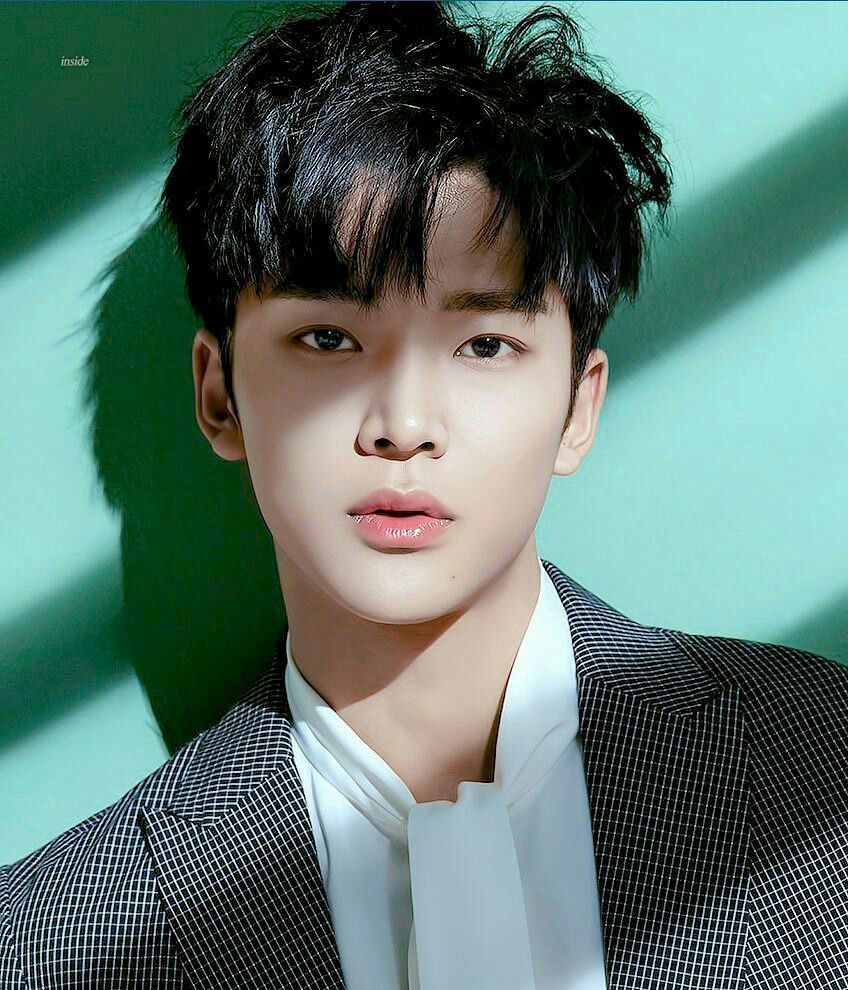
Actors: Park Eun Bin, Rowoon and Nam Yoon Su
For more…

Park Eun Bin:
– Age of Youth 1&2
– Stove League
– Father I’ll Take Care of You
– Do You Like Brahms?
Rowoon:
– School 2017
– About Time
– Extraordinary You
– Sunbae, Don’t Wear that Lipstick
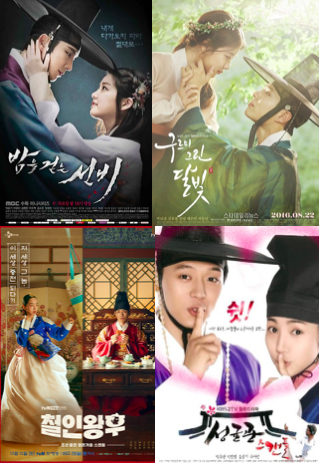
Historical dramas with gender-benders:
– Scholar who walks the Night
– Love in the Moonlight
– Mr Queen
– Sungkyunkwan Scandal
Analysis
Synopsis
When the Royal Consort gives birth to twins, it is considered an ominous sign. So, she pretends her daughter is dead and hides her away. Years later, young Dam I has to endorse the role of the Crown Prince after his death. She becomes the cold and mean Crown Prince Lee Hwi, constantly afraid that her identity would someday be revealed. One day, she meets Jung Ji Un, who becomes her teacher. They develop feelings for each other.
My Opinion (No Spoiler)
I simply loved it! The plot, the acting performance, the twists and the romance, everything was perfect! Characters are beautifully written and the plot unravels with subtlety and smoothness.
If you haven’t watched it, I can only recommend you do it quick!
Analysis (Spoiler Alert)
Characters: For this analysis, I think it is interesting to study the following four characters, since they all have one fixed line of desire until the very end. But each of these desires is hidden behind actions, decisions, choices and obligations, which make it difficult to decipher sometimes.
Lee Hwi (Park Eun Bin) is the twin sister of the Crown Prince. At birth, her parents faked her death to protect her and her mother sent her away to be raised in a temple. Years later, she is hired as a maid for the Palace. There, she meets young Jung Ji Un (Rowoon), the son of a noble family. They immediately fall in love. Meanwhile, Lee Hwi, whose real name is Dam I, meets the Crown Prince himself. Their uncanny resemblance pushes the latter to switch places with her. This switch is the disruptive element of the story. Indeed, it is during one of these that the Crown Prince is assassinated by his own grandfather, thinking he has killed the twin sister.
When the Queen gets wind of it, she decides to cover the truth and disguises Dam I as the Crown Prince. So, the switch becomes permanent. From then on, Dam I turns into the future King Lee Hwi. This event brings about many changes for the young girl. First, she has to say goodbye to her crush Ji Un, who is set to leave for Qing. Second, she has to endorse the identity of her male brother, while erasing hers. Third, she needs to lie and live in constant fear of being discovered. Hence, her unwillingness to connect with others. In a nutshell, she erases her identity, lives someone else’s life and is all alone. She is like imprisoned in a golden cage (the Palace). Her only two confidents are her court lady and eunuch.
Lee Hwi grows up entangled and trapped in her own lies. Years later, she has become a cold and distant person, disliked for her bad temper. However, this is just a facade to make sure no one finds out the truth. Under this armor hides a vulnerable, sweet and tender side of Lee Hwi, that only Ji Un gets to know. He manages to make some cracks thanks to his genuine feelings. Indeed, even as the Crown Prince, Lee Hwi proves to be an excellent leader and future ruler. She is fair, upright and devoted to her people. She has lived as a commoner before, so she respects every single life no matter the social rank or status.
Due to her situation, Hwi is also discreet and secretive. She doesn’t trust easily, but is willing to sacrifice herself if it means protecting those she loves. That is exactly what happens at the end, when she gives a poisoned tea to her grandfather. In order to avoid any suspicion, she drinks the tea as well. She eventually survives the poison, but this shows how far she is willing to go to protect everyone.
Her line of desire is simple: She wants to get her life back but not at the cost of others’. Protection, devotion and sacrificial spirit are her main traits.
I have to say that her behavior was exemplary throughout the drama. Too bad she could not get on the throne because she is an incredible ruler, a clever opponent and a empathetic individual. Even when she escapes the palace at the end, she takes time to free the Queen from her role, protect her honor and apologize for fooling her. She even tries to save her lovely younger brother, who is unfortunately killed during a coup.
Jung Ji Un is made of the same steel as Lee Hwi. His main line of desire is to protect his lover. Like Hwi, he is fair, upright and sacrificial. His devotion for Hwi is admirable and drives his actions throughout the drama. No matter if Hwi is a man or a woman, a King or a commoner, his past love or not, once he has chosen to protect her, he doesn’t renounce. Moreover, he is true to his words and promises. Indeed, he confesses his love several times without never faltering in the face of danger and he promises Hwi he would be by her side, what he does at the end.
Jung Ji Un is a positive character through and through. Many times he appears to be carefree, but he knows exactly when to assume his responsibilities: as a friend (he rescues his friends from the pharmacy for instance), as a member of society (he is a famous doctor, who provides free help), as a son (despite his differences with his father, he is willing to protect him), as a lover (Lee Hwi has become the apple of his eyes).
Just like the Crown Prince with the Queen, he does his best to protect Shin So Eun‘s (Bae Yoon Kyung) pride, when he rejects her love. I admit that I was really satisfied with the second leads’ behaviors in the drama. They were never pushy and respected the other’s love. It was pretty dignified and never turned into a conflict of ego and interests nor a competition.
The romance: Lee Hwi and Jung Ji Un’s romance was so pure that it was difficult to see them struggle so much. Their honesty, sincerity and timeless devotion were heartwarming to watch. Their relationship, free of conventions and prejudice, is actually what makes the drama so likable. Their bond gets even stronger, when Ji Un discovers Hwi’s secret, which is at the heart of the drama.
Hwi’s hidden identity is the core of the intrigue. It is already a trigger for many issues in the drama, so it was an excellent idea to rid the rest of the story of useless and futile sub-elements such as second leads’ jealousy and/or a reflection on Ji Un’s potential love for a man.
Talking about second leads, I have to mention how great of a character Lee Hyun (Nam Yoon Su) is. He is the second son of the King’s older brother, who was killed. Technically speaking, he and his older brother are the legit heirs to the throne. Despite that, Lee Hyun has no interest whatsoever in recovering his title. Instead, he fell in love with Lee Hwi as a kid and has at heart to protect her. He has known her secret since the beginning, but never confessed anything. He preferred observing her and protecting her from afar. In that sense, he is probably Hwi’s most loyal friend. His line of desire is quite similar to Ji Un’s: To protect Lee Hwi and to keep an eye on her from a distance.
He is deprived of ambition to take the throne, contrary to his brother. Interestingly, they are quite opposite. His brother is obsessed with power and greedy for the throne, when Hyun couldn’t care less; Prince Wonsan (Kim Taek) is ready to betray, lie and kill to fulfill his interests, when Hyun would rather stand up and defend his beliefs (loyalty for the King, devotion to Lee Hwi). Their only common point is their brotherly love. Neither is willing to sacrifice the other yet.
In the end, Lee Hyun becomes the King, after they have faked Lee Hwi’s death. This configuration couldn’t have been better. First, Hwi breaks free from her golden cage. Second, she can finally be herself and live her life the way she intends to. Third, she can marry Ji Un. Fourth the rightful heir to the throne becomes King (remember that Lee Hyun’s father was ousted and Hwi’s took his place). Fifth, Hwi and Ji Un can leave without concerns. The enemies, such as Hwi’s grandfather and Prince Wonsan, have been defeated. Better, Hyun is upright and fair, trustworthy and sits on the throne. The friends have managed to protect not only the stability of the kingdom, but also their relationship. That was a perfect ending in my opinion!
Han Ki Jae (Yoon Je Moon) is Hwi’s grandfather. If the drama shows that good intentions are rewarded, it also proves that greed, and vices in general, are to be punished. Indeed, Han Ki Jae is actually the reason why everything went astray. He was so obsessed with power that he ordered his granddaughter to be killed. Yet, he didn’t realize that he had actually put an end to the Crown Prince’s life, forcing Dam I to become Lee Hwi. Somehow he brought his end upon himself. However, he remains a complex character. His main goal is to control the Crown Prince and to be the King’s puppeteer. So, his main line of desire is to protect the Crown Prince at all costs, only because it serves is interests and ambitions. To do so, he is willing to do just anything: kill, kill and kill.
The only problem for Hwi’s grandfather is that Lee Hwi herself becomes his main opponent. She refuses to be used and manipulated. On top of that, she bears resentment towards her parent for killing her twin brother.
As long as Hwi is a man, the grandfather can’t do anything against him. But the table turns when he is told Hwi is actually a woman. There is no safety net left. Han Ki Jae uses that information to foment a coup. Yet, he never imagined his granddaughter would go as far as sacrificing herself to take him down. Why? Because Ki Jae has never thought about sacrificing himself for anyone else. He only got rid of others. This distinction between both characters comes as a final twist in the story, that even takes the grandfather by surprise. This gesture also proves Hwi’s worthiness.
As we can see Ji Un’s, Lee Hyun’s and the grandfather’s line of desire converge towards protecting Lee Hwi. Yet, their intentions are driven by different reasons and don’t have the same goals: Love for Ji Un, friendship, love and loyalty for Hyun, power and ambition for the grandfather. In a nutshell, you have moral characters standing up against immoral ones.
What are the themes tackled?
A love that transcends boundaries: Like mentioned earlier, Jung Ji Un is a devoted character, who pursues his love without caring about conventions. In that way, the drama portrays a very open-minded character, who doesn’t let society or others dictate his desires. Even if Jung Ji Un eventually finds out that Lee Hwi is a woman, he spends most of his time thinking the Crown Prince is man. Yet, he doesn’t dwell on the sexual identity and rather wonder whether his feelings for her/him are true or not.
This is an impressive twist for viewers, especially in a historical drama. Indeed, sageuk (historical dramas) are usually based on a man/woman relationship, where the common barriers are social status, power struggle and second leads’ involvement in the relationship. The King’s Affection rejects all of these stereotypical elements and offers instead a fresh and innovative love story. Second leads are more of a support than a hurdle, power struggle is relayed to the background, giving the stage to the identity secret; and social status is not even considered.
On top of that, the drama doesn’t even introduce an ounce of prejudice, judgement or moral comment regarding the relationship. It focuses on the hardships that pure love overcomes to bloom.
This is a great lesson to take away from the drama and to apply in our daily lives: We should see and love people for who they and not for whom they like.
Identity: The King’s Affection relies essentially on the identity secret. Episode after episode, the drama highlights the difficulty of concealing one’s identity. Lee Hwi can’t express free will and is bound to erase herself. She goes through a progressive transformation in the drama, that is associated with her gradual liberation. That is yet another message to take away: Be who you are and don’t let others decide for you.
Father-son relationship: Although Lee Hwi has the feeling that her father (the King) despises her, it is not true at all. When the Queen died, the King learned about Hwi’s secret. To protect his only remaining kid at that time, he chose to push her away, as a way to push her away from the throne and let her live her life. He expressed his fatherly love in an atypical way, that was wrongly interpreted until he told Hwi.
This clumsy expression of love is present in Ji Un’s own relationship with his father as well. As a kid, Ji Un witnessed his father killing an innocent maid. This event created a bridge between both men, unable to communicate nor understand the other’s perspective. Yet, Jung Seok Jo (Bae Soo Bin), Ji Un’s father, cares a lot about his son and family. However, he justifies his wrong actions by affirming that this was the only way to protect them. Ji Un is able to prove him wrong, showing that you can act rightfully and protect your loved ones. It just requires a bit more will. This provokes a change in the father’s mindset. So, Seok Jo shifts little by little from one side to another out of love for his son.
Choose your friends wisely: I loved how the drama showed that you actually don’t need many people to succeed. Indeed, Lee Hwi is surrounded by only a small group of allies: Jung Ji Un, Lee Hyun, Commander Yoon (Kim Jae Chul), her court lady and eunuch and her bodyguard Kim Ga On (Choi Byung Chan). Despite the low number of supporters, it is actually enough for her to win the fight. Only because they all share one common trait: their loyalty. Through her good character and empathetic behavior, Hwi managed to win the heart of great allies, who are the ones carrying her towards victory. So, choose wisely the ones you surround yourself with.
OSTs: This review wouldn’t be complete without a mention to the amazing OSTs of the drama, especially: Lyn “One and Only” and Baek Ji Young “If I”! Loved them!
 Once Upon a Drama