Presentation
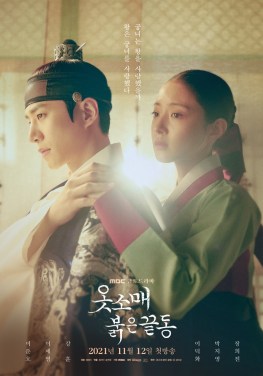
Korean Title: 옷소매 붉은 끝동
Aired in: 2021 (17 episodes)
Channel: MBC
Grade: 10/10
Actors: Lee Jun Ho and Lee Se Young
For more…


Lee Jun Ho:
– Good Manager
– Wok of Love
– Just Between Lovers
– Confession
Lee Se Young:
– The Crowned Clown
– Memorist
– Kairos
– Doctor John
Dramas based on true events:
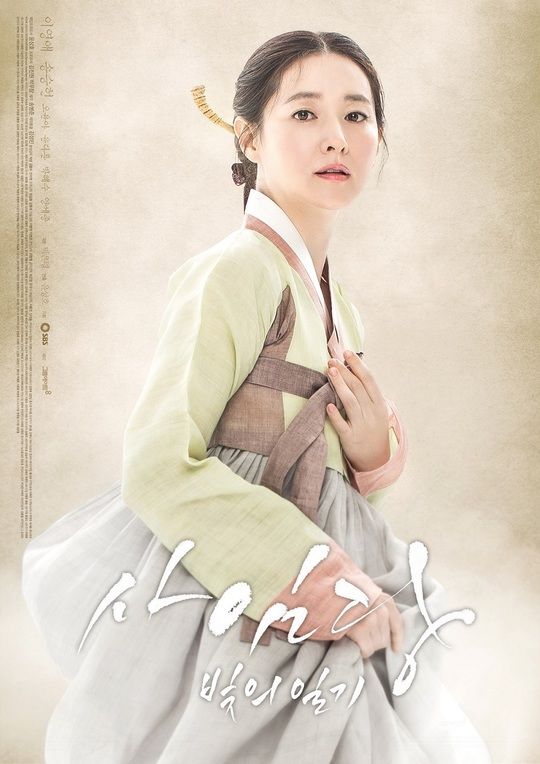
– Saimdang, Light’s Diary
Analysis
Synopsis
Set in the 18th century, the drama follows the romance between King Jeongjo and is royal Concubine Uibin Sung.
My Opinion (No Spoiler)
AMAZING! Historical dramas focus generally either too much on romance or on political schemes. But The Red Sleeve exceeds all possible expectations! There is romance indeed. Of course there are narratives related to succession (Yi San becomes King). Yet, the drama always manages to find a proper balance: never too much cheesiness, never too much plotting.
If you want to see a beautiful historical drama, with an amazing acting performance and the tale of two actual lovers who existed in real life, I can only recommend you jump right now on that drama!
It is a must-watch of 2021!
Analysis (Spoiler Alert)
GENERAL OVERVIEW
Title explained: The title The Red Sleeve actually refers to the color of court maids’ handbok, a.k.a. the sleeve (no kidding!). It signifies that the court maid is the King’s person/”propriety”. She belongs to the King and “works” for him.
Implicitly, the title already contains some main themes present in the drama: The connection between Sung Deok Im (Lee Se Young) and the Crown Prince Yi San (Lee Jun Ho), the bond of loyalty and later on love that unites them, as well as all the issues that arise from their condition (becoming a King, becoming a Royal Concubine or not, what to choose between love and freedom). It is an excellent first dive into the various problems that punctuate the entire drama.
A well-narrated “historical drama”: The Red Sleeve is a beautiful “historical drama”, understood under its primary sense: The story of real events and characters that follows the passing of life. Watching this drama, you will surely have the impression to read a book with several distinct chapters. Only that in that case these are chapters of life that depicts the deaths of people, the arrival of others, and the passing of years with its good and bad moments. If I had to sum up the storyline, I would say that the drama is made up of the following different periods:
Chapter 1 = Encounter as kids: a young Crown Prince and a naive court maid
Chapter 2 = King Yeongjo (Lee Deok Hwa): The feared and soft grandfather
Chapter 3 = The riot of the maids led by Head Court Lady Jo (Park Ji Young)
Chapter 4 = The ascension of King Jeongjo
Chapter 5 = The riot of Hong Duk Ro (Kang Hoon)
Chapter 6 = 3 years later: death of a friend and rise of Concubine Uibin Sung
Chapter 7 = The death of a lover: The King loses Deok Im
Chapter 8 = The peace era: Jeongjo, a wise and beloved King
Chapter 9 = Ruler’s death and lovers’ reunion
The fact that the drama has an accurate historical background strengthens the various emotions we experience throughout the episodes, as we can totally relate to the “tragic” love story in real life. Although some of it may have been romanticized in order to soften the brutality and harshness of some moments in the drama, I was really pleased to see that The Red Sleeve tried its best to stay close to the truth. They didn’t transform the love story into a happy ending, nor did they glamorize some behaviors, attitudes or relationships. They presented viewers with an accurate version of History with a subtle and poetic touch that gave its beauty to the drama.
The tragic, yet poetic ending: According to the historical sources, King Jeongjo elevated Sung Deok Im to the rank of Royal Consort on September 1782. They then welcomed a first child: Crown Prince Munhyo, who unfortunately died in 1786 at the age of three. Meanwhile, Uibin had already given birth in 1784 to another baby, a princess who died shortly after birth. When her son dies in 1786, she is pregnant with their third child. Yet, tragedy strikes and Uibin dies of liver cancer. Her unborn child dies with her.
In the end, King Jeongjo and Sung Deok Im only spent 4 years together. Meanwhile, the ruler spent 14 years “alone” until his death in 1800.
Despite the actual tragedy, the writers of The Red Sleeve took an original path to close their love story. They portrayed the deaths of, first the Crown Prince, and second Deok Im, with a certain realism. Screenwriters didn’t try to hide the pain, nor the emotional violence of the events. On the contrary, they used them as fuel to put forward King Jeongjo’s qualities, future reign and love for his lost family.
Although the drama could’ve stopped like that, The Red Sleeve still manages to provide us with a metaphorical happy ending for our two lovers. As demonstrated, being together in real life was not possible, but is still achievable in death. The last scenes of the drama, highlighting flowers at different stages of their blooms, convey the idea of a blooming love and future together in the afterlife with a lot of poetry and subtlety. Now that Yi San is not a ruler anymore, he can keep his promise to Deok Im and stay by her side forever. He can fully be hers, as just as she is his.
The beautiful direction and acting performance: There is a reason as to why the drama and its crew received so much praise and awards (e.g. at the 2021 MBC Awards ceremony, they received Best Screenplay, Best Couple, Best Actor, Best Actress, Best Drama, Best New Actor and Best Supporting Actress).
First, the story perfectly combines and balances a whole panel of emotions and historical accuracy. Second, the direction is flawless. Whether it’d be during action scenes showcasing a tiger, romance blooming in full nature or intimate scenes at court, nothing has been forgotten: Lights, colors, and cinematographic cuts. Third, Lee Jun Ho and Lee Se Young, respectively playing King Jeongjo/Yi San and Sung Deok Im, are at the top of their games. There is not a single scene in which their expressions or emotions are fake. They really displayed their talent in that drama! Both embodied with utmost perfection their character’s perspectives, obligations and desires. On top of that, they were really able to display a great chemistry together. Not to mention the numerous and amazing kiss scenes, that sincerely gave me butterflies. These two really made my heart flutter and break throughout the drama.
All in all, the acting performance of all actors and actresses was really relatable, believable and genuine.
The heartbreaking OST: To complete this general overview, I think it is also important to emphasize the importance of music in the drama. Lee Sun Hee’s OST “I’ll Leave You” already seems to forecast the end, while conveying at the same time sadness and hope.
DIVE INTO CHARACTERS
A dutiful King: Before entering into further details regarding the character displayed in the drama, I believe a quick presentation of King Jeongjo is in order. So, to give you a brief introduction of the actual historical figure: King Jeongjo, born Yi San, was the 22nd ruler of the Joseon Dynasty. He was born in 1752 and died in 1800. As seen in the drama, his father was Crown Prince Sado, who was put to death by his own father (Yi San’s grandfather) King Yeongjo. The reason lies with inner conflicts between father and son, deepened by Prince Sado’s mental illness.
After the death of Crown Prince Sado, Yi San was adopted by another clan in order to smooth his succession to the throne. Despite this strategic move, many at court rejected his position as future King and opposed King Yeongjo’s decision. In the end, Yi San managed to become King in 1776, after having been appointed regent by the end of King Yeongjo’s rule.
If we now analyze the familial structure and the various conflicts at court in the fictional version, I think it is quite true to what History tells us. During the first half of the drama, we clearly witness King Yeongjo’s struggle to protect his beloved grandson and put him on the throne, while punishing him somehow for his father’s mistakes. The other conflicts involving King Yeongjo’s daughter Princess Hwawan (Seo Hyo Rim) also occupy an important part of the storyline and lead to many hurdles on the Yi San’s road to the throne.
Once he had acceded the throne, King Jeongjo went through a tumultuous first few years of reign. He was almost assassinated by members of other clans, who staged a coup (Hong Duk Ro in the drama and his riot). This forced King Jeongjo to execute most of his relatives, who could potentially take over the throne. He also spent most of his life trying to clean his father’s name. Nevertheless, King Jeongjo has managed to engrave his name in History. Now known as Jeongjo the Great, it is said that he was a devoted King to his subjects. He tried to implement many new political and social policies throughout his reign for the well-being of the nation.
In all honesty, I think The Red Sleeve did an excellent job at portraying all the challenges (either personal or political) that King Jeongjo was confronted with. As explained in the drama, King Jeongjo, despite a certain number of opponents, succeeded in providing his subjects with a country in time of peace, going through reforms. Also, he accomplished his 3 main wishes (mentioned in the drama): water control, the building of Hwaseong Fortress (located in Suwon) and of course peace.
King Jeongjo is a man of principles, who believes in fairness and equality amongst his subjects (whether they’d be slaves or nobles). He is unbending and doesn’t make exceptions, which puts him several times in a difficult position towards Deok Im (for instance when one of her best maid friends has a relationship with another man, when it is forbidden). As a King and as an individual who has gone through opposition, rejection and unfair treatment, he understands the weight of the crown and assumes its responsibilities. Even if it means he has to sometimes appear cruel and cold. This is what happens for example with Hong Duk Ro, who foments a coup. The latter holds the King responsible for the death of his sister, who had become Royal Concubine and died at a young age. He thus decides to stand against Jeongjo and to stage a coup. Despite being a close friend, King Jeongjo had no other choice but to demote him and exile him outside the palace.
In the drama, it is clearly visible that King Jeongjo is the embodiment of duty. However, he doesn’t leave aside his genuine feelings for those he cares about (his mother, Sung Deok Im and his grandfather at some point). His soft side, his cold heart melted by Deok Im herself, are revealed in the intimacy. Only then are Yi San’s weaknesses revealed: From his trauma caused by both his father and grandfather to his profound devotion and affection towards the only woman he has ever truly loved.
Moreover, there is one important, if not crucial, aspect of King Jeongjo’s personality that needs to be addressed: His desire not to become like his grandfather, as a person and as a monarch. Indeed, Yi San is quite the opposite of his parent. The latter is an impulsive old man, when we discover him. He is easily swayed and manipulated, suffers from an inferiority complex (he was the child of a slave), is insecure and resorts to violence as a punishment. Finally, he has mainly been incapable of protecting those he loves. From that perspective, Yi San has grown up fearing to become like him and has evolved towards the exact opposite.
A “free” maid: Sung Deok Im is very similar to Yi San. In the drama, they meet when they are around 10 and immediately like each other. But it is only years later that their romance begins. Indeed, Deok Im joined the palace as a maid. It is later revealed in the drama that she owes her place to Crown Princess Hyebin (Kang Mal Geum) (Yi San’s mother), who rescued her and her brother. They are the children of one of Crown Prince Sado’s bodyguards, who was killed the same day as the Crown Prince. So, both Deok Im and Yi San come from the same background (in terms of familial tragedy) and meet pretty soon.
Their second encounter happens in the library in which Deok Im works and Yi San finds shelter. They bond at first over some teasing and later on develop feelings for each other. The fact that Sung Deok Im is full of wits and spirit, that she is brave and sometimes reckless (in her speech to the Crown Prince), devoted and loyal, is the reason why Yi San falls head over heels for her. Indeed, Sung Deok Im chooses to become the Crown Prince’s person, and her loyalty can never and is never once swayed by money or power. On top of that, Deok Im has a way with words. She is strong-minded and eloquent to the point that she also gains the favors of Yi San’s mother and the Queen Dowager, Queen Jungsoon (Jang Hee Jin).
Nevertheless, Sung Deok Im also knows perfectly what she wants and what she doesn’t. Even if it is clear that she reciprocates the King’s feelings, she refuses to admit them for fear of becoming his concubine (you have to kind of read between lines to understand how much they love each other). Indeed, Deok Im dreams of only one thing: Living her life the way she intends to. She doesn’t want to give up everything she has (her friends, family and freedom) out of love for the King. That’s why, Yi San and Deok Im’s romance is so complicated. Yi San naturally respects her choices and never appears to push her to get married. In the end, it is Sung Deok Im who bends and accepts the wedding, but it is with a heavy heart and a bittersweet taste. She is fully aware that this choice means there is no turning back for her. Her life will forever be different, as well as her relationship with the King and her friends.
The end of their fateful love story is even more tragic and heartbreaking when she asks the King to pass by her, if they were to meet again in their next lives. In her final moments, she indirectly confesses her love for the King (when he asks her if she has ever loved him), while asserting her desire to be free.
EXTENDING THE THEMES
Women at the palace and their conditions: Not only does The Red Sleeve depict with great panache the heartbreaking love story between King Jeongjo and Deok Im, but it also subtly describes women’s condition at that time. Indeed, all women (whether they’d be royals or simple maids) seem to be prisoners within the palace walls. They are unable to choose their own destiny and have to act upon the good will of their master.
As mentioned by the Queen Dowager herself, the palace is a prison, a golden cage for women, who are to remain inside. Once they step into the palace, and worse become part of the Royal family, they basically have to leave everything behind: their desires (they only are good to produce an heir), their friends and families (Deok Im for example leaves behind her friends due to their difference in status) and their own free will.
The palace is a solitary, boring and cruel place, the higher you climb the ladder. Indeed, when Sung Deok Im becomes a Royal Concubine, she technically gives herself to the King and become his possession. The reverse is however impossible to imagine: Yi San will never be entirely hers. She may have his heart, but his favor can change any time.
This difficult condition for women is actually emphasized in the drama by one essential event: The riot of the court maids. At some point in the story, Son Young Hee (Lee Eun Saem), who is Deok Im’s best friend, tells the tale of a secret organization made up of court maids. Their goal is simple: They play a hidden role in palace affairs and try to influence the politics by choosing themselves the King they wish to serve. The root of this organization is said to be the trauma experienced by many maids/fairies, who devoted themselves to a King. Later on, the latter betrayed them and had them all killed. Since then, court maids have decided that they would be the owners of their own fate by only supporting each other.
Under these circumstances, Court Lady Jo is revealed as the head of the organization. She tries to oust Yi San from his position as Crown Prince, asserting that her crazy father assassinated maids and hence he is not worthy of getting the crown. The riot eventually fails, but it remains a beautiful example of how women in the palace are trapped and how they try to control their lives and get their freedom back.
Friendship: The drama did an incredible job at describing what a true friendship should be like. Whether it’d be between Hong Duk Ro and Yi San, or Sung Deok Im and her 3 best friends; it seems as if characters are always willing to forgive, encourage, love and support each other in all circumstances.
The bonds all of them form in their childhood years is a sustainable one, that appears to be rather unbreakable. Even after death, the bond remains. That’s the case for example when Yi San learns about Duk Ro’s death. The King is crushed by the loss of his trusted friend and confident. His affection towards Duk Ro is visible several times in the drama. Yi San gives him multiple chances to come clean and to admit his evil deeds (he plotted treason), and refuses to execute him.
A similar bond unites Sung Deok Im to Son Young Hee, Bae Kyung Hee (Ha Yul Ri) and Kim Bok Yeon (Lee Min Ji). The four of them grew up together, went through difficult situations together as maids. They have lived together forever and value their companionship. Kyung Hee, Young Hee ad Bok Yeon are part of the reason why Deok Im is so reluctant to become a Royal Concubine. She doesn’t want to change in the eyes of her friends, nor change the nature of their friendship. Even in her final moments, she asks Court Lady Seo (Jang Hye Jin) to call upon them and not the King, so she can say her final goodbyes. That only is proof of the strength of their friendship. Finally, in the last scenes (14 years after Deok Im’s death) Kyung Hee is summoned by the King. He wants to reminisce moments with Deok Im and knows that Kyung Hee was her close friend. During their conversation, Kyung Hee confesses that Deok Im never really left her. She was always a part of herself, so she never truly felt lonely in the palace. Such a heartbreaking but genuine statement!
Written words, oral words and the unspoken: When the drama starts, Sung Deok Im is first discovered as someone who wants to be a writer. She loves to read, she transcribes books to earn some pocket money, she has good writing skills and knows how to use words at her advantage (eloquent speeches). She is full of wits and her love for words is what precipitates many events in the drama: King Yeongjo gifts her the former Royal Concubine’s book as a kid; she saves young Yi San by ripping a page out of a forbidden book; she reads to the Queen Dowager and acquires gradually her trust thanks to that; she meets the Prince in the library; she is chosen as his personal maids for her calligraphy skills, she finds the Document of Truth thanks to a tattooed letter on her shoulder, that leads to the coronation of Yi San as regent and future King, etc…
Books in the drama are a link between lovers. It is a red thread that connects them throughout their entire life, but even beyond. Years after Deok Im’s death, the King takes a look at her belongings among which books that remind him of her and his love for her.
As for the oral words, Sung Deok Im also has a talent when it comes to pleading. She has the ability to convince and persuade anyone: when she asks the delusional King Yeongjo to remember his past; when she pleads in favor of Yi San in front of the Queen Dowager; when she debates and defends her point of view with King Jeongjo, etc…
Whether they are spoken are written, words are crucial in the drama!
Finally, the drama also plays a lot on what is unspoken. But even if it is unsaid, it doesn’t mean that it doesn’t exist. For example, the obvious love between Sung Deok Im and King Jeongjo is never truly admitted orally by Deok Im. Yet, it is clearly visible in her actions (she saves his life multiples times), in her expressions and in her behavior towards him.
 Once Upon a Drama