Presentation

Korean Title: 한 사람만
Aired in: 2021-22 (16 episodes)
Channel: JTBC
Grade: 10/10
Actors: Ahn Ein Jin, Kim Kyung Nam, Joy and Kang Ye Won
For more…



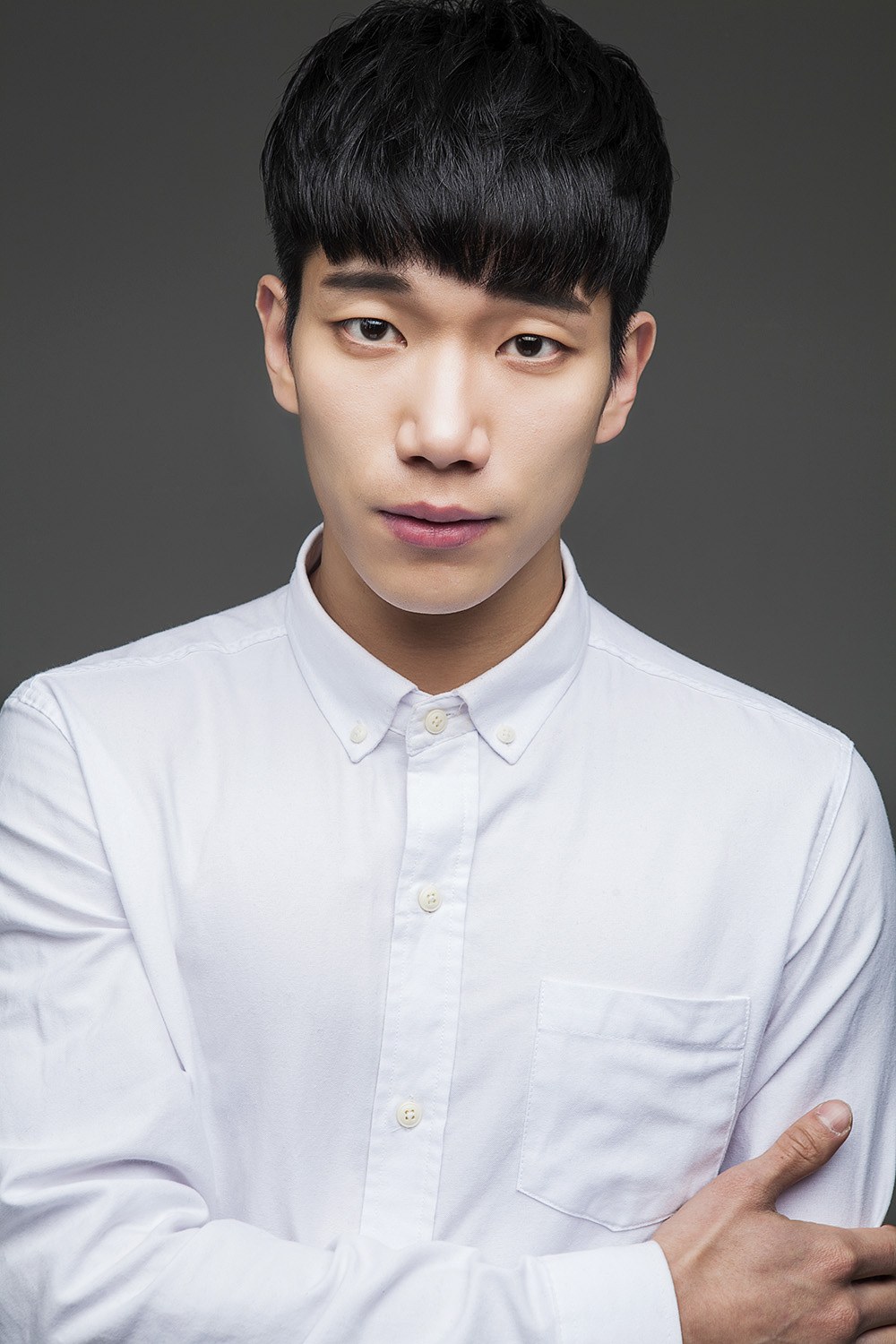
Ahn Eun Jin:
– War of Prosecutors
– More than Friends
– Strangers from Hell
– Hospital Playlist 1&2
Joy:
– The Great Seducer
– The Liar and His Lover
Kang Ye Won:
– The Thousandth Man
– Bad Guys
– Becky’s Back
– Man who dies to Live
Kim Kyung Nam:
– The King: The Eternal Monarch
– Where Stars Land
– Come and Hug Me
– Revolutionary Sisters
Analysis
Synopsis
Pyo In Sook is a young woman, who has struggled her entire life and learns she doesn’t have much time left. So, she goes to a hospice where she meets a lonely housewife called Kang Se Yeon and a popular influencer named Sung Mi Do. One day, the three of them get involved in a murder case. While chased by the police, In Sook meets Min Woo Cheon, another suspect.
My Opinion (No Spoiler)
I personally loved this drama! Although the topic is quite sad (characters have terminal illnesses), the story rather emphasizes the bright side of life, focusing on the positive rather than the negative.
The fact that the feel-good vibe is associated with an investigation adds to the freshness of the plot.
Finally, I have to admit that Ahn Eun Jin and Kim Kyung Nam make such a warm, cute and lovely couple!
If you are not afraid of shedding some tears, I highly recommend this original drama!
Analysis (Spoiler Alert)
Characters:
3 women, 3 stories, 3 personalities:
Pyo In Sook, from a gloomy and cold person to a bright and warm woman: From the get-go viewers are totally immersed in Pyo In Sook’s (Ahn Eun Jin) life and struggles. When she was a child, she was abandoned by her parents. Her mother had died and her father left her to be raised by her grandmother. She also experienced bullying from other kids with a more traditional familial structure. On top of that, she suffers from hearing impairment after she was thrown in the swimming pool by her 10-year-old peers, while having an ear infection.
Years later, Pyo In Sook now works as a body scrubber in a public bath. She appears to be quite cold and resigned and seems to have given up on a life that has only brought her disappointment and suffering up to now. She is used to being unlucky and lonely, refusing to connect out of fear of being betrayed by others. The only person she actually warms up to is her neighbor, a little girl called San Ah (Seo Yeon Woo).
San Ah finds comfort in In Sook, who tries to protect her from her drunkard father, who constantly abuses her and her mother. He even has in mind to kill his own daughter in order to get the insurance money.
Metaphorically, this little neighbor is a reflection of Pyo In Sook when she was her age. She sees how San Ah is afraid of living, how lonely and left aside she is. So she attempts to provide her with the safety she would have wanted when she was a kid.
As if Pyo In Sook’s suffering was not already enough, she discovers that she has a tumor in her brain. It is difficult to do surgery and if she doesn’t do anything, she thus only has a few months left to live. The female lead accepts the piece of news in a detached way. She doesn’t expect anything from life. Therefore, dying could be a good solution to put an end to her misery. In that state of mind, she decides to go to a hospice for women in order to spend her remaining time there.
But this place proves to be an eye-opener for Pyo In Sook and radically changes her personality and life. Indeed, she meets other sick women, who have chosen to live fully instead of just waiting for death. She also has two roommates: Kang Se Yeon (Kang Ye Won) and Sung Mi Do (Joy). Although living with these two is hard at first – due to personality differences – In Sook learns how to express her feelings, how to better communicate and how to connect with others to the point that they become real partners in crime and good friends.
Yet, the greatest life changer for In Sook is her lover: Min Woo Cheon (Kim Kyung Nam). The main leads have a peculiar story as they had actually already met many years ago. Indeed, In Sook saved Woo Cheon’s life. Then they separated but eventually reunite afterwards. They immediately connect and will stick together until the very end. Thanks to Woo Cheon’s presence, In Sook discovers love. She then manages to forgive her father, to communicate with her grandmother by expressing her gratitude for everything she sacrificed for her. She gradually lightens up and warms up to others. In a way, her life-or-death situation gives her life a meaning and Min Woo Cheon becomes a reason to stay alive.
In the end, In Sook accepts to do the surgery for the sake of her lover and family. The operation is successful, but she suffers from memory loss making it difficult for her to remember Min Woo Cheon. However, this doesn’t seem to be problematic for neither of the characters, as they would rather fall in love again and create new memories together than be separated forever. The last scene displays a third encounter between them, showing that they are soulmates meant to meet over and over again no matter the circumstances.
Kang Se Yeon, from an ill-treated and lonely housewife to a free and independent woman: Just like her roommate, Kang Se Yeon (Kang Ye Won) has not been spared by life. She appears as a quiet and lonely housewife, resigned and defeated. She suffers from sleepwalking due to stress. A state of mind we get to understand better when we are introduced with her husband. The latter is ungrateful and cruel towards her. He tramples on her all the time, accusing her of not liking his mother and of not having taken care of them both better. He is selfish and self-centered, unable to see his wife’s pain.
Se Yeon’s life, as we later know it, is quite unfortunate: she was in love with another woman, whom she decided to leave because of her mother’s prejudice, she was disrespected by her own husband who held her responsible for her two miscarriages and was forced to take care of her sick and violent mother-in-law, who would accuse her of trying to murder her.
Meeting Pyo In Sook and Sung Mi Do helps her transform as well. She learns that even though her remaining time is short, she can still live it free of everything, starting with her marriage. So, She asks for a divorce, while meeting her first love again – the woman she had to let go of. Now approaching the end, she decides to assume her love fully.
I have to say that her death is beautiful in the drama. Once she has freed herself from her chains and reconciled with people important to her (her mother, her now ex-husband, her mother-in-law and her lover), she dies peacefully at the beach surrounded by her infaillible friends of the hospice. While staring at the horizon and the green ray of light that pierces through the clouds, she closes her eyes and draws one last breath. She is serene and free, things that she couldn’t have throughout her existence.
Sung Mi Do, from a kid craving for love and attention to an asserted and self-loved woman: In her childhood, Mi Do was denied love and attention by her parents, who held her responsible for the death of her little brother. Indeed, one night she went to the beach with him. She climbed some rocks and left him behind just the time to check the road ahead. When she came back, her brother had fallen into the water and drowned. Since then, she felt remorse and guilt, doubled by that of her parents’, especially her mother’s.
While growing up, Mi Do has thus spent her life trying to be loved and accepted, but she never got it genuinely, without her fame or money. Instead, she connected with greedy and interested people, and had only fake relationships. Even her future husband Koo Ji Pyo (Han Kyu Won) uses her and her sickness as leverage for publicity.
Even if she seems selfish and self-centered, Mi Do turns out to be quite loyal. Somehow, her sickness enables her to meet true friends and to create the family she has never had. She also makes peace with herself by expressing her true feelings to her mother by the end of the drama.
Her death is the most poetic of the drama in my opinion. As she approaches the end, she reunites with her lost brother in a sort of awaken dream. This meeting is a way for her to alleviate her guilt, ask for forgiveness, and reconcile with herself.
Sisterhood and friendship: It is clear that these three women are actually quite similar despite their distinct personalities. They have all been wounded by life several times and led lonely lives. The fact that they are all about to die strengthens their connection long before they get involved in a murder case together.
Indeed, one night Pyo In Sook receives a call from her grandmother that San Ah is in danger. The little girl’s father is trying to hurt her. In Sook decides to leave the hospice to go help her neighbor. Pushed by Se Yeon – who is sleepwalking at that time – In Sook is accompanied by both her roommates. Under the pouring rain, In Sook hits San Ah’s father on the head with a golf club. She sees Min Woo Cheon the same night as he is also trying to save San Ah. They leave the crime scene thinking that the villain is dead. Later on we discover that he was just unconscious when they left.
The fact that they are forced to back each other up and to keep the secret makes the three women bond faster. They learn to trust each other and to protect one another. This drama does an excellent job at depicting sisterhood and friendship, proving that even in the most dire circumstances it can still thrive and triumph.
Min Woo Cheon, from a lone and empty wolf to a devoted lover: Like the three female leads, Woo Cheon is a wounded person who bears the weight of guilt. When he was younger, his parents tried to commit suicide by burning charcoal in their car. He miraculously survived thanks to Pyo In Sook’s intervention, who took his hand after having broken the car window.
After that, Woo Cheon had to deal with the death of a close friend, for which he was held accountable by the deceased’s mother. She prevented him from living a normal life. Indeed, as she was a wealthy and influential person, she continuously made sure that he couldn’t study anywhere nor find a job or make money. Min Woo Cheon thus lost his will to live. He became an empty shell. Afterwards, he was hired as a hitman, very well known in the business. This job is actually what helps him meet Pyo In Sook again, as he is hired to kill San Ah’s father.
Meeting Pyo In Sook radically changes his life too. It is a way for him to learn how to live again, he discovers love and refuses to let go of the hand that saved his life years ago. Thanks to In Sook he is also able to make peace with his past and to move on.
Atmosphere: The particularity of this drama relies on the fact that it combines two very different genres: The feel-good genre and the police genre. This mix gives it its original, fresh and innovative taste, allowing one to influence the other and reverse.
The witch hunt: The entire plot revolves around a murder in which the four main leads (In Sook, Woo Cheon, Mi Do and Se Yeon) get involved. Min Woo Cheon has indeed been hired to kill San Ah’s father and to turn his death into an accident. He doesn’t know the identity of the man who paid for the murder, which will later on lead to the accusation of the two lovers as culprits. It turns out that Mi Do’s fiancé, Koo Ji Pyo, is actually the one who abetted murder in order to conceal past misdeeds.
Unfortunately for the three friends, they act before Woo Cheon has time to disguise the murder. This plot twist is clearly problematic for the women of the hospice, yet it is the pillar on which the entire story stands. Thanks to that fateful, yet tragic encounter, Woo Cheon and In Sook start their romance, while she and her roommates start developing a strong bond.
Moreover, the persecution of the innocent couple by the police forces them to connect faster. They are somehow pushed at first to cooperate with each other, which strengthens their relationship afterwards. Running away allows them to get closer, express their feelings and discuss them, although they are not necessarily skilled at it.
The witch hunt also gives rhythm to the drama and serves as a mean to develop each character’s story such as Mi Do’s, Shin Tae Il’s, Koo Ji Pyo’s and Kang Ye Won’s. The open investigation is actually a clever way to dig deeper into each and everyone’s background and to give depth to all the characters. We get to understand why they act like they do and get a glimpse at their life story.
The poetic vibe: The drama does an excellent job at connecting our main leads In Sook and Woo Cheon, using minuscule yet crucial details for their relationship: the hand that connects them first, then the photos Min Woo Cheon sees on the wall at In Sook’s place, the trip to Venice, the teddy bear bought by Woo Cheon and saved from trash by In Sook’s grandmother, the bill on which In Sook writes that ends up at Woo Cheon’s feet… These are but a few red threads that give a special vibe to the drama, as if destiny had a role to play in their encounter(s).
Not to mention that the poetic vibe is obviously present in Mi Do’s and Se Yeon’s death!
The Green Ray: When newcomers arrive at the hospice, they and their roommates have the possibility to name their room after a movie. In In Sook and her friends’ case, they choose to call their room after the movie called The Green Ray.
Briefly, The Green Ray tells the story of Delphine, a lonely and lost woman, who ends up wandering around in several French cities after her vacation with her friends is canceled. During one of her trips, she hears about a solar phenomenon called the green ray that she gets to witness herself, accompanied by a man she has just met and feels attracted to.
There is an obvious link between our three main leads and the movie itself: for starters loneliness and the search of a purpose. Just like in the French movie, In Sook, Mi Do and Se Yeon are at a turning point in their lives. Not because they are about to die, but because they are experiencing lots of changes and making peace with themselves.
The link between Kang Se Yeon and the movie is even more visible by the time she dies. Just like Delphine in The Green Ray, she is able to see the actual phenomenon, while staring at the sun on a peaceful beach. As the sun goes down and the green ray appears, life comes to an end for Se Yeon. This alone is quite poetic!
What are the themes tackled?
Reflection on life and death: In the hospice, characters know that their time is now counted, which makes them reflect on everything they have lived so far. The hospice is a place to die, as much as a place to live, where you assess your existence and enjoy it to its fullest. There, you can get rid of regrets (or make sure you don’t have any when you go) and reconcile, forgive and forget, prepare your departure. There is a bright and positive view on existence showing that it is never too late: Se Yeon for instance forgives her mother for her past behavior, rekindles the flame with her ex-lover and makes peace with her husband; Mi Do forgives herself for her brother’s death; In Sook opens up to her grandmother and father, while loving Woo Cheon.
But there are naturally some darker sides and reflections involved in the story: Why do these good women have to die, when trash like San Ah’s father stay alive? Is it fine to kill these mean individuals considering all the bad they have spread? Who is going to remember us after we are dead, if we have no one to rely on from the get-go? Can a sick person be punished for someone’s murder instead of someone else, just because she is about to die?
Although good wins over evil, it is still important to keep in mind the balance established in the drama, proving that to every right there is a wrong and vice-versa.
Other themes:
Here are some other topics present in the drama, that are worth exploring:
Family ties: Whether it’d be between in-laws, a mother and her daughter, a daughter and her grandmother, a father and his daughter, or even strangers who become a family, the drama beautifully intertwines people together. It shows that every relationship has its ups and downs, but that what matters most is love and forgiveness.
Domestic abuse: San Ah’s family is the epitome of this configuration. Worse, her mother ends up killing her husband because she can’t stand being beaten up anymore. No one, not even the police, was able to save her from this dangerous man, so she had no other solution but to save herself with her own hands. Not only does the drama tackle domestic abuse, but it also displays the tragic consequences of it: An innocent woman forced to commit murder to defend herself, to pay for a crime she never would have committed, had the system been more present and helpful. Fortunately, San Ah’s mother receives the empathy from public opinion and is able to shorten her prison sentence thanks to attenuated circumstances.
Homosexuality: As mentioned earlier, Se Yeon loves women. When she was younger however, she didn’t have the occasion to come out of the closet. Her mother’s judgmental attitude playing a huge part in that. She was kind of forced to live a “normal” life (I insist on the quotation marks!), meaning that she got married to a man and tried to have children. But her past caught up with her. By the end of her life, she was finally accepted by her mother for who she is and whom she loves.
Saying goodbye: This is probably one of the most difficult, but also necessary thing to do in life: Saying goodbye to loved ones. Whether they are friends or family members, the pain remains excruciating. Only One Person is a beautiful ode to life that also advices viewers to prepare for the worst and to enjoy the best of life.
Ending: All in all the ending is quite realistic and satisfactory. Mi Do and Se Yeon have succumbed to their cancer, while In Sook got lucky for once in her life. She has a successful surgery and is given more time to live. Yet, she suffers from memory loss which makes her forget her love story with Min Woo Cheon. He is aware of that issue, but still goes to see her when he goes out of jail. No matter how many times they have to meet again, they will still fall in love. The last scene on the bridge is proof of this destiny. As In Sook advances, Woo Cheon arrives at her level. They both stare at each other, while In Sook seems to physically (probably) remember that she feels something for this stranger.
This ending allows for both characters to have a fresh start. They leave behind their past and suffering and start on a clean slate, even their love story.
Last words: “All humans die. The only difference is whether or not you know when you will die. Let’s try our best to live until then.”
 Once Upon a Drama