Presentation
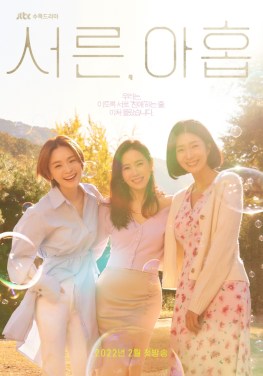
Korean Title: 서른, 아홉
Aired in: 2022 (12 episodes)
Channel: JTBC
Grade: 10/10
Actors: Son Ye Jin, Jeon Mi Do and Kim Ji Hyun
For more…
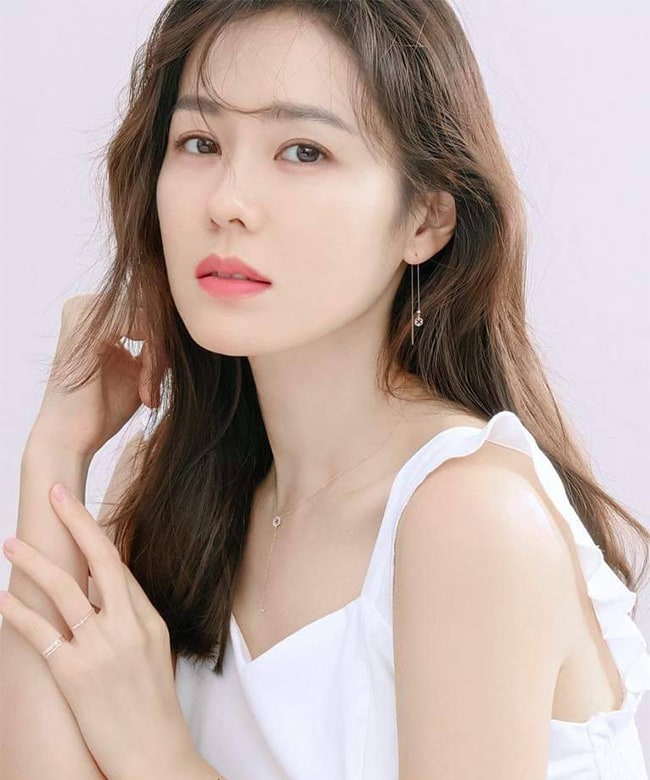

Son Ye Jin:
– Personal Taste
– Something in the Rain
– Crash Landing on You
– The Last Princess (movie)
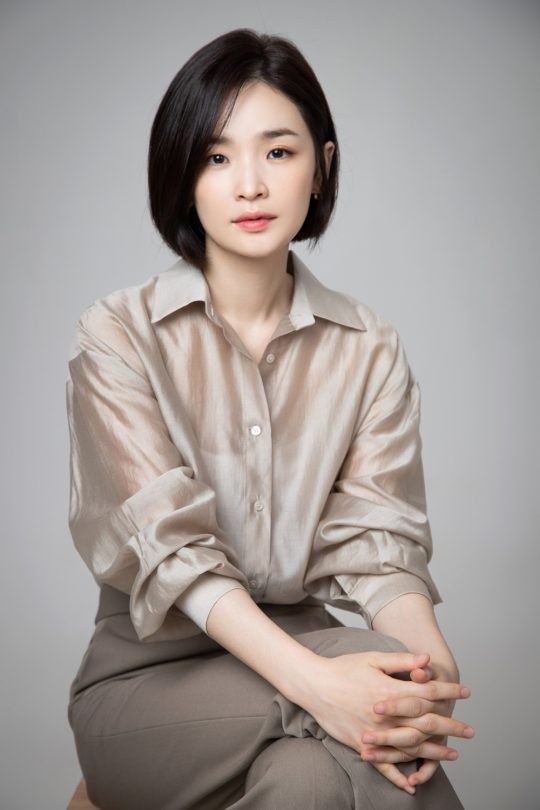
Jeon Mi Do:
– Mother
– Hospital Playlist
– Hospital Playlist 2
Kim Ji Hyun:
– The Smile has Left your Eyes
– Justice
– Backstreet Rookie
– Artificial City
Analysis
Synopsis
Cha Mi Jo, Jeong Chan Young and Jang Joo Hee have been friends since high school. Now aged 39, they navigate through life and its ups and downs, love and friendship.
My Opinion (No Spoiler)
Don’t get me wrong, Thirty-Nine broke my heart in each and every episode. I cried so much in the last one that I could’ve probably filled an entire bottle! Still, the tragic and melodramatic plot doesn’t take away the beauty of the story. The relationships are heartwarming, the events relatable and depicts life is a poetic, yet realistic way.
If you have good tissues, and you’re in for an emotional drive, put your seatbelt on and go!
Analysis (Spoiler Alert)
Thirty-Nine is a drama that englobes three main themes, each developed in a variety of subcategories. These themes are: family, life and death. Let’s dive into each and every one of them.
Family ties: It is clear that the drama displays the importance of family to help you overcome tough moments or share good ones with you. But the story defines family as a group of people we have chosen to be with, meaning that the bond here is more relevant than blood.
Hence a panel of different family configurations that all point out to the same idea: your real family is the one you consider as such.
Family by adoption – Being an orphan and adopted: Early on in the drama, viewers discover that Cha Mi Jo (Son Ye Jin) is adopted. Gradually, her background is explained. She was abandoned by her birth mother at a young age, then was first adopted by a family that dissolved the adoption. Finally, she found solace with the Chas, who took her as their own and raised her as their real daughter/sister. Therefore, Mi Jo has a very strong bond with both her parents and her sister Cha Mi Hyeon (Kang Mal Geum). Yet, she feels she has a debt towards them. Despite her love and affection, she can’t help but think that her birth mother has only been a burden to her adoptive family. Indeed, Lee Gyeong Seok (Seo Ji Young), Mi Jo’s biological mother, is a known scammer, who has been convicted several times for fraud. Worse, she has been extorting money from Mi Jo’s adoptive parents under the pretext that they should be grateful they can raise her daughter.
Naturally, Mi Jo’s is unaware of her mother’s identity and her bad deeds. She is sheltered and protected by all, whether it’d be her adoptive parents or her friend’s (Joo Hee) mother, who happens to know her birth mother. After 39 years of wondering who her mother may be and trying to understand the reason of her abandonment, Mi Jo finally gets to meet her. Her disappointment is as great as eye-opening for the main lead. She discovers that the woman in front of her, hungry for money, is everything but her mother. Her real mother is the one who protected, fed, raised and loved her throughout her life. Therefore, Mi Jo chooses to cut ties with her birth mother, making her understand that she (and her real family) won’t fall prey to her blackmail anymore.
This is a crucial moment for Mi Jo, as she finally gets rid of her guilt and is able to make peace with her past. The end of that chapter of her life is a stepping stone in her future’s happiness. Better, she is able to give the same amount of love she received from her adoptive family by adopting herself a young kid from the orphanage she visits. This is a beautiful moment that shows that familial love is not a question of blood, but rather of bond.
Unlike Mi Jo, the second orphan of the drama has been suffering from her relationship with her adoptive family. Indeed, Mi Jo’s boyfriend, Kim Seon Woo (Yeon Woo Jin), happens to have an adopted sister Kim So Won (Ahn So Hee). Unfortunately for her, her adoptive father rejected her completely after her mother’s passing. So, she fled from the US to South Korea, put an end to a brilliant career as a pianist and cut ties with her brother. Hoping to mend the relationship, Seon Woo flies to Korea and settles there. He ends ups becoming a dermatologist at Mi Jo’s clinic and then, the love story writes itself.
Despite his efforts, Seon Woo is unable to communicate with So Won. He loves her and sees her as his one and only sister. He refuses to lose her and even stands up to his father to defend her. He wants nothing more than his sister’s happiness. However, So Won doesn’t see things that way. Being rejected (again) by her adoptive father is hurtful and brings back bad memories. One day, her father even tells her that she would be nothing without him and his money. For example, she wouldn’t have become a pianist, had it not been for the tuition fees he paid. So Won feels pressured, confused, hurt and lost. More than that, she feels extremely lonely. She has nothing to hold on to, nor anyone. Because of her guilt, she chooses self-destruction, working as an hostess for instance. I actually think that So Won’s behavior is a cry for attention. She wants someone to love her and rescue her, who is not her brother, as she immediately associates him with her adoptive father.
In those circumstances, it is Mi Jo’s presence that enables change to happen. Being an orphan herself, Mi Jo can relate to So Won and vice-versa. The doctor is able to convince So Won that her gift as a pianist has nothing to do with money, but everything to do with her own skills and talent. Her sweet attitude and comforting speech allow So Won to shift her perspective. At the end, So Won decides to go back to her passion and her music, while accepting with open arms Seon Woo’s brotherly love. Moreover, Mi Jo also confronts Seon Woo’s father, telling him that she loves his son and appreciates his daughter and that it is not her fault she is an orphan. Yet, that doesn’t make her a bad person. This truthful discussion sways Seon Woo’s father, who seems to review his opinions at the end.
These two situations (unconditional love from the one side, and rejection from the other side, from the adoptive family) already showcase, with a lot of subtlety, the power of love and family. They show how close unrelated siblings can turn out to be, how affectionate and equal adoptive parents can treat their new kid, how the responsibility of a child should be assumed until the end and how a parent by blood is not by definition a good parent.
Family by choice – Creating your own family: Outside this close family core, Mi Jo has also woven a web of support around her. When she in high school, she decided to go look for her birth mother. She only had the address of a small restaurant. So, she went to pay a visit. In the subway, she met another young girl Jeong Chan Young (Jeon Mi Do). They immediately liked each other and went to the restaurant together. There, they met Jang Joo Hee (Kim Ji Hyun), another high school student. Since then, they became inseparable. Each has integrated the others’ own family, to the point that they call their best friends’ parents ‘Mom’ and ‘Dad’.
The trio embodies at the same time friendship, sisterhood and entirely new type of family. For 20 years, they have experimented everything together, gone through the ups and downs of life, break-ups, disease, etc… Like 3 siblings of the same cluster, they have lived it all!
Family by marriage: Interestingly, our three main leads, Mi Jo, Chan Young and Joo Hee, are at different stages of love relationships. One of the greatest asset of the drama is that it explores many different configurations, the same way life is. Let’s see with examples:
Mi Jo and Seon Woo: Mi Jo and Seon Woo probably have the most ordinary love relationship in the drama. They are around the same age, have the same social status (they are dermatologists) and come from wealthy families. Moreover, they get attached and form a couple quite early on in the drama. The only obstacle that clouds their path is the fact that Mi Jo is adopted. Yet, this doesn’t take too much room in the intrigue and serves rather as a red thread, accompanying Mi Jo’s transformation. All in all, they are a happy pair and intend to get married, as confirmed by the last episode. In that matter, the characters illustrate a rather normal relationship.
Joo Hee and Hyeong Jun: Moving on to the second relationship, that of Joo Hee and Park Hyeong Jun (Lee Tae Hwan), it is clear that configuration starts to prove more atypical. Indeed, Joo Hee is older (by some years) than Hyeong Jun. To complicate matters, Hyeong Jun is also already in a relationship, when he meets Joo Hee. He is the new chef and owner of a restaurant called Chinatown, that Joo Hee visits often because it is in her neighborhood. Rapidly, the place because a hide-out for the trio.
Joo Hee and Hyeong Jun’s relationship is slow-placed, but built on trust, connection and mutual support. When Hyeong Jun puts an end to his former love story, Joo Hee comforts him and stands by his side. Both develop feelings for each other, without ever openly talking about them. In the end, Joo Hee and Hyeong Jun get closer, as Joo Hee is hired at his restaurant as a part-timer. By the end of the drama, they have both found solace in each other and comfort in their relationship. The plot even points out at a future engagement, following Mi Jo and Seon Woo’s wedding.
Chan Young and Jin Seok: This couple is surely the most controversial one. Many viewers criticized the fact that the drama was glamorizing the affair between these characters. Even Mi Jo herself raised concerns regarding the status of that relationship, definitely located in a grey area!
However, it is not entirely true that Kim Jin Seok (Lee Mu Saeng) and Chan Young are having an affair. What transpires in the intrigue are the following elements: Jin Seok met Chan Young in college. They fell madly in love but split up when Jin Seok was in the US. There, he met another woman, Kang Sun Joo (Song Min Ji). She fell in love with him and trapped him into marrying her by telling him that she was pregnant with his kid. Assuming his responsibilities rather than out of love, Jin Seok conceded to the marriage. Only 4 years later does he discover that he is not the biological father of his son. Still, he stayed married to protect him. This situation joins that previously described regarding family ties, and mostly the fact that a family is not made only by blood.
Along the years, Jin Seok and Chan Young stayed in touch. Moreover, it is clearly emphasized that they would have gotten together, if Sun Joo had not been pregnant. One thing leading to another, they were kind of forced to stay away from each other. So instead, they became very close friends. After Jin Seok’s wedding, he and Chan Young never got involved otherwise than in words or by being there for the other (so no sex!). They somehow missed their chance at happiness, but eventually accepted it with resignation.
It is only when Jin Seok discovers than Chan Young is sick that he decides to finally be true to himself and his feelings. He asks for a divorce and moves in with Chan Young to be with the one he loves until the very end.
Jin Seok and Chan Young’s relationship leaves you with a bittersweet taste. You realize that they could’ve spent so much time together, in love, if they had admitted sooner their feelings. It is also a great lesson to take away: Don’t miss the opportunity to be with those you love because life is short. A message that Jin Seok understands by being with Chan Young during her last 6 months of life.
Life, realistically depicted: Now that we have explored relationships and ties between people, it is time to take a closer look at the life events displayed in the drama. Indeed, the realistic aspect of the plot makes it easier for viewers to relate and identify with their own situations. Whether it’d be marriage or divorce (Jin Seok for example), starting out anew (So Won) or chasing after your dreams (Chan Young), Thirty-Nine is a feel-good ode to life that encourages you to dare and to act. After all, life is full of surprises!
Three characters show that you can always change paths and be happy down the road.
Hyeong Jun – Personal happiness over prestige: Hyeong Jun is the perfect example that money and fame don’t always bring happiness. After a successful career as a chef, he quit his job at a five-star hotel. Though in a relationship at that time, Hyeong Jun is not at all supported in his decision by his girlfriend. On the contrary, she criticizes him, as well as resents him for not trying to get his reputation back, when the opportunity presents itself. She doesn’t understand why he doesn’t want to follow her desires. She is even ashamed to tell her friends that her boyfriend now works in an insignificant neighborhood restaurant. This behavior and lack of understanding from Hyeong Jun’s girlfriend precipitate the end of the relationship.
Indeed, the chef refuses to sacrifice his happiness and comfort for some money and fame. He insists on the fact that he is perfectly fine being an unknown chef and that he has finally found his place. He will no longer follow his girlfriend’s orders and if she can’t understand that, it is better to end things here.
In the end, this choice is an excellent one for Hyeong Jun, who meets Joo Hee and her group of friends there.
Joo Hee – Finding your path: Jang Joo Hee seems to be a fragile and vulnerable woman, but she also can be quite fierce and determined, when she sets her own on something. At the beginning of the story, she works as a sales manager for skincare products in a shopping mall. She has been doing that job for years and has gone through all kinds of humiliation. Until one day, she decides she has had enough. The trigger is nothing else than learning that her best friend is going to die. This news is an electroshock for Joo Hee, who realizes that life can end anytime, so she’d better fill in with happy moments. After a period of reflection, Joo Hee finds a new purpose. She opens up a nail art shop right in front of Hyeong Jun’s restaurant.
Chan Young – fulfilling your dreams: Chan Young has always dreamed of becoming an actress. But after several years of trying, she gave up and became an acting coach instead. Just like for most characters in the drama, the news of her upcoming death works as an eye-opener. It is her last chance to fulfill her dream. So, she gives her all. She goes to an audition and gets the part. Months after her death, the movie is finally released in cinemas, showing that despite her being gone, she still lives somewhere (on screen and in her entourage’s heart). She is the epitome of resilience, suffering through her disease with dignity and finishing her life with panache.
Nature, the passing of seasons and the start of a new chapter: Thirty-Nine is a very poetic drama. In the sense that it uses every detail at its disposal to shed light on the meaning of life.
It is winter when Chan Young is diagnosed with pancreatic cancer stage 4. She only has a few months left to live, but intends to spend her remaining time living, rather than dying in a hospital room. The climate becomes as sad, cold and tough as the story. Until Christmas, all characters try to take the news as good as possible. They cry, think it unfair, are in pain, but eventually resolve themselves to accompany Chan Young on her last journey with their head held high.
Slowly, the pain of the beginning leaves room to a renewal of life and a underlying anguish, just like winter turns into spring. On one spring night Chan Young dies. The rest of the characters mourn and try to move on. It is only in the last scene of the drama, when winter takes its place again, that it seems they all have reached a sort of acceptance state. It doesn’t mean they don’t miss Chan Young, it just means they are now able to accept her absence.
The passing of the seasons is symbolic for the turning of the new life chapter. Joo Hee, Mi Jo and Jin Seok say goodbye to a dear friend and 20 years of friendship, but they are also willing to open up for new adventures (Mi Jo’s wedding for example, or Joo Hee’s new career).
The anatomy of a clean death: Although the name of that part may seem unexpected, many elements in the drama actually comforted me, despite knowing that Chan Young was going to die. Indeed, the drama aims at spreading love, light and life. It doesn’t deliver a gloomy, dark and painful expectation of death. On the contrary, the plot focuses on the bright side.
Preparing your departure: For example, Chan Young is diagnosed with pancreatic cancer at the age of 39. It is very young and she is crushed by the news. One might think that cancer is a terrible disease to die with and it is. The treatment, the pain, the psychological trauma and the certainty that your dear one will die in the end, are no walk in the park. Nevertheless, this is not the vision the drama describes. On the contrary, it shows that this small amount of time given can also be of use. Chan Young is given a chance, despite the horror of the situation, to prepare in details her departure.
Once after the other, Mi Jo, Joo Hee, Jin Seok, Chan Young’s parents and every character is informed. Still, the death is not brutal, nor imminent, so it leaves some time to mentally accept the disappearance of Chan Young.
Chan Young can rekindle the flame with Jin Seok, the latter has enough time to divorce his wife and focus on his true love. Chan Young’s parents are able to enjoy life with their daughter more than ever, Chan Young manages to become an actual actress and to fulfill the 2 missions she had given herself, when she heard about her sickness: Finding Mi Jo’s birth mother and finding Joo Hee a boyfriend. Thankfully, by the time she dies, all her things are in order. Her office is empty and sold, her apartment is taken care of by her lover, her parents’ restaurant is renovated, she has prepared a cake for her mother’s next birthday, she has informed her friends of her last wishes and even recorded a video destined to Mi Jo, for when things are too hard to handle after she is gone.
From that point of view, it seems like Chan Young leaves peacefully, after having put her entire life in order. When she dies, it is without worries, with no regrets and free of mind. On top of that, her funeral is already well prepared, as she has a picture and a spot at the columbarium.
Even if the announcement of her sickness and then death is tragic, everyone is given enough time to prepare for her departure. This simple fact alleviates a little the pain.
Quality over quantity: Chan Young is adamant throughout the entire drama. She refuses to receive treatment (she only has less than 1% survival rate). Rather than chasing a wild dream and spending her remaining time in a hospital, she decides to re-focus her entire energy on enjoying life. She wants to become the “happiest terminally ill patient”. So, she chooses quality of life rather than quantity of life. She doesn’t want to sacrifice 6 months of joy with her family for only one more month of life. Unlike Joo Hee’s mother, who also had a cancer but survived, her chances are to slim for her to take a gamble.
Her friends and family have all understood that. Therefore, they try hard to align with her wishes. The most beautiful moment of the drama is surely, in my opinion, the brunch. Mi Jo is given a list of people Chan Young wants to have at her funeral. Instead of waiting for that day to come, Mi Jo decides to organize a surprise event. She informs everyone and throws a brunch party, so that Chan Young can say her last goodbyes to those she holds dear. Once again, a beautiful way to tie some loose ends.
Mi Jo, Chan Young and Joo Hee – sisters beyond death: Obviously, these three were meant to be. The intensity of their bond is amazing, especially the one between Mi Jo and Chan Young. Joo Hee knows far too well that she can’t compete, but she is not jealous of it.
Both Chan Young and Mi Jo love each other as friends, sisters and soulmates. They know each other better than they know themselves. That’s the reason why Chan Young goes to greater length to help Mi Jo grieving her death.
One of these besties may be gone, but she still lives in the others’ heart and memories. She is still part of the group, though not physically here to interact. “Friends until the end“, that is what they are.
Atmosphere: The drama is at the same time poetic and emotional. Chan Young’s death and the emotional tsunami that goes with it slowly develop until they reach a climax in the last episode. The tension explodes for characters, as much as for viewers, who now can relieve their anguish and move on.
Just like nature, that we mentioned previously, music connects people together. It has an essential place in Mi Jo’s personal development. As a kid, she discovers Rachmaninoff at her adoptive parents’ house. Thanks to that she starts talking. Then, she meets Seon Woo at a Rachmaninoff’s concert, assuring her that she can trust him. It is a soothing melody for Mi Jo, that carries her through her whole life. Flowers, like peonies, participate to this environment, and take part of the overall atmosphere.
All of that is supported by a brilliant acting performance, making this emotional drama heartwarming despite the loss.
 Once Upon a Drama