Presentation

Korean Title: 히어로는 아닙니다만
Aired in: 2024 (12 episodes)
Channel: JTBC
Grade: 10/10
Actors: Jang Ki Yong & Chun Woo Hee
For more…


Jang Ki Yong:
– Come and Hug Me
– Kill It
– Search WWW
– My Roommate is a Gumiho
Chun Woo Hee:
– Argon
– Be Melodramatic
– Delightfully Deceitful
– The 8 Show
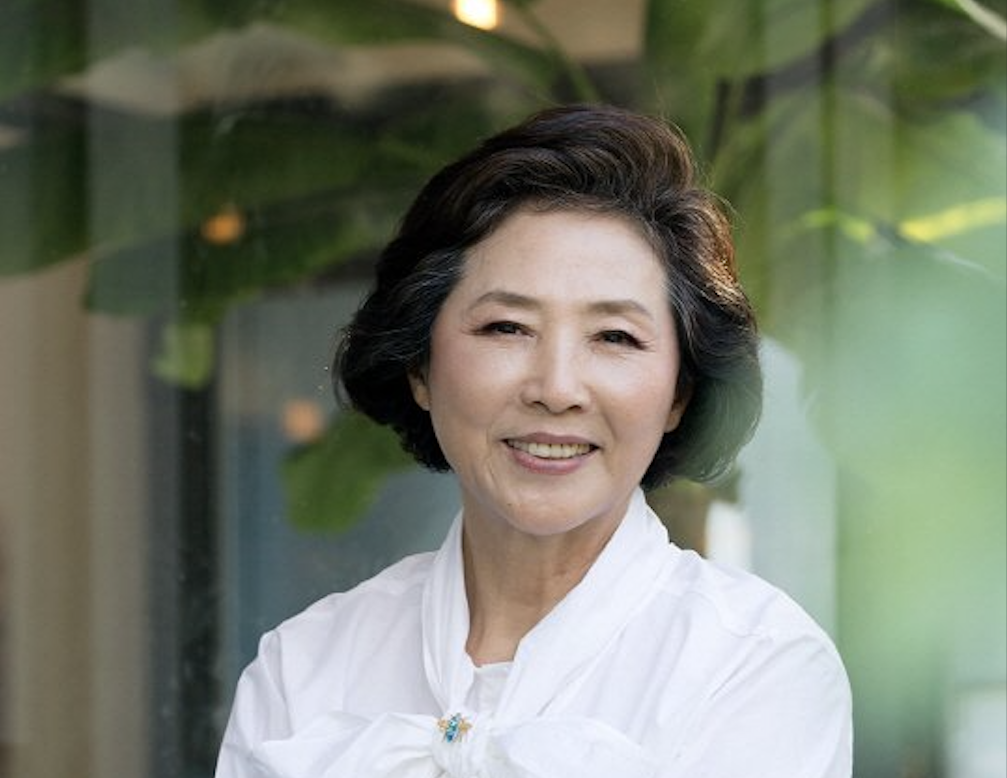
Ko Doo Shim:
– Dear My Friends
– Our Gab Soon
– Our Blues
– Curtain Call
Overview
Synopsis: Bok Gwi Joo has a superpower that allows him to travel back in time to happy moments of his life. But he can’t change the past. His family members also have their own superpower, but they all start losing them due to modern time issues. One day, he meets Do Da Hae. She brings about change to the family.
My Opinion (No Spoiler): I loved this drama! It’s been a long time since I’ve binge-watched a drama, but this one made me want to click the next button constantly. First of all, the cast is stellar (Jang Ki Yong, Chun Woo Hee, Ryu Abel, Ko Du Shim, Claudia Kim, Choi Roy, Park So Yi to name a few). Second, the plot is fresh and original. There have been dramas on people with superpowers before, but this show linked it with societal issues, while using them to give structure and pace to the story and relationships. From beginning to end, past, present and future were cleverly connected. And the ending is just chef’s kiss; a perfect wrap up to the overall narrative. On top of that, I would also add that the drama tackles a lot of interesting topics (grief, friendship, self-acceptance, family…) and shares valuable lessons and takes on life. Finally, I could not talk about this drama without mentioning the romance (or romances should I say), because the leads’ was beautiful, but I Na’s was just the cutest! In a nutshell, 100% recommended, The Atypical Family is amazing, and absolutely atypical for its own good – even the music is unordinary.
Analysis
- Superpowers in a diseased society
Guilt, the ‘super-disease’ at the center of it all - Who’s the atypical family
- Key lessons to take away
You’re your greatest enemy
The future is a matter of interpretations
You’re the master of your destiny - Important themes and values
Family
Parenthood
Friendship
Grief
Body acceptance and self-love
Self-confidence, self-esteem and self-assertion - A romance between past, present and future
A story born through fire
From darkness to colors
A life-long connection - Side romances
Toxic – Dong Hee and Ji Han
Cute – I Na and Jun Woo
Unexpected – Dong Hee and Da Hae’s uncle - Cinematography and music
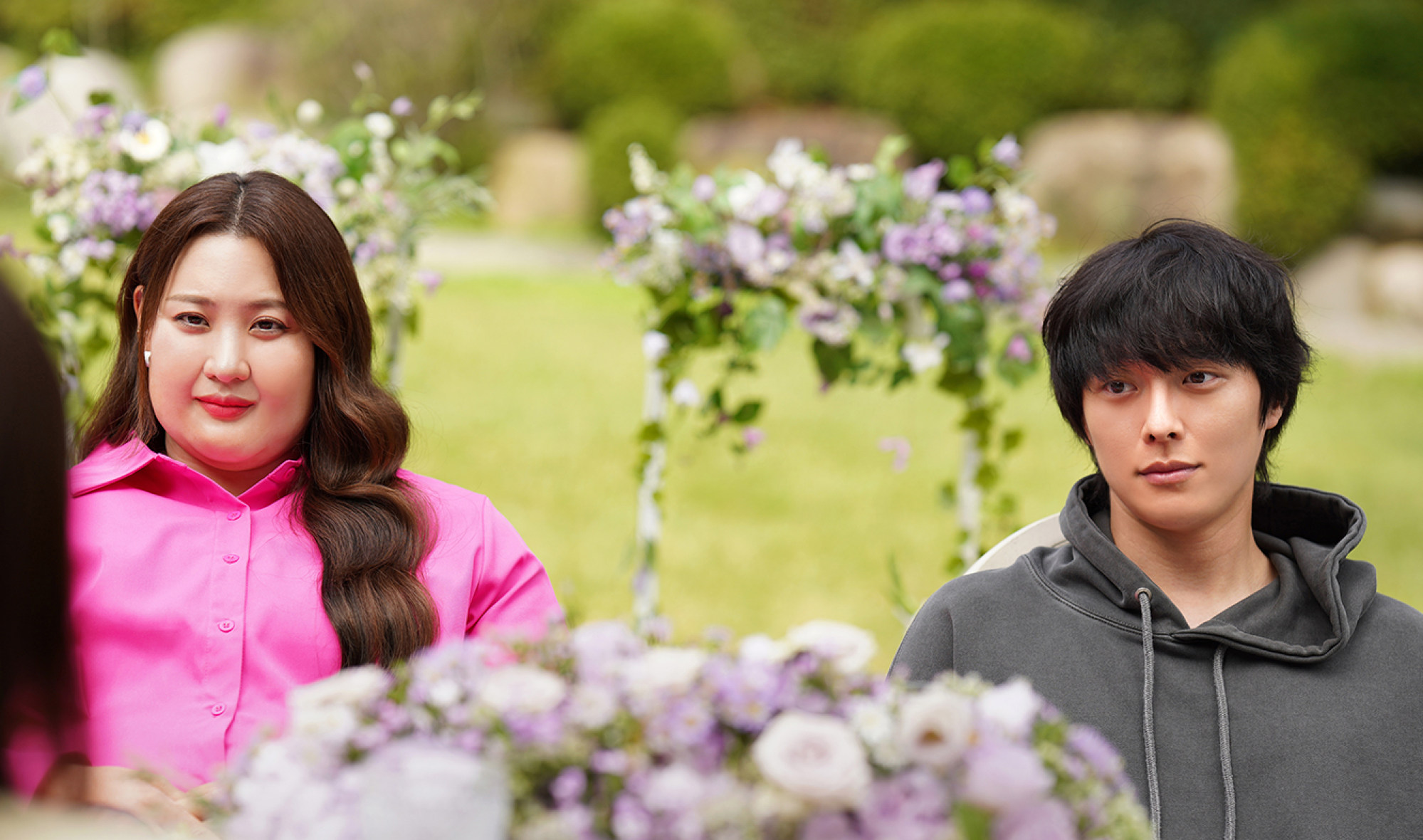
Superpowers in a diseased society: The Bok Family comes from a long line of ‘super-people’. Their ancestors before them had super-abilities too and learned how to live with them in each of their respective era. In this day and time, the family consists of: Bok Man Heum (Ko Du Shim) who dreams of the future, Bok Dong Hee (Claudia Kim) who can fly, Bok Gwi Joo (Jang Ki Yong) who can travel to his happiest time in the past and Bok I Na (Park So Yi) who can read people’s thoughts. Although it seems like a blessing to have these powers, the Bok Family suffers more because of them. Each is hit by a societal disease that weakens their power or worse, makes it entirely disappear. The mother has insomnia. The eldest daughter can’t fly because she put on a lot of weight. The son is grieving and going through depression, which hinders him from making good memories to travel back too. And the granddaughter is a shy loner at school who’s socially awkward and is afraid of what people would think of her. That being said, the powers that brought them fortune and happiness over the years are now destroying them from within. Or so they think.
Guilt, the ‘super-disease’ at the center of it all: Considering the opening plot of the drama (the Bok Family is looking for a way to cure their diseases and retrieve their abilities to their fullest), I found it very clever to link each character with a societal disease. Indeed, many people in modern day societies suffer from insomnia (due to stress for example), depression (which can be even stronger after a loss), social phobia, obesity, etc… Yet, if we dig deeper these clinical diseases all converge towards one main topic: Guilt. In reality, if you live with one of these challenges, it’s often because there’s another insidious root behind the surface. I’m not generalizing of course, but I think guilt is a red thread in the drama.
Man Heum fears her dreams and guilt-trips herself whenever something bad happens. Her own anxiety and anguish, combined with her certainty that the future is set in stone, make it impossible for her to sleep and dream.
In Dong Hee’s case, she feels responsible for an accident that occurred to one of her model peers. This guilt ate her away, shattering her self-confidence and making her eat as a way to compensate.
Bok Gwi Joo obviously feels responsible for the death of his wife. As he was dwelling on the past and trying to save his firefighter friends from a grave accident, he forgot to live in the present. This led to an unwanted back-and-forth between past and present, and to his disappearance right when his wife and daughter got into an accident. Not only was he feeling helpless for not being able to protect his team, but he added the guilt of not being able to protect his wife on top.
As for I Na, guilt is also a reason why she refuses to accept and use her power. She was in the car with her mother right before the accident. At that time, she heard her mother’s thoughts and told her about it. Her mother was in total disbelief and thus stopped paying attention to the road. These 2 seconds of carelessness resulted in the mother’s death, the daughter’s trauma and the father’s depression. All the roads lead to guilt. So, the right therapy for this family is to overcome their guilt. They need to accept that some events are just bound to happen, they have no control over it. Meanwhile, they need to enjoy the rest such as their family, their love, and thrive for a better, happier future.
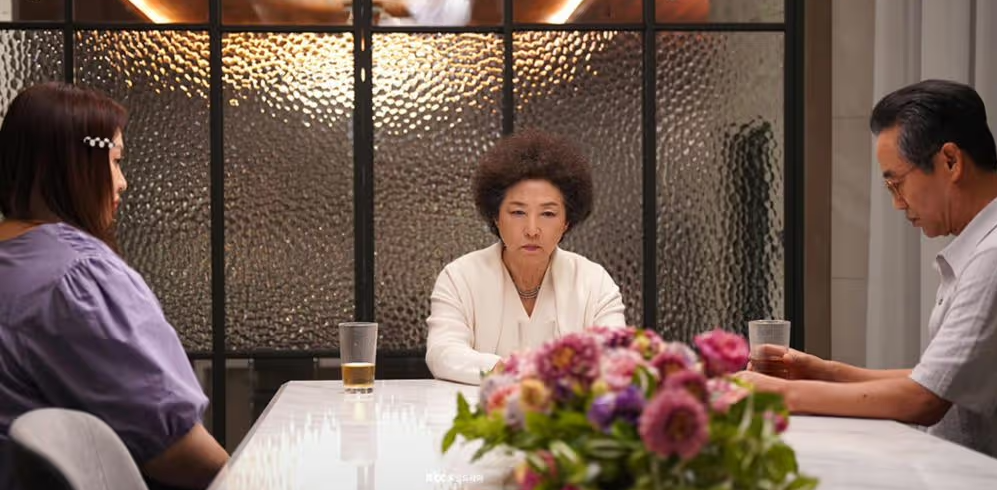
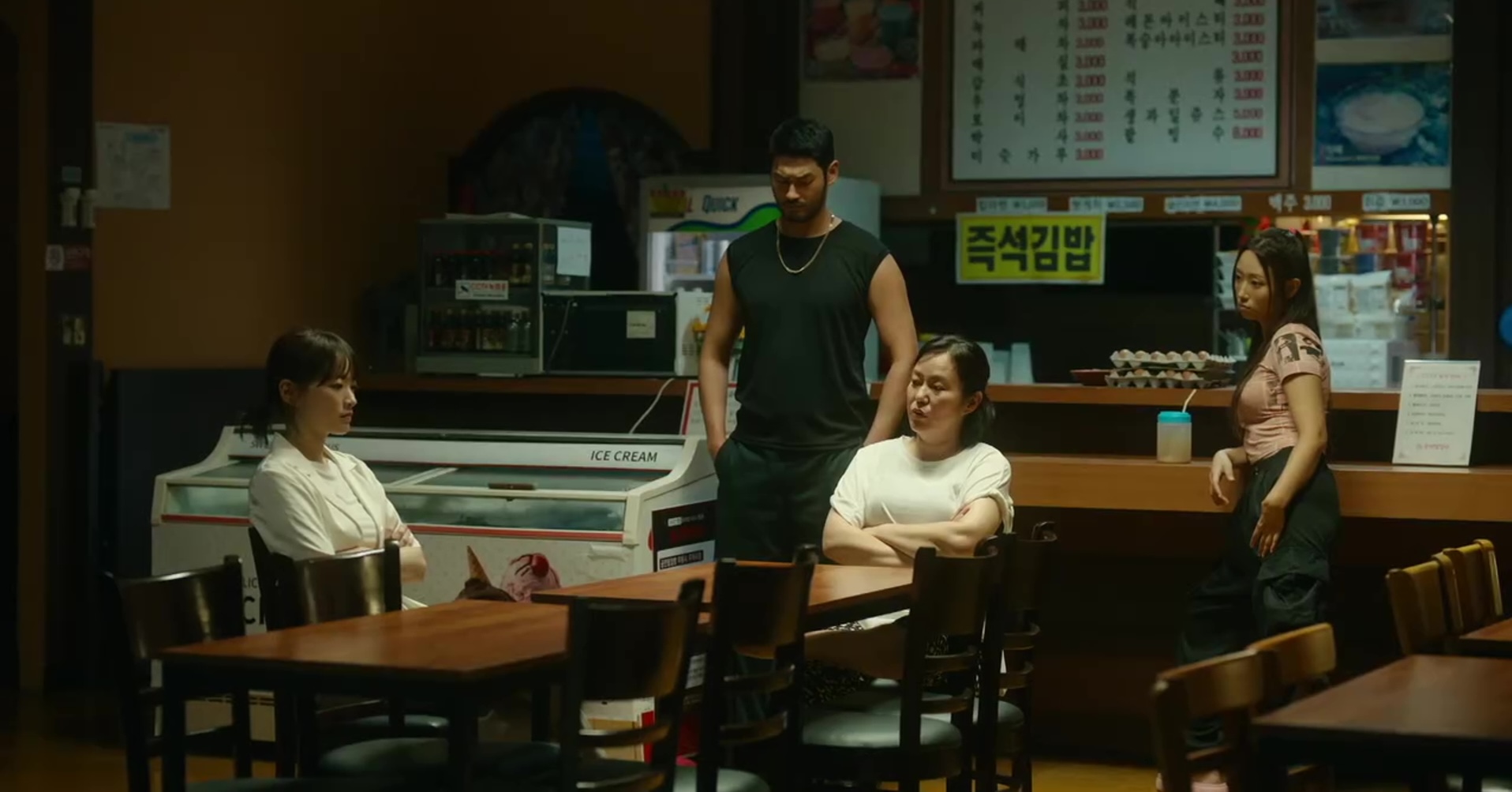
Who’s the atypical family? The more I watched the drama, the more I wondered who was the real atypical family. Although Gwi Joo’s seems to be the right answer, the dynamics between the members remain that of a real family. Parents care for their children and want to protect them, siblings are in a love-hate relationship, but would move mountains to help each other. Love and affection connect them all. Even if they have superpowers, the Bok Family can be considered as a ‘typical’, ordinary one from that perspective. Now if you take a look at Do Da Hae’s (Chun Woo Hee), that’s when you can actually start digging a little deeper. Da Hae lost her parents early on in life. In high school, she became an orphan, crumbling under debts, and harassed by loan sharks. One of them, Baek Il Hong (Kim Keum Soon), refused to take pity on her. She offered her to work for her as a fraudster in order to pay her debts. Once she finishes reimbursing the money, she would be free. Apart from Il Hong and Da Hae, there are two other family members worth mentioning: Il Hong’s ‘younger brother’, Noh Hyeong Tae (Roy), and her other daughter Grace Kang (Ryu Abel). If you take a closer look at the family names, it’s clear that none of them are related with each other. Still, they ended up together and gathered their forces to scam others. Money, and not love, seems to link the family. Moreover, trust doesn’t seem to be part of their vocabulary. Da Hae dislikes Il Hong who uses her to her advantage, she feels like her uncle is her adopted mother’s minion and her sister is yet another burden to live with. In a sense, they are the atypical family, pretending to be a loving one in order to extort money from others and benefit from Da Hae’s marriages. Nevertheless, this dynamic is bound to change when push comes to shove. Her encounter with Gwi Joo will not only change his and his family’s lives, but also hers.
Key lessons to take away: Apart from the usual romance and melodramatic vibes you find in this kind of dramas, The Atypical Family is actually filled with key lessons to take away and to apply in your day-to-day life. Below are the most important ones in my opinion.
You are your greatest enemy: We will never repeat it enough: there’s no greater enemy than yourself. You can have the best abilities on the planet, be endowed with great talent, meet the best opportunities in the world, you will always fail if you don’t believe in yourself. And that’s something that each member of the family learns the hard way. Believing in yourself reveals your potential and opens the door of success. But if you’re unable to trust yourself, no one will. In the drama, Dong Hee’s and Gwi Joo’s experiences are the best depiction of that mindset. The eldest is convinced that her weight is the reason she can’t fly anymore. Every time she tries, she inevitably falls on her bottom. One try after the other, she becomes demotivated and really sure that she needs to lose weight to touch the sky again. That’s where the problem lies for me. Overweight or not, I’m convinced that Dong Hee would have been able to fly, because the reason why she’s able to do it is her self-confidence, not her physical figure. Proof is that even at the end – when she goes back to her original weight – she’s still unable to lift herself because she doesn’t believe she can do it.
The journey is quite similar for Gwi Joo. He’s never been able to change the past. Instead, he relived his happy moments over and over again, only to discover that they are all linked with bad events for someone else. He learned to live with it and accepted his fate. The past is not to be changed. Period. On the day of the fire at the school – the same day he loses his colleagues – he’s given an opportunity to change it. At the hospital, in the room where his wife has just given birth to his daughter, the door suddenly gets colored. He can touch it and open it. This is his escape to go help people from the tragedy happening outside, but it’s also the beginning of a series of events that will lead to catastrophes in Gwi Joo’s life (aka his wife’s death). I think that Gwi Joo wanted to change the past so badly that he eventually improved his power. That’s how he upgraded it. But despair and hopelessness prevented him from going further. At the end of the drama, Gwi Joo has gained self-assertion. His desire to save Da Hae is so strong that he manages to shift his power for good and to actually change the past. These characters are examples that you need to believe in yourself first, before making actual changes to your life.
The future is a matter of interpretations: We talked about self-confidence above, now is the time to take about free will which is the second key lesson to take away from the drama. Bok Man Heum is certain that the future is fixed in stone, just like Gwi Joo believes the past can’t be changed. The matriarch’s dreams are just warnings on what is bound to happen. That’s why, she generally dreams about money (lotto numbers for instance) rather than people. Indeed, every time she’s foreseen her person’s future, it led to tragedy (her father’s death, her daughter’s accident, etc…). She feels trapped and incapable of enjoying the unknown. However, that’s where the problem lies. The future is not definite. A premonition is just a tiny scene of the future extracted from its context and up to interpretations. Depending on the lenses you choose to wear, you will obviously read the dream differently. Man Heum being pessimistic and resigned always sees tragedy, when in reality her dreams are just neutral manifestations. They show a possible path people can take if they decide so. However, they don’t force you to take it. In the present, you remain free to trust the premonition or not. The dream shows the intention of the person and what could happen if they keep this same intention. They don’t tell you what you have to do. Dong Hee’s case is the best epitome of it. At the end of the drama, her mother dreams that she will get into a fight with a woman in the new apartment she’s moving in with her fiancé. Her mother interprets it as her confronting her fiancé’s mistress. So, she is keen on keeping her at home to avoid that painful incident. However, Dong Hee refuses. She’s been hurt by her mother’s dream once and doesn’t want to let them take control over her life anymore. She eventually winds up at her apartment and finds her fiancé with someone else. However, what the dream didn’t say is that this scene was orchestrated by Grace and Da Hae to make Dong Hee realize her man was not the one. The woman she ends up having a fight with is none other than her friend Grace. If Dong Hee had not shown up, she never would’ve encountered her fiancé with his other lover. She would’ve probably gotten married to him and regretted it. Instead, she chose to listen to her heart and changed her life. The future is never set in stone and the glimpses you may have of it are just indicators of what your life could be like. But they can’t be taken for granted because who knows what choice you will make tomorrow.

You’re the master of your destiny: Last but not least, you’re the master of your own destiny. Yes, there are some events that are bound to happen to you in life (like the fire at school for Gwi Joo and Da Hae), but this doesn’t strip you from your own willpower. All characters in the drama make decisions for themselves, despite knowing the outcome. When I Na’s school is on fire at the end, Dong Hee willingly decides to fly in front of others, thus revealing her secret, to save them. Same for Gwi Joo. He knows that going back to save Da Hae will probably mean that he would die. Nevertheless, he still does it. On that note, I also need to highlight the fact that sometimes, fate needs a little push. You can’t leisurely wait for the foreseen future to happen. Your decisions, but also your actions make it come to realization. That’s exactly what Gwi Joo’s father, Eu Sun Gu (Oh Man Seok), has been doing all his life. He’s the only one in the family who doesn’t have superpowers. He’s a simple human limited by his condition. However, he’s also fate’s greatest assistant without whom the family would not exist. When his wife dreams, he’s the executioner of the future. In a way, he’s also the master of the family’s destiny.
Important themes and values: The Atypical Family tackles a good number of important topics that deserve some recognition in my opinion.
Family: Family, as mentioned in the title, is literally at the center of the drama. Different types of dynamics are showcased from spouses to parents to siblings. At the top of the Bok Family, you have Man Heum and Sun Gu. They fell in love in their youth and have been together ever since. Throughout the years, the family’s father has been in the confidence of his wife’s dreams and has helped her to the best of his ability. Years later however, he feels like a bystander, an outsider who’s endorsing the role of the butler. His wife’s power has taken control of their entire life, leaving little space for them to nurture their relationship. Moreover, no one seems to care about him. Every other member is focused on their own unhappiness and forget that he also belongs to the family. I honestly really liked this character. The father may not have super-abilities, but he’s the man acting in the shadows and actually holding the entire family together. His absence at some point in the drama proves that he’s the center piece of the family and the soul of the home. Through his food and his affectionate presence, he’s a breath of fresh air in a house full of negativity. This man is the miracle shadow worker who’s supported the family without asking for anything in return. And it took them a long time to realize that. On Da Hae’s side, I found it quite interesting how the relationship evolves between the family members. Little by little, you get to learn more about Baek Il Hong’s past, more specifically the loss of her daughter. It becomes clear that she considers Da Hae and Grace to be her own children, although her tough façade says otherwise. The uncle’s calm attitude is a good way to pacify his women’s hot disposition. All in all, the bonds these families have created are strong and unbreakable. They just need to be reminded of it sometimes.
Parenthood: We talked about family, so of course we should mention parenthood. I personally like the two mothers of the families, Il Hong and Man Heum, but they seemed very bland in comparison with Gwi Joo’s relationship with his daughter I Na. His daughter’s arrival into this world was one of Gwi Joo’s happiest moments in his life. Unfortunately, it didn’t last long. The fire and loss of his colleagues that same day drove him crazy. He was constantly absent and would go back to the past only to come back in an even worse state. He drank and forgot that his family in the present was waiting for him. Then came the death of his wife. He became withdrawn and secluded himself in his room. He was drinking constantly and shut himself from the rest of the world. I Na grew up without a mother and with an absent uninterested father. Her grandparents and aunt allowed her to feel loved and cared for. However, she felt guilty and responsible for her mother’s accident, while being unable to connect with her distant father. Not going to lie, their relationship is in shambles at the beginning of the drama. There’s no interaction or dialogue between the two. I Na is shy and discreet. She doesn’t speak much, doesn’t confide in anybody, has no friends at school, and is even bullied at times. She doesn’t have it easy. Worse, she can’t talk about her feelings to anyone. So, Da Hae’s arrival plays a crucial role in the father-daughter dynamic. She opens up Gwi Joo’s eyes and makes him understand he’s neglected his daughter all along. She becomes an emotional support to I Na, who finally finds someone she can confess her secrets too. Da Hae is the bridge that connects I Na and Gwi Joo again. Without pushing it, she silently helps the father to make amends and the daughter to reveal the burden she bears. Though the road is bumpy and actions are clumsy, it’s clear that Gwi Joo loves his daughter more than anything in the world. And that I Na has been craving for his attention. The most emotional scene between these 2 is when Gwi Joo discovers his daughter can read his thoughts. They are sitting on a bench and I Na is crying, confessing that her mother died because she’s discovered her power. So, Gwi Joo asks her to read his thoughts, while he asserts her that she’s got nothing to do with it and that he loves her no matter what. This scene was really emotional and a pivotal moment in their relationship. Then, Gwi Joo continues to take on his role as a parent seriously by jumping into fire to rescue I Na. And by the way, Do Da Hae also becomes a mother in the drama. She considers I Na as her own daughter and also jumps into fire to protect her.

Friendship: Dong Hee and Grace, I Na and Go Hye Rim (Kim Soo In) or Han Jun Woo (Moon Woo Jin), all these characters are representative of friendship that connects people in very different ways. Dong Hee and Grace start off the wrong foot. Grace is the fit and seductive woman that all men like at the gym, while Dong Hee feels inferior due to her weight. However, they both have strong temperaments and constantly bicker. Their push-and-pull relationship built on sassy remarks and petty tricks slowly turns into a real friendship. Grace sees Dong Hee’s faults and feels empathetic towards her. She wishes to support her in her journey to get better, even if it means being the bad guy. Parallel to that, Dong Hee has a clear understanding of Grace’s motivations. Indeed, her goal is to use her to scam her family and steal her building. Despite all that, they tolerate each other. As fellow women, they also help one another against men; whether it’d be Dong Hee by pushing bad men away from Grace or the latter opening Dong Hee’s eyes on her fiancé’s real intentions. Born out of interests, the bond between these two women becomes strong, all the while they find a lot of similitudes between each other.
As for I Na, her introverted and shy personality has always been a stopper when it came to making friends. Now in middle school, she wants to change that. She becomes friends with Hye Rim, the most popular girl at school, and enters her circle of friends. However, what seemed to be genuine turns into bullying. Hye Rim is indeed jealous that Jun Woo has a crush on I Na and not on her, and makes her friend pay for that. On top of that, I Na is so desperate to be accepted that she’d rather please Hye Rim and push Jun Woo away than go back to being alone. At the end of the drama, Hye Rim misbehaves towards I Na and suffers from the backlash. Friendship could’ve stopped there, but I Na proved to be the bigger person by asking others to forgive Hye Rim and to reintegrate her into the group. The two friends brush it off by confessing their true feelings: I Na wants to be Hye Rim’s friend because she really likes her and thinks she’s cool, while Hye Rim felt frustrated that I Na would not tell her anything and make her feel like they were not friends. Like I said, different types of friendships are displayed in the drama, but they are all moving.
Grief: I don’t think I need to go too much into details to explain how important grief is in the drama. Bok Gwi Joo lost his wife the hard way. He felt guilty and ended up drowning his sorrows with alcohol. In a deep depressive state, no one seems to be able to make him overcome this tragedy – until Da Hae’s arrival at least. Grief is also the main trigger of Da Hae and Gwi Joo’s relationship. Had he not lost his wife, Da Hae would have no weapon to play against him to seduce him. Now, she uses his weakness and pain as a joker card to empathize with him, while convincing him that she’s been through similar pain. So, they are really compatible and can understand (and heal) each other’s wounds.
Body acceptance and self-love: I’ve already talked about Dong Hee’s situation and the events she went through that led her to hate herself. She used to be a successful model, but lost everything overnight. Indeed, she was supposed to walk the highway with shoes specifically designed for her. But her mother dissuaded her telling her that she would have an accident. So, she didn’t go and let someone else replace her on stage. Problem is: the shoes were not fit for the new model. So, she fell and hurt herself. This put an end to her career and is the beginning of Dong Hee’s slow descent into Hell. Dong Hee started to hate herself, blaming herself for the accident. Whenever she felt bad, she would compensate by eating. As a kid, she’s always had a joyful relationship with food, enjoying each meal she was given. So, she found comfort in it again. Unfortunately, this compensation turned into an addiction. She felt the need to eat every time something went wrong in her life which made her put on weight. She lost confidence and was shamed for being overweight. She also shamed herself and degraded her self-esteem even more. Her transformation is not just physical in the drama. I’m actually convinced that this is not the highlight of her story by the way. I didn’t consider the drama to advocate for fat phobia or else, because her weight was just a means to show her psychological and emotional journey. The fact that she puts on and loses weight is just a reflection of the mental state of mind she’s in. Her appearance was the easiest method to mirror her emotions and the character’s lack of self-love. By the time she finally frees herself from her dark thoughts, she’s finally achieved what she wanted. Her objective was to get back to her original weight – fair enough – so, she worked hard to get there and got rid of all the negativity she had to succeed. From feeling ashamed to loving herself, her body and her power, Dong Hee is the epitome of positive transformation.


Self-confidence, self-esteem and self-assertion: Finally, I think working on the inner self is crucial and that’s what the drama demonstrated. Whether it’d be the father at home, I Na at school or Dong Hee with men, they all feel invisible, but manage to communicate their fears and express their anxiety to others while asserting their own selves.
A romance between past, present and future: The love story between Gwi Joo and Da Hae just flows naturally with the narrative. From the encounter until the ending, the romance oscillates between past, present and future with subtlety and logic.
A story born through fire: During her high school days, Do Da Hae used to be bullied by her classmates. One day, they decide to lock her up in a storage room filled with paint and other inflammables used for arts classes. Precisely at that time, a fire starts. While teachers and students are evacuated, Da Hae is trapped. She tries to escape, but it’s impossible to open the door or the windows. The smoke is slowly invading the storage and Da Hae starts losing consciousness. At that exact same time, Bok Gwi Joo, then a firefighter, welcomes his daughter into the world in a nearby hospital. In the mean time, Gwi Joo’s colleagues have been dispatched to Da Hae’s high school to extinguish the dreadful fire. When firefighters believe they have managed to take most of the school out, Da Hae’s bullies run up to Gwi Joo’s superior and inform him that someone’s still inside. Without thinking, the veteran firefighter jumps into the fire, seconds before the building crumbles down and swallows him up. Although no firefighter came to her rescue, Da Hae survived. How? She doesn’t remember specifically, but someone with scar on the neck opened the door for her, took her out, gave her a ring as proof of his identity and exited her from the building before the flames destroyed the school. Turns out this mysterious man is Bok Gwi Joo. He traveled back in time to save Da Hae in her teenage days. The revelation that Gwi Joo is Da Hae’s savior is what concludes the leads’ romance, but also what begins it.
At the end of the drama, a fire breaks out at I Na’s school. Da Hae rushes inside to find her. Gwi Joo follows shortly after. When Da Hae finally finds the little girl, they realize they are trapped inside. Smoke is all around, and the decor on stage threatens to crush them. At the last second, Gwi Joo appears and holds the wall that starts crumbling down. In order to save everyone, there’s only one solution left: Da Hae has to take I Na out, while Gwi Joo goes back in time to save her. He has to leave a fire for another one. In the present, he saves Da Hae and his daughter from the school fire; and in the past, he protects Da Hae from the explosion that destroyed her school. Fire is the most crucial element in the love story. It’s what links both leads, it connects their past to their present, but also to their future. Indeed, at the end of the drama, Da Hae has given birth to Gwi Joo’s son. He’s now 5 years old and reveals his power for the first time. He can travel in time and bring things (objects or people) with him. After seeing a picture of his father, Da Hae asks her son if he’ll be able to make him come back. Though she doesn’t expect much, the drama ends with Da Hae face to face with Gwi Joo holding his son’s hand. The kid fetched his father and saved him from the fire, the same one that almost took his mother’s life. Fire is a beginning in the drama, but also an end. It’s a cycle that eternally bonds Da Hae and Gwi Joo, and seals their romance.
From darkness to colors: Romance is not only displayed through the narrative, but also through the details and changes that Gwi Joo experiences. The closer he gets to Da Hae, the more his power evolves for the better. Do Da Hae brings color to her lover’s world. Suffering from depression and grieving, Gwi Joo sees the world in black and white. He’s unable to travel back in time anymore, and whenever he does, events are fixed, intangible and unchangeable. That is until he meets Do Da Hae. His woman brings about life to his present and his memories. Little by little, he manages to use his power again. Even better, his past is not black anymore. Do Da Hae is the only one in color that he can talk to and touch. As he develops feelings for her, he’s able to put colors to his memories, feel the breeze of the wind and rewrite history. Do Da Hae is a life-changer in Gwi Joo’s life. She turns his gloomy world into a bubbly colorful one.

A life-long connection: All along, it seems like Gwi Joo and Da Hae have been crossing paths. It started when Gwi Joo traveled back in time to teach Da Hae how to ride a bike, then they found themselves in the same hospital during the funeral of Da Hae’s father. The fire is just another crossroad for the couple. Even if their story seems to have started with a scam, it actually goes way back. Every time Gwi Joo and Da Hae ended up in the same place, it was a new opportunity for Gwi Joo to travel to that time and positively influence Da Hae’s life unbeknownst to her. That’s what I liked the most about the drama. The way all of their important life moments are linked with each other and serve the overarching narrative. Despite the back-and-forth between the various timelines, the plot is so cleverly written that it just flows naturally. Each episode unveils a new connection that cements the relationship even more.
Side romances: The Atypical Family showcases more than just one love story. There are also some interesting side romances that deserve mentioning. I would split them into 3 categories.
Toxic – Dong Hee and Ji Han: The first relationship is the one between Dong Hee and her long-time boyfriend Jo Ji Han (Choi Seung Yoon). There’s no better word than toxic to qualify this relationship. Jo Ji Han fell in love with Dong Hee when she was a renowned model, and he a simple med student. He pursued her and eventually won her over. Over the years, Dong Hee’s appearance changed – following her colleague’s accident – as well as her mental state. Although Jo Ji Han remained with her, it’s clear that he was only motivated by her money. Thanks to her, he managed to open a cosmetics clinic and continuously benefited financially from her. Meanwhile, he pushed her away, belittled her, and even criticized her for putting on weight. Even when Dong Hee persists in getting married to him, he accepts thinking that he would get a building out of this union. It took a long time for Dong Hee to realize how toxic her relationship with Ji Han is. But thanks to Grace and Da Hae she finally comes around. She lets go of the last thread that connected her to her previous life. Indeed, I think Dong Hee refused to let go of Ji Han sooner for 2 main reasons. First, marrying him was a way to punish her mother she considers responsible of her colleague’s accident. Second, Ji Han is a part of her glorious past. Leaving him meant renouncing her past, which means she would’ve ended up with nothing to hold on to. When she finally retrieves her self-confidence and asserts herself as a capable independent woman, she sees Ji Han for who he really is: a self-centered narcissistic opportunist. Seeing her standing back on her feet again and getting rid of Ji Han was a liberation for everyone, myself included!
Cute – I Na and Jun Woo: On another note, I Na and Jun Woo offer us a sweet teenage romance. I really found myself giggling at their shy confessions and clumsy interactions. I Na’s introverted side is well compensated by Jun Woo’s kindness and patience. Without forcing her one bit, he expresses his feelings for I Na and waits for her to come to him. Their romance was such a nice side topic in the drama. I really loved it.


Unexpected – Dong Hee and Da Hae’s uncle: This is a romance I didn’t see coming. And yet, it became an evidence when I saw Da Hae’s uncle and Dong Hee start a relationship. Hyeong Tae is calm, taciturn and a man of few words. Yet, he’s always been protective of his people, supportive of Da Hae’s decisions, and a strong presence in the shadows. When you think about it, it’s exactly the kind of man Dong Hee needs: someone who won’t judge her, someone who will protect and support her, and who will also be patient enough with her bold and hot temperament. Hyeong Tae is used to dealing with his sister and nieces’ strong personalities. So, he’s entirely prepared! These two may be an unexpected pairing, but they show us that love does not discriminate, it can happen to just anyone.
Cinematography and music: This review would not be complete if I didn’t take some time to talk about the cinematography and the music of this drama. First off, the music. Just like the title mentions it, it’s atypical. I was surprised to hear this odd soundtrack, but it fit perfectly with the storyline. As for the cinematography, there’s so much to mention: the black and white vs. colored memories; the fire scenes, the beach sceneries; the images were so beautiful, light and clean. A real pleasure for the eyes!
 Once Upon a Drama