Presentation

Thai Title: เกมชนคนโสด
Aired in: 2024 (6 episodes)
Channel: Netflix
Grade: 9/10
Actors: Pongtiwat Tangwancharoen & Kemisara Paladesh
For more…

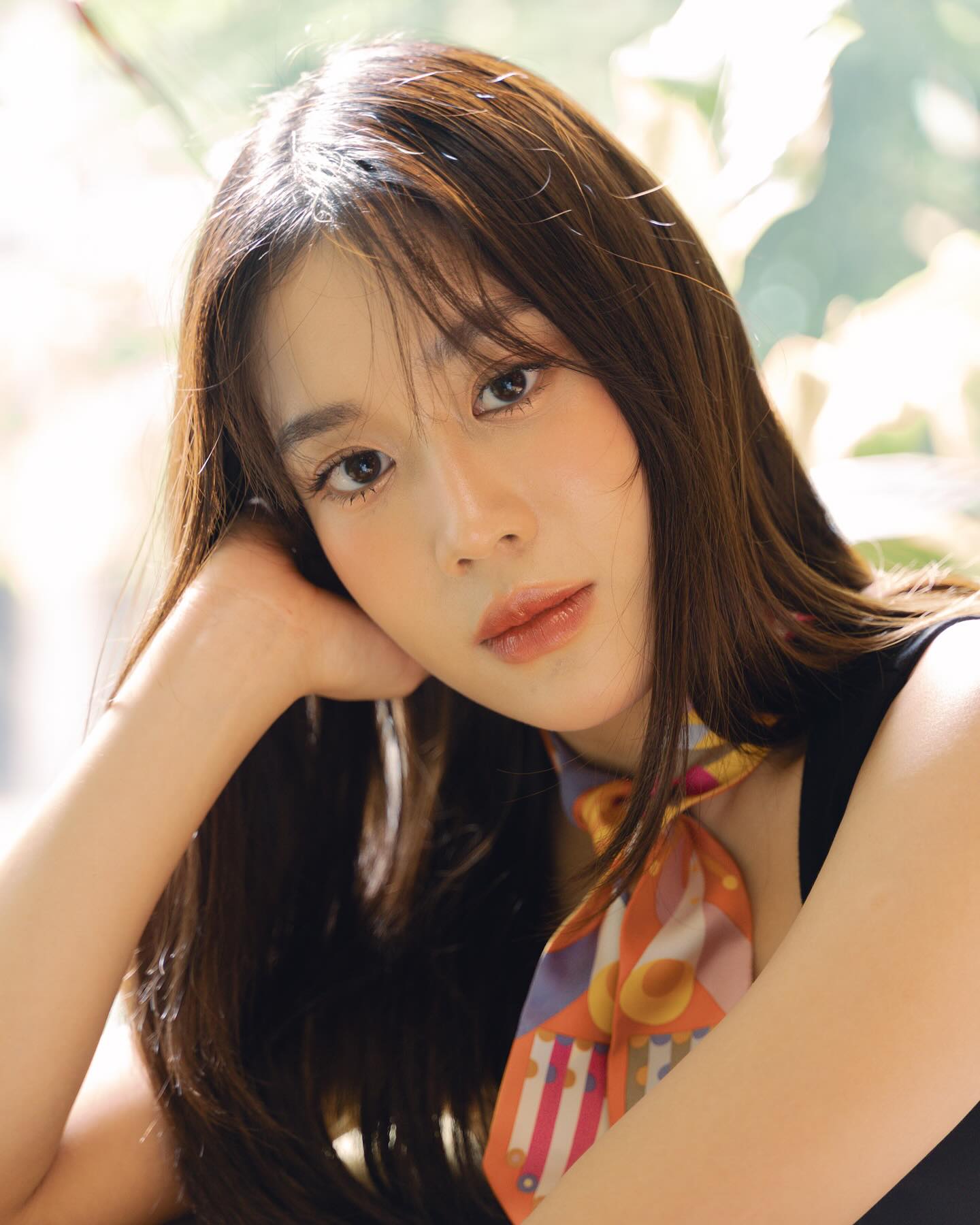

Pongtiwat Tangwancharoen:
– You Are My Hearbeat
– Wongsakhanayat
– Intern in My Heart
Kemisara Paladesh:
– Hormones: The Confusing Teens 1,2 & 3
– Project S The Series: Side by Side
– Catch Me Baby
Another drama with games:
– Squid Game 1,2 &3
Overview
Synopsis
Following a world pandemic in the 1970s, male babies have now become rare. So, the government has gathered them in a closed space named The Farm. To help them find their future wives, they’ve also created a reality show named Ready, Set, Love where women compete to win their hearts. Among them stands the Lotto Girl Day. While in the program, she meets the arrogant and popular contestant Son. Can she win his heart?
My Opinion (No Spoiler)
I loved the concept of the drama! Generally, we tend to see several men fighting for the same woman, so I really loved that the dynamic was reversed this time. It gives way to a lot of hilarious scenes, especially in the context of the game. Men become objects that women fight for. Though the story seems like a lighthearted rom-com, the drama actually goes way deeper than just the tip of the iceberg. It also explores some dark themes that counterbalance the innocent ambiance. Men are a scarce species, so obviously people want to get control of them. And that’s the whole point of the show. You also see the not-so-nice side behind the polished surface. The romance is also quite cute and they really executed the drama properly considering that there are only 6 episodes. My only criticism would be that the plot in itself and characters were too stereotypical. There’s nothing new really, as Ready, Set, Love seemed like a giant blend of The Handmaid’s Tale and Thomas More’s Utopia (for the dystopian view on the system), Squid Game (for the games, minus the blood) and The Hunger Games or Divergent (for the poor heroine who goes against the system). It’s nicely mixed, but not original. Nevertheless, I would recommend the drama and would definitely watch season 2.
Analysis
- Characters
Day, the chosen one
Son, the Icy Prince
Almond, the fear of the system
Paper, the desire of freedom
Max, the sincere lover
Chanel, the need of recognition
Jenny, the unexpected helper - Two worlds
The Farm
The Control Ground - The inspirations
Utopia
The Handmaid’s Tale
The Hunger Games
Squid Game - The ending
Characters: Like all good dystopian shows, Ready, Set, Love offers a large panel of different characters. Each is either an allegory of a romantic trope or the embodiment of a behavior in response to the system they live in.
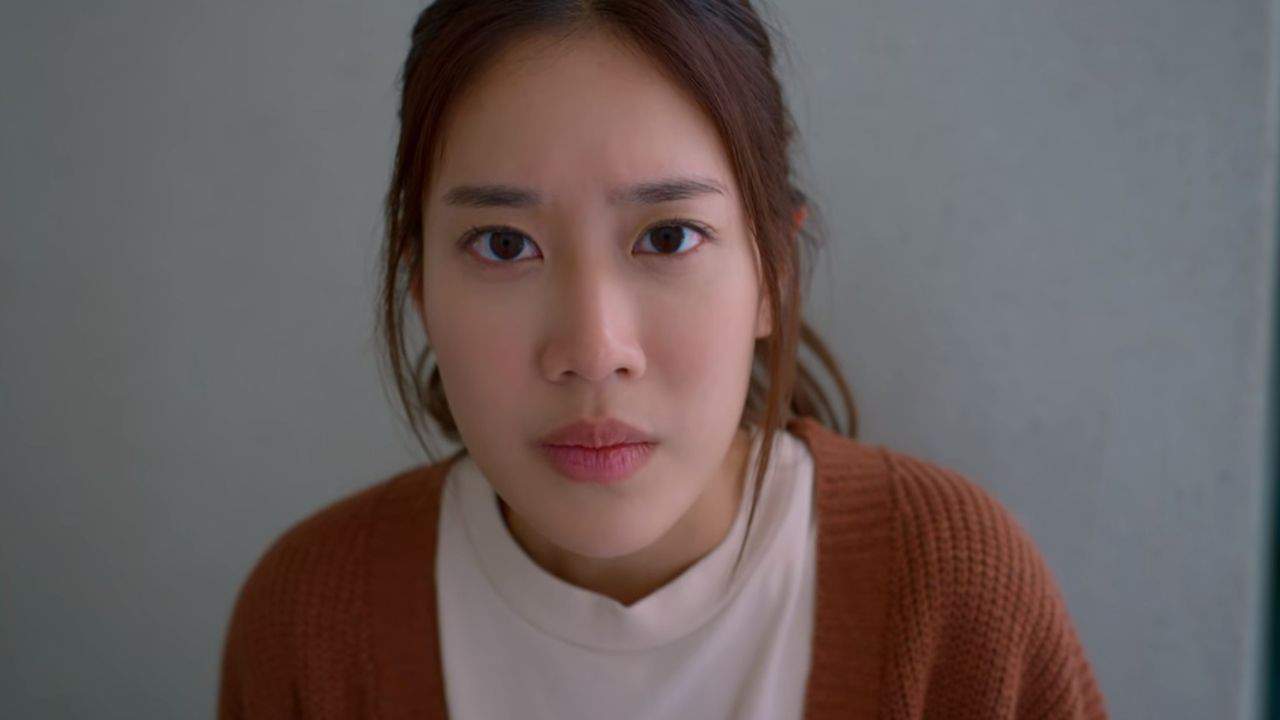
Day, the chosen one: Day (Kemisara Paladesh) has always lived her life outside of The Farm. After the loss of her parents, she had to fend for herself and her sick little sister. Her precarious situation never allowed her to have time for dreams and hope. Instead, she used those precious hours to earn money and provide for her sister. She buys her everything she wants – even if this is merch related to The Gentlemen at the Farm – and ensures her happiness. As an individual, Day has never grasped other women’s passion for the reality show Ready, Set, Love nor has she ever wanted to take part in it. On the contrary, the simple idea of having to compete with others on screen for the love of a man irks her. She’s strong, independent, and only ever counted on herself to survive. Plus, she already has enough on her plate. Her love life can thus wait. That’s with this exact mindset that Day enters the show. Thanks to her sister, she wins the national lottery which propels her directly into the game. As ‘Lotto Girl’, she has to seduce the Gentlemen and hope to marry one of them. In the drama, Day represents the outsider. She gradually turns into the symbol of the common people who unite behind her. Her presence in the game, as much as her arrival in the finals, is a strong message to the population. Anyone can get out of his condition, it just takes a little bit of effort. But Day’s character is even more important when you consider her on a macro level. She may be a symbol of hope and change to the people, but she’s also a threat and potential liability to the ones controlling the system. Chosen against her will, it’s now her burden to uncover the hidden truths behind the functioning of the Farm and puts an end to the reign of the wealthy and powerful. Day is the heroine who challenges the status quo and questions the current ways of working of the society. She inspires and breathes a new wind for future generations to come. From unknown outsider, she turns into the leader of the riot. On a romantic level, Day embodies the poor girl who falls in love with the rich guy. She’s the typical girl next door who becomes the Princess of her own fairytale.
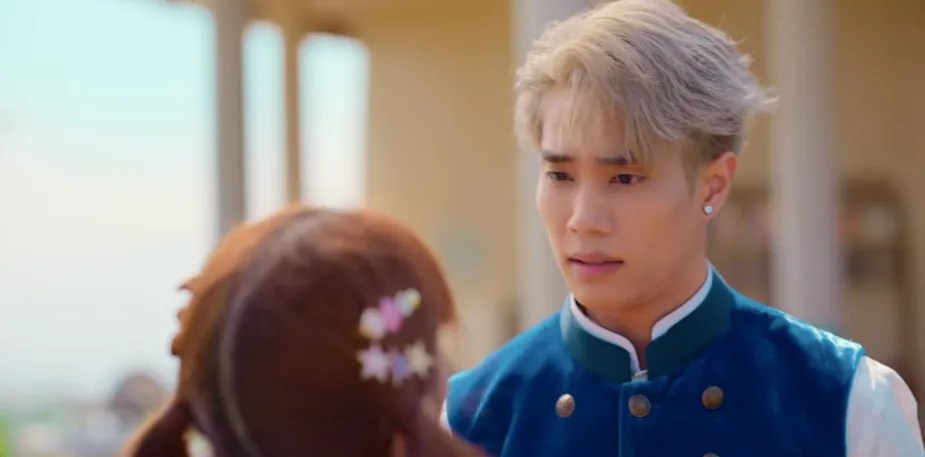
Son, the Icy Prince: If Day is the Princess, Son (Pongtiwat Tangwancharoen) is for sure the Charming Icy Prince. Contrary to Day, Son has had quite the sheltered life. He was born and raised in The Farm, alongside his father. But the latter didn’t entirely adhere to the rules of this golden prison. So, he decided to disguise his son as a little girl and to run away in the night. He was unfortunately captured by security officers, but Son managed to escape for a time. That’s when he met Day. She rescued him and hid him in her secret hideout. Together, they spend happy moments and vowed not to split. Unfortunately, the army retrieved Son’s position and brought him back to the Farm, leaving behind a lost and confused Day. This incident deeply marked Son, who’s consistently kept a distance with people around. He appeared cold and arrogant to others, but this was his way of protecting himself. Only some of his friends, like Almond or Chanel, know him well. The rest of his personality is a perfectly polished image for the cameras. That’s exactly this capacity to take a step back that allows Son to be the hero of the drama. He doesn’t blindly believe in the system and trust those in charge. He’s seen and lived enough to understand that there are a lot of bad sides to it, he just doesn’t know how to address them nor how to make a dent in them. Things change when Day comes into his life again. He refuses to let The Farm or anyone else take her away from him this time. So, the rebel in him awakens. He sides with Day to challenge authorities and goes on the frontline to denounce the system. His popularity renders his claims and questioning legit and credible. If the most liked Gentleman also turns against the system when he’s always been part of it, doesn’t that mean that there’s something wrong with it? Son recovers his freedom, his independence and control over his life thanks to Day. He was a beautiful bird prisoner of a golden cage, paraded like a trophy but never allowed to spread his wings and take over the sky. After his escape from The Farm, he can finally focus on what truly matters: his life, his love, his freedom and his future.

Almond, the fear of the system: Almond is Son’s closest friend among The Gentlemen. Just like the main protagonist, he was raised in The Farm among other male kids. All his life, he’s been led to believe that his mother had abandoned him, so that the system would provide her son with a better life. Therefore, Almond has never wished to find his biological mother. He’s willingly accepted his fate and thus abides by the rules of The Farm. Never in his life has he ever rebelled against the established order. The Farm represents his entire life, his stability and his future. He doesn’t know anything else and is even scared of disrupting that fragile balance out of fear of being abandoned and lonely again. However, this mindset seems to contradict his actions in the drama. Early on, he discovers that Day and Son are trying to destroy the system from within. But instead of denouncing them, as Son would’ve expected, Almond chooses to help them in their cause. This is a rather surprising behavior for Son, who then believes that Almond’s feelings for Day are the reason why he wants to support them. And I believe Day could’ve been the game changer for Almond, if only she had reciprocated his feelings. If Almond had had a good reason to leave The Farm and had known that he would not lose everything by doing so (aka he would’ve been with Day), he may have taken a different path. Unfortunately for him, Day is in love with Son, despite all his gentle and sweet efforts to conquer her heart. At the end of the drama, Almond switches sides and informs Jenny that some contestants are trying to escape. He’s betrayed his side, but his justification is understandable: He doesn’t want to leave others behind and is simply scared of the unknown. The Farm is all he has, he just can’t let it go in a split second. That’s a valid and legit excuse. Almond is too upright and faithful to the system to challenge it, even if it turns out that it lied to him in the first place. Indeed, Almond was not abandoned by his mother, but taken away from her. She and her daughter Valentine spent a lifetime looking for him. Though this revelation shakes Almond up, it’s not enough to persuade him. He’s afraid of the system, the truth and the repercussions this news could have on his peaceful and quiet existence.

Paper, the desire of freedom: Contrary to Almond who’s the first believer in the system, Paper (Chayapak Tunprayoon) is the first one to suffocate in it. He feels the pressure and burden of being a man, imprisoned in The Farm without the slightest possibility of leading the life he’s chosen for himself. His only breath of fresh air in this fake and controlled world is his radio. One day, female contestant Bovy (Anongnart Yusananda), engages in a deep conversation with Paper. Together, they feel at ease and comfortable enough to share secrets. She reveals that there’s a radio pirate on a special frequency that she often listens too. The owner of that radio is a male singer who lives outside of The Farm, in a free place named the Control Ground. This news comes as a shock to Paper. He never thought it possible for men to actually live freely outside of The Farm. Worse, the system brainwashed its inhabitants by making them believe that this was impossible. Paper feels a certain attraction towards this voice on the radio, as if it was calling him. So, he finds a way to connect with this mysterious singer and even escapes The Farm to meet him. This encounter opens Paper’s eyes. He realizes that his life, dreams and future are not within the barricades of The Farm, married to a rich female contestant, but outside. He wants to be able to walk in the streets openly alongside his singer without fearing retaliation. When Son and Day come up with a plan to leave The Farm, Paper is obviously the first one to join. I think it’s quite interesting to compare Almond and Paper, as their mindset and behaviors are the exact opposite. Though they come from the same place and have gone through the same education, their values and personality greatly differ. One (Almond) is too fair and upright, putting others before his needs, while the other (Paper) prioritizes his self and desires. I’m not saying that Almond is a coward and Paper selfish, not at all. I’m simply emphasizing the impact that a controlling system can have on two people and how individuality prevails in the end. The Farm may want to create a homogeneous society connected by one single mindset, but it can’t really erase its people’s specificities. That’s why some adhere, while others rebel. And Almond and Paper are perfect examples of that.

Max, the sincere lover: If other characters tend to be symbols of behaviors that either go with or against the system, Max (Phuriphat Jiramethapon) embodies the typical romantic trope. He doesn’t seem to care about The Farm, the riot, his situation as a man or anything related to this part of the plot. He only has at heart to conquer Chanel. She’s his main objective. Right from the start, the superficial Max falls for Chanel. Although his actions to seduce her are clumsy, his genuine feelings sway Chanel over at the end. Max is a simple character, moved by his emotions rather than by politics. He goes where his heart is, which means that he goes where Chanel goes. Too busy to make Chanel understand that she has the right to be happy and make her own choices, he never gets involved in the rebellion against the system. That’s why during the finale of the show, you can clearly see two narratives in parallel: the societal one with Day and Son, and the romantic one with Max and Chanel. The male contestant is content with his life at The Farm. He’s got comfort, friends, but more importantly the girl he loves. What I liked about this character is that he never tries to hide what he feels. On the contrary, he puts his heart on a platter, expresses his love for Chanel directly, even if it means being vulnerable and potentially rejected. He may not be a hero, but he’s a knight in shining armor for Chanel. He provides her with a safe space to talk, feel and breathe. And honestly, we don’t need more in a romance.
Chanel, the need of recognition: Chanel (Nichapalak Thongkham) belongs to the same romantic narrative as Max. Though she is also involved with Son, she doesn’t really care about The Farm. That’s simply because her mother is the head of The Farm. She’s the leader of system, who acts in the shadows to secretly keep control over the male population. Her mother’s role is a curse for Chanel, as she is herself controlled by her wishes. According to her, her daughter has to marry Son, as he’s the best match. So, she puts pressure on her daughter to make sure that she would win the games and be picked by Son at the end. Though Chanel obeys at first, she eventually rebels. Her feelings for Max and Son’s obvious love for Day are enough arguments to make her understand that she’s the master of her destiny. I empathized a lot with Chanel in the drama. I could feel like her house was like a microcosm of The Farm, meaning that the dynamics at home were like those applied in The Farm. Her mother is the chief and her wishes are law. She decides for everybody, whether in The Farm or for Chanel, how everyone has to live his lives. This environment suffocates Chanel who breaks free from it at some point. Just like Day and Son escape the system, Chanel escapes her own golden prison by choosing Max and rebelling against her mother’s orders. The reason why she abided by the rules for so long is that she was in dire need of recognition from her parent. Since early childhood, Chanel has been a disappointment to her mother. She never managed to satisfy her ambitions and thus has been regarded as a constant failure. This greatly impacted Chanel’s self esteem and self confidence. She believes that her value only depends on her mother’s recognition, when in reality, she’s the one defining her own worth. Max’s unwavering love and encouraging words enlighten her. Plus, she witnesses Day and Son fighting for their own happiness, so she decides to do so as well.

Jenny, the unexpected helper: Jenny (Natthaweeranuch Thongmee) is what I would call a swing character. At the beginning of the drama, she’s the right hand of Chanel’s mother, rigging the show to match her daughter with Son. Jenny is the producer of Ready, Set, Love and thus has full authority over the behind the scenes. She’s also the one who proposed to have a lottery and make someone from outside participate in order to increase ratings. Of course, Jenny had in mind her career and used contestants to her advantage. However, Jenny is not the villain character she appears to be at first. If you scratch the surface, you realize that she fought hard to get where she is. She also has a gentle heart and only dreams of having her own family with her girlfriend. Things take another turn when she gets pregnant. She learns that she’s carrying a son, meaning that she will have to make a choice at some point that will have immense consequences on her future. Her first option is to trust the system. She believes that she will be able to have a stable relationship with her son, while he’s at The Farm, shielded from the world. Though her girlfriend is not ok with abandoning their child, she lets Jenny make the decision. Now, remember when I said that Jenny was a swing character? Well, she switches side right at the end and chooses to help Day and Son instead. When the couple uncovers the truth behind the fate of mothers who give birth to a son, Jenny’s faith in the system disappears. She doesn’t want to entrust her child and future happiness to The Farm. She refuses to be split from her baby and thus turns her back on the system and Chanel’s mother. Using her power as producer of the show, she allows the leads to reveal the ugly truth, then helps them escape safely, while running away herself with her girlfriend. She may have lost her career after years of hard work, but the sacrifice is worth it. She gets to have her family safe and sound. I think Jenny is a crucial character in the story. Without her intervention, Day and Son’s entire plan would’ve collapsed. Her mindset is also quite interesting. She wants to believe that the system is good and trustworthy, but she’s the first to know how manipulative and rigged it can be. She’s done it herself with the show and has seen the consequences of not following orders. Jenny has a two-sided vision on The Farm and that’s exactly the reason why she’s able to doubt, question, and suspect the viability of the society she dreams of living in. She’s in denial at first, but quickly realizes that the world is not a pink paradise like you see on TV and that you need to fight for what you want to protect.

Two worlds: The drama’s greatest asset is its capacity to link romantic comedy and dystopia. To do that, they show two different worlds, each representing a genre, and blur the frontiers between them.
The Farm: The first world is that of romance. The Farm is a happy place where its inhabitants live in harmony. Men are protected from the outside world and families lead a quiet and happy existence. The Farm is also the place where the show takes place. It’s a world where every woman dreams to go in order to start their grand love story with one of the Gentlemen. In this small paradise, everything has been set up to make this world attractive. You have vast spaces, luxurious houses, protection from armed guards, and of course many games to conquer your loved one. On screen, The Farm is Heaven. Men and women find their perfect match and live happily ever after with their kids. Unfortunately, The Farm is also a world of pretense. Beneath the surface, ugly things are happening. Women pregnant with male babies are tracked, kidnapped and locked away in a secret basement. There, their babies are taken away without their consent, while they are drugged and forget they ever gave birth. That’s exactly what happened to Almond’s mother. No matter how many times she tried to tell her story, no one believed her. Instead, they told her she was crazy and had hallucinated all that. The Farm is warm and bright, but also treacherous and vile.
The Control Ground: This leads me to the second world of dystopia. The Control Ground that Paper, Day and Son escape to. Though this world is described as an evil place, where dissatisfied people plot against the system, it’s the exact opposite. The world of the dystopia is the actual paradise for those who dream of freedom and independence. Men are not separated from their families, they grow up dreaming about whatever they want, and free to go wherever they need to. There’s no split between populations, no controlling leader who decides for the rest. However, the Control Ground is also a world of sacrifice. To get inside, you need to leave behind everything from the other world (career, family members who refuse to follow, normal existence). At the end of the drama, there’s a clear reversal of these two worlds. The Farm has become this dark place where you’re spied on every day, while the Control Ground is the small heaven where romance can bloom between characters.

The inspirations: Ready, Set, Love is a drama that simply works because it gathers all the ingredients of success. Though the drama is a new story, it blends a good number of literary and cinematic references that participate in its success. Here are a few that I think are worth mentioning.
Utopia: Utopia is a novel by Thomas Moore written in 1516. In the book, the main character describes an island named Utopia in which all individuals seem to leave in harmony. There are no conflicts, no negative feelings. Only peace and happiness reign. However, there’s a darker side to it that emerges through the pages. Indeed, Utopia only exists because the system erases its inhabitants’ individuality. Everyone needs to comply and obey. Each person has to adhere to the set of rules and become a simple gear in the mechanism. You can’t question, criticize nor rebel. What seems to be like a perfect world at first turns out to be prison, especially for those who demand their freedom. Rings a bell? I hope so. As you can see, the setting in the drama is quite similar to Utopia. The island is The Farm. Men and families live in harmony, as long as they accept to comply and turn a blind eye to the hidden face of the system. Stealing babies from mothers, making them go crazy, shut them out from the rest of the world are all reprehensible actions that the government enforces to keep control over the scarce male population. Even Valentine at some point almost dies, while trying to reveal the dark secrets hidden at The Farm. And if you’re still not convinced the drama and book are linked, there’s a direct reference to it in the show. Indeed, during the first game, it is revealed that Utopia is Almond’s favorite book.
The Handmaid’s Tale: In a society where infertility has drastically increased, the government imposes an authoritarian system in which women are regarded as bellies made to procreate. In this dystopian world created by Margaret Atwood, women are prisoners. Their fate is decided by high-ranking male officials who constitute the government and make decisions in their interests. Babies are taken away from their mothers to be given to wealthy families. The rules apply to all, except those in power. If we go back to the drama now, we can see that The Farm works in a similar way. The one big difference is that male babies are the rare species. As for the rest, both systems work the same. Chanel’s mother for example is the most powerful individual at The Farm. She’s the one pulling the strings and influencing the selection to make her daughter the winner. She’s also rigging the TV program, so that the only women who get married are those already belonging to The Family (aka the women living at The Farm and daughters to the wealthiest families). That’s how she intends on keeping control on everybody else.
The Hunger Games: These books share many common characteristics. First, individuals evolve in a dystopian environment and are split into two groups: those who enjoy wealth and are allowed basically everything vs. those who are poor and can only dream and hope for a better life. Second, the main protagonist is an ordinary woman who just wants to have a normal life, but ends up leading a rebellion against the system. Third, that same lead becomes a symbol of freedom and hope to others without even wanting to bear that cross. In Ready, Set, Love Day is the Lotto Girl who is given a chance to participate in the reality show because she’s been randomly selected like Katniss in the Hunger Games. She eventually decides to partake in the TV show for the sake of her sick little sister, again like Katniss. And she ends up unmasking the government’s masquerade in front of everyone. Not to mention that the Hunger Games is also a TV program broadcast to the entire population, like Ready, Set, Love.
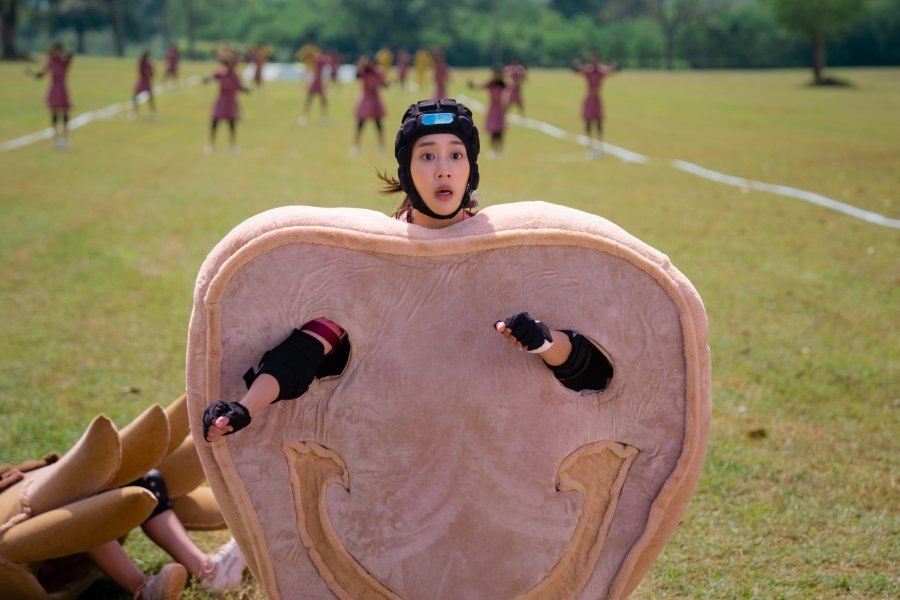
Squid Game: Although Ready, Set, Love is a light-hearted rom-com, there’s no denying that the games played by the ladies are quite similar to those in the Korean drama Squid Game. Of course, you don’t have deaths nor blood, but it’s a fight for survival and the winning prize is not money, but your lover’s heart. A noticeable difference between these 2 is that all games deal with wedding, dating and being a couple in the Thai drama. These are suppose to help participants bond and learn more about each other. I liked how colorful and eccentric these games were. They really added the fun part to the drama and got me entertained.
The ending: The end of the drama shows Day and Son escaping The Farm. They then settle down with their respective families (Day’s sister, Paper) in the Control Ground. There, they lead a self-sufficient life, cultivating their food, teaching their kids on their own, away from the world and unwanted eyes. Four years pass by, and we encounter Day and Son completely changed. They have adapted to their new environment and have even given birth to a son. But dangers roam. The last scene of the drama displays Chanel’s mother in her house holding pictures of Day, Son and their kid at the Control Ground. This obviously suggests a second season and a plethora of questions to be answered, among which:
– How have Day and Son lived until now?
– Have other people joined them?
– Are Almond, Max, Chanel, and the others still at The Farm?
– Have things changed after the big reveal? Are people rioting? Have people rebelled against the system?
– Is The Farm still the same? Or are there changes?
– Are Max and Chanel still married?
– Where is Jenny? Has she given birth to her child? Has she joined the Control Ground too?
– How is Chanel’s mother going to get her revenge against Day and Son? Is she going to kidnap their son?
 Once Upon a Drama