Presentation
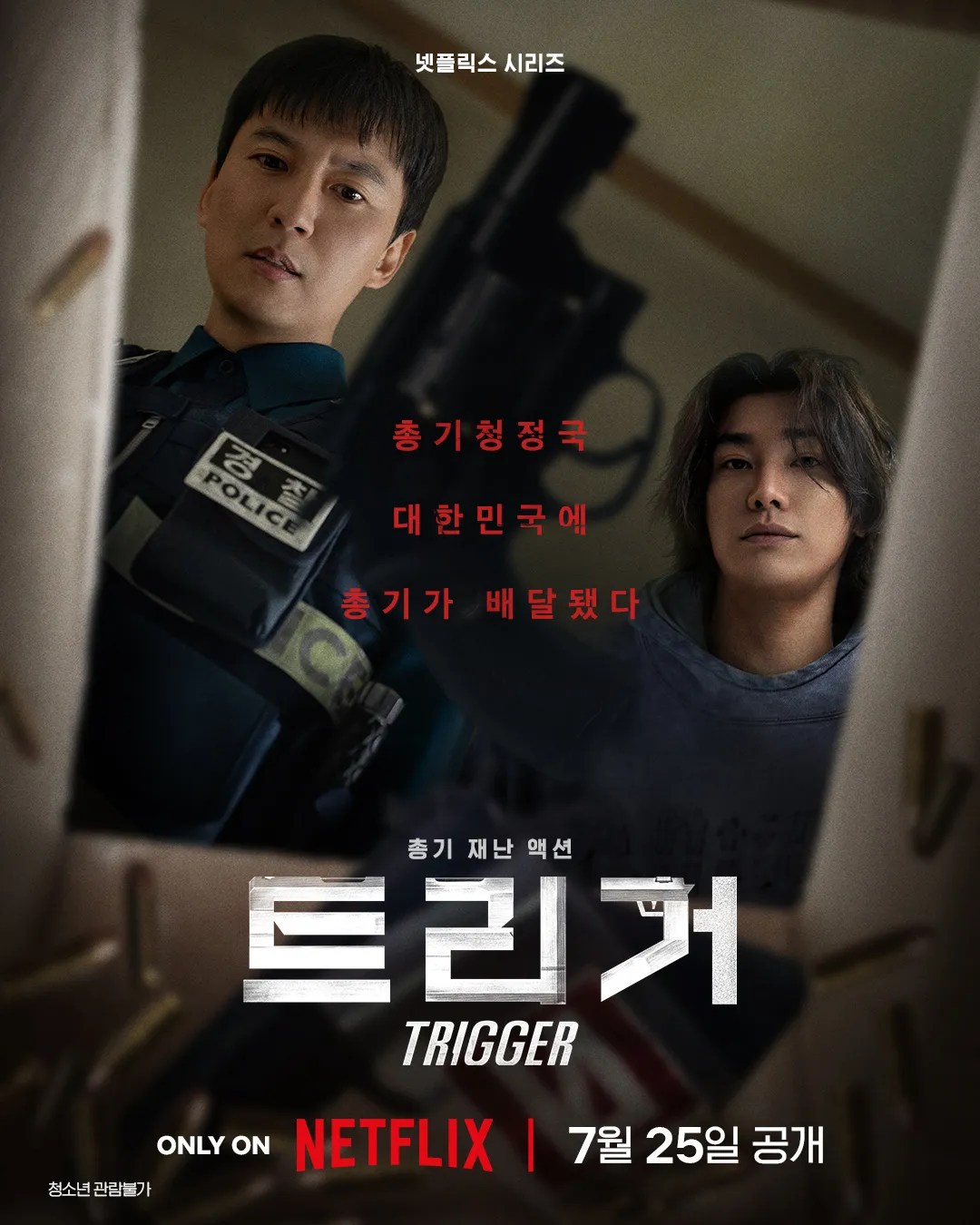
Korean Title: 트리거
Aired in: 2025 (10 episodes)
Channel: Netflix
Grade: 10/10
Actors: Kim Nam Gil & Kim Young Kwang
For more…
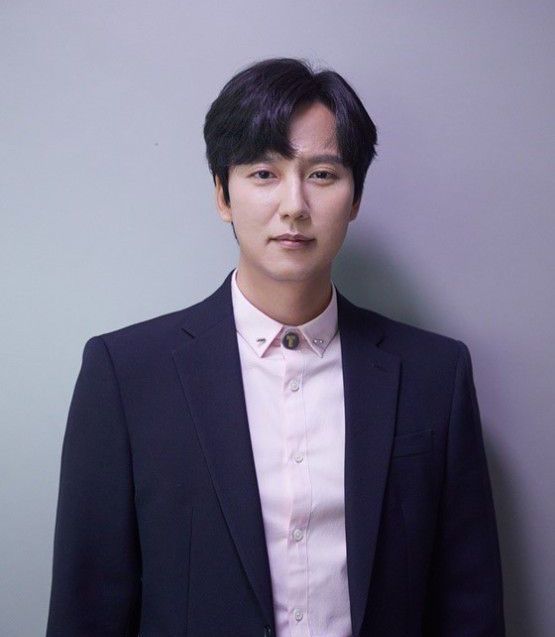

Kim Nam Gil:
– Live Up to Your Name
– The Fiery Priest
– Through the Darkness
– Song of the Bandits
Kim Young Kwang:
– Sweet Stranger and Me
– The Secret Life of My Secretary
– Hello, Me!
– Call It Love
K-Dramas about characters making justice themselves:
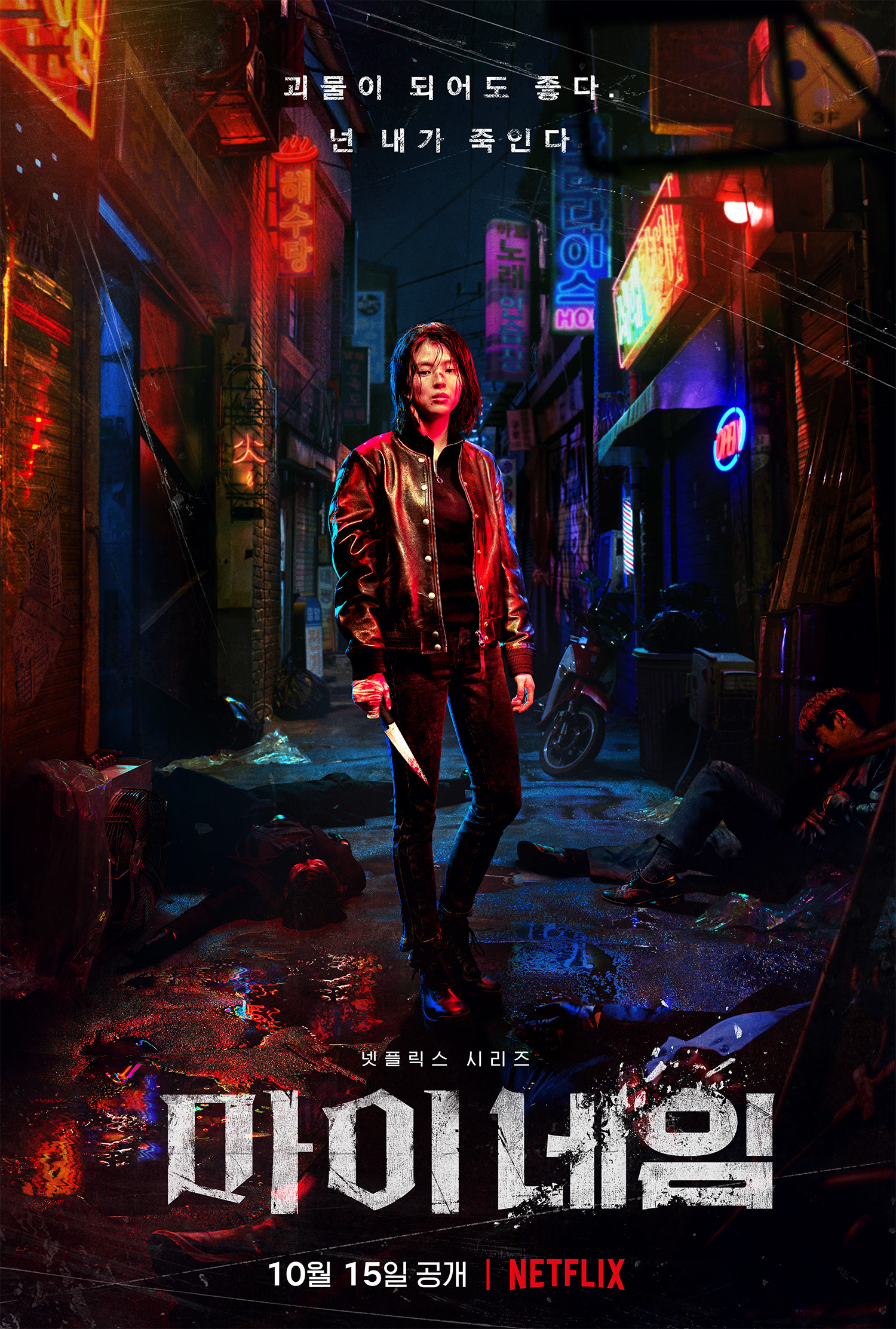
– My Name
Overview
Synopsis
When illegal guns suddenly start flooding the country, gun incidents proliferate in South Korea. Yi Do is a righteous detective who served in the military as a sniper. He now struggles to stop a series of gun incidents and chases after the source of the illegal firearms. Moon Baek is a key figure in the underground arms broker world.
My Opinion (No Spoiler)
Trigger is an excellent action drama that offers a good reflection on firearms and their consequences, especially in a country like South Korea where they are illegal but also where a part of the population knows how to use them. The cases are compelling and you get to understand how each person’s despair or feeling of injustice leads them to pull the trigger. The lead duo is amazing with Lee Do as an ordinary hero and Moon Baek as an exceptional villain. I really liked that they delved into his past in order to explain his intentions in the present. Not to mention that Kim Young Kwang was a hot and handsome bad guy! I would however recommend against watching more than 2 episodes per day, as the drama can be emotionally tough. Apart from that, I can only hope you watch it.
Analysis
- A tortured hero
- The pathetic villain
- Opposite views on firearms
- The downfall of a society
Introducing guns in South Korea
The dormitory shooting
A rapist’s anger
The old lady
The mafia fight
The school shooting
The scam that turned wrong
The final chaos
The nurse - The ending
- Trigger
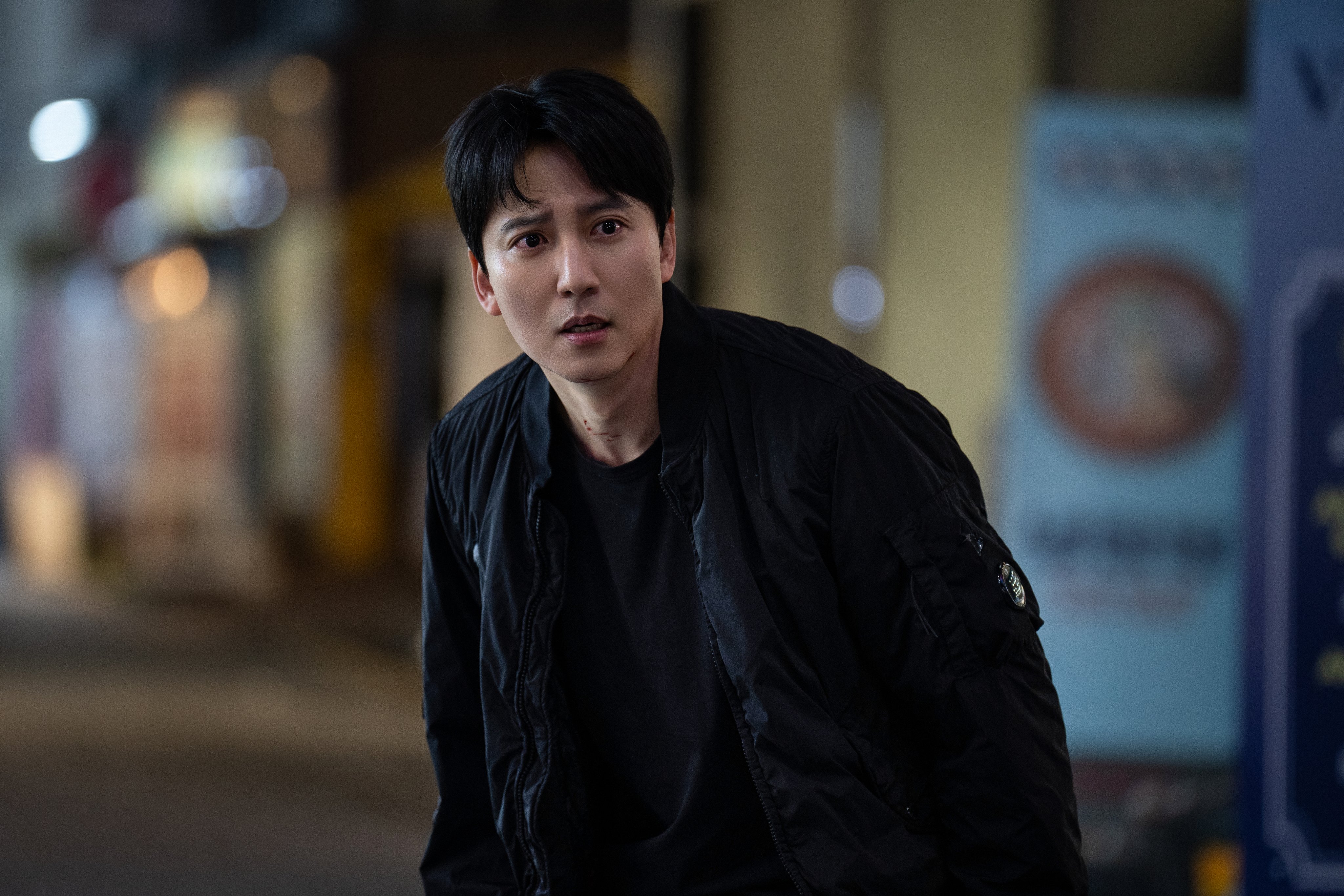
A tortured hero: Lee Do (Kim Nam Gil) is the perfect epitome of the ordinary hero. His parents were killed by a serial killer when he was a kid. He witnessed the tragedy and saw the face of the criminal who destroyed his family. In a fit of rage, he seized a gun and aimed at the monstrous man. Lee Do wanted to kill him, but was talked out of it by police officer, Cho Hyun Sik (Kim Won Hae). The little kid contained his hatred and eventually put the gun down. That day is a turning point for the future police officer. It’s the day he decided to trust the system to punish criminals rather than to do justice by himself. After that, Lee Do grew up into a righteous man who exteriorized his pain and violence through his job as a mercenary. He learned how to use a gun and killed numerous enemies on the battlefield. However, he reached his limit at some point. He couldn’t endure the brutality linked to firearms, especially when they fall into the hands of innocent children, as he’s seen it during the war. After his retirement from the army, Lee Do became a police officer. As such, he now takes care of victims, people let down by the system, and individuals who need help. Though he doesn’t yield a lot of power, he does his best to ensure their security and well-being. Lee Do’s main goal in the drama is to contain the firearm plague and soothe people’s despair. Unfortunately, he’s not enough to handle the ailments of an entire society.
The pathetic villain: Opposite to the righteous hero, the drama displays a pathetic villain. Though his intentions are evil, his reasons are understandable (careful I’m not saying they’re justified). His past and terrible experiences give backbone to the bad guy with whom you want to empathize. Moon Baek was abandoned by his mother as a baby, then ‘rescued’ and raised by an illegal organization that would use orphans as organ donors. In that context, his left eye was taken. After that, he was sold to a vicious American man who also intended on using him as an organ donor. Police arrested him on the day of Moon Baek’s final surgery. The young child remembered the face of the man who tried to harvest his organs. So, as a teenager, he found a gun (way more accessible in the US) and shot his executioner. Guns gave Moon Baek power and allowed him to make justice for himself. Thanks to that small item, he got his life-long revenge. That same day, the teenager was rescued by the boss of a mafia organization dealing firearms. He became part of his gang and was gifted a blue left eye when he joined the team. That’s how he turned into a blue-brown-eyed gun dealer in the US who offered to extend the business in South Korea. Moon Baek’s character development is extremely well explained. Mid-drama you get to understand his past, thus you’re given a chance to better get his intentions. His suffering deeply remained imprinted in his head and he kept physical marks of his painful experiences. Not only does he seek revenge against those who mistreated him, but he also wishes to destroy the system that let him down. Hence his desire to introduce guns in the country and have people raise up against each other. He claims he wants to create a new world, but he already knows that he won’t live long enough to see it. Indeed, Moon Baek is sick – probably because of him being an organ donor. He doesn’t have anything to lose. Therefore, he’s willing to bring the world down with him.
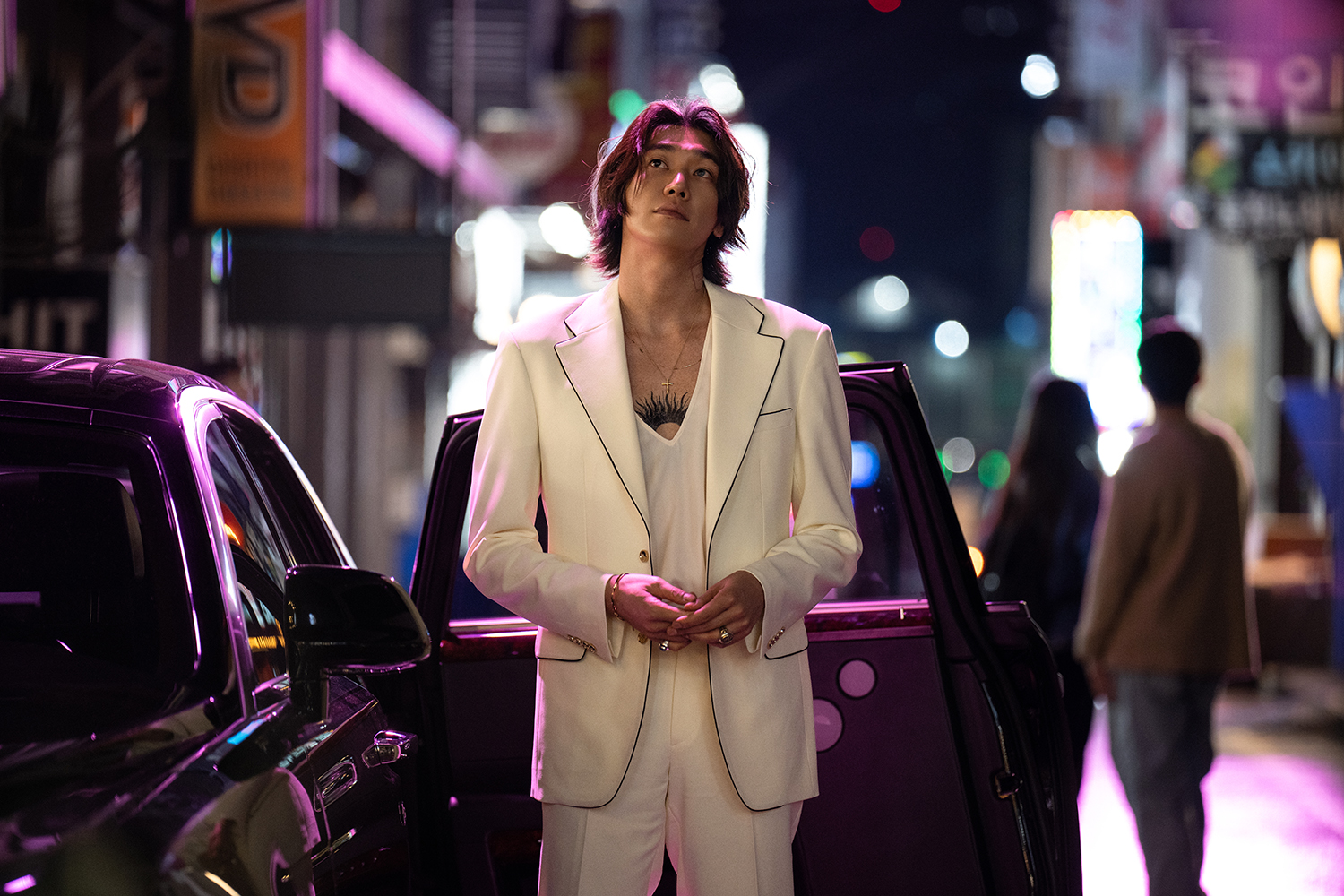
Opposite views on firearms: The tension in the drama is intense because the show opposes 2 sides, each with valid arguments. On the one side, Lee Do sees guns as a dangerous weapon. To him, they don’t bring justice, but rather suffering and massive destruction. Only violence and chaos can unfold if people start using guns to protect and/or defend themselves. The anti-guns demonstraters stand with him in that debate. On the other side of the spectrum, there is Moon Baek, supported by pro-guns rioters. Unlike Lee Do, he seized a gun to get his revenge in the past. He didn’t choose to let go of his hatred for the world. Instead, he openly participated in its annihilation. As he didn’t trust the system to punish criminals who wronged him, he did justice to himself following the lex talionis aka ‘an eye for an eye (couldn’t have been truer in that context!), a tooth for a tooth‘. His one and only goal is to crush the system that failed him once, and that still continues to fail others. Therefore, guns are a powerful leverage, an efficient protective tool, and an instrument of personal revenge. Guns are synonymous with power and security.
The downfall of a society: It’s interesting to see how a society is a constant cycle made up of the same phases that follow each other. First there is peace, then tension arises until that same tension breaks into chaos. Once the world has been crushed, people have no other choice but to choose peace again. I think there’s no better illustration than world wars to demonstrate that idea. Now if we draw a parallel with the drama. At the beginning, the South Korean society is experiencing a rising social tension. We are at the second phase of the cycle. People are dissatisfied with the system, fall victim to scams, get bullied or hurt without getting proper compensation. Through the different cases displayed, we witness society’s growing discontent and insecurity leading to a breaking point of no return in episode 10. However, the interesting part here is that the cycle has been accelerated by Moon Baek’s intervention. In order to precipitate society’s downfall, he decided to send guns to desperate people who believe they are victims of the system. Whether this statement is true or false is not relevant. What’s important is that these people are ticking bombs ready to explode and bring everybody down with them. That’s exactly what happens in the show.
Introducing guns in South Korea: South Korea belongs to the group of countries that still have a mandatory military service. Most men should thus technically know how to use guns. However, firearms are illegal and prohibited. This paradox is an open door for Moon Baek’s business, as he can easily push people to use guns and they will just do the rest to aim at the right target. When it comes to people who receive guns, I think there’s a certain gradation in the cases exhibited. They are built like a funnel, from the least understandable situations (where criminals believe they are victims of society) to most tragic ones, where actual victims’ despair is used to pull the trigger. We start with unstable people who could not, in any case, live ‘properly’ within the community (schizophrenic man, rapist, gangsters) to people who are actually pillars of the society like students, police officers, nurses. I would also comment that education, security and healthcare are generally what constitutes the foundation of a proper society. Here, each of these pillars have been attacked and almost completely destroyed.
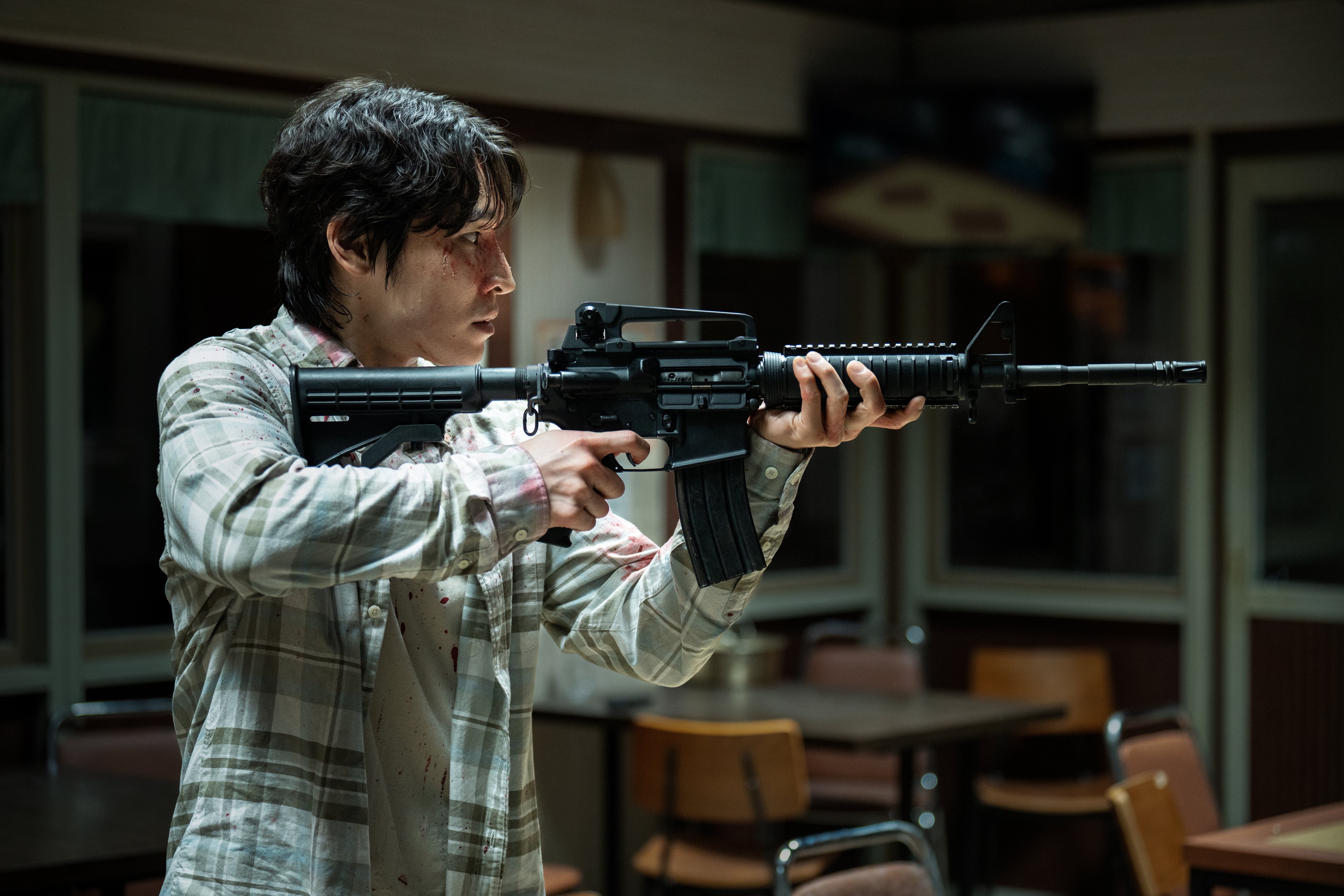
The dormitory shooting: The first episodes start quite strong with a shooting taking place in a dormitory. The criminal is an unstable individual who suffers from schizophrenia. He’s well aware of his condition and thus regularly consults a psychiatrist. During his sessions, he confesses that he’s quite sensitive to people’s misbehaviors and disrespect towards rules. Simple things, like loud noises during bedtime or impolite manners, make his blood boil. From the get-go, it’s clear that this man is like a pressure cooker. He could explode any time, no matter what you try to do to stop him. Though he restrains himself in general, the bomb eventually blows off. As he’s received guns previously, he only has to pull the trigger now. This case is perfect to introduce the drama and its themes. Though the first shooter feels threatened by everything and everyone, he still makes some valid points regarding the way certain people behave in a community. His neighbor constantly brings his girlfriend in his room – when it’s forbidden. They have sex very loudly which disturbs our first shooter’s sleep. Though he asks them to stop through the paper thin wall, no one seems to care. The frontman doesn’t want to get involved, whilst other neighbors bully him whenever he politely asks them to quiet down as well. Everyone around him pushes his buttons which can only result in him blowing off violently. If he’d not had firearms the day he went rogue, this massacre would’ve probably not happened. But guns gave him the power to make others listen to him and respect the rules.
A rapist’s anger: You can’t really empathize with the second shooter. He’s a rapist who’s now on parole. He lives at his mother’s and uses her name and address in order to avoid issues. It’s also a good cover if he wants to do bad things. In the drama, this character has a profound hatred for the police. He feels like they are always on his back and preventing him from living his life the way he intends to. He harbors resentment against those who ‘spy’ on him, like his parole officer, or diffuse the dangerous situations he creates, like Lee Do does on the day the criminal tries to assault a woman and kill a police officer. He’s had enough with law and order. On the day he receives his gun, he feels like he’s finally going to get back at those who bothered him. That’s why he starts a mass shooting in a police station. He creates a bloodbath in the place where civilians should be safe. That’s an attack against one of the country’s pillars which shakes the foundations of society and increases the rampant tension.
The old lady: This case is the revenge of a desperate mother. Lee Do knows her well. He sees her every day protesting in front of the company that neglected safety and thus precipitated her son’s death. She tried several times to get compensation from the CEO – and by that I mean at least an apology. But the latter rejected her and treated her like a pebble in his shoe. His disrespect towards human life and his lack of remorse turned the grieving mother against him. Though she’s a good person in the first place who’d never hurt a fly, she sees a way to do justice for herself when she receives a gun. As the system let her down and her son’s murderer remained unscathed, she saw an opportunity to honor her child’s memory. Though the CEO’s death and the old lady’s action are not justifiable, she’s the first armed character with whom you can truly empathize. She’s just a mother who wants to avenge her son.
The mafia fight: Gangsters in the drama are quite pathetic. But I guess that’s because they’re not actual ones. Led by Gu Jeong Man (Park Hoon), the group is a collection of little bullies who want to be bad, but are actually lost in their lives. They have never known anything else but violence, so it’s ride or die to them. In reality, this team is more of a gang of brothers rather than the real mafia. They are the executioners, the little hands that do the dirty work. Though they’ve been promised a business by their head boss, these are just vain promises. The humiliation, betrayal and scorn they suffer on a daily basis, topped with failed promises, are enough to turn Gu Jeong Man and his group agains the mafia boss. That’s why they want to get their hands on guns. Fully armed, they stand a chance against their leader to destroy him from within. I would say that this case is more of a war gang, yet it has a certain impact on civilians’ feeling of insecurity. If the mafia starts using firearms, then the situation could rapidly spiral out of control. Lee Do diffuses the situation in time, but the damage is already done.
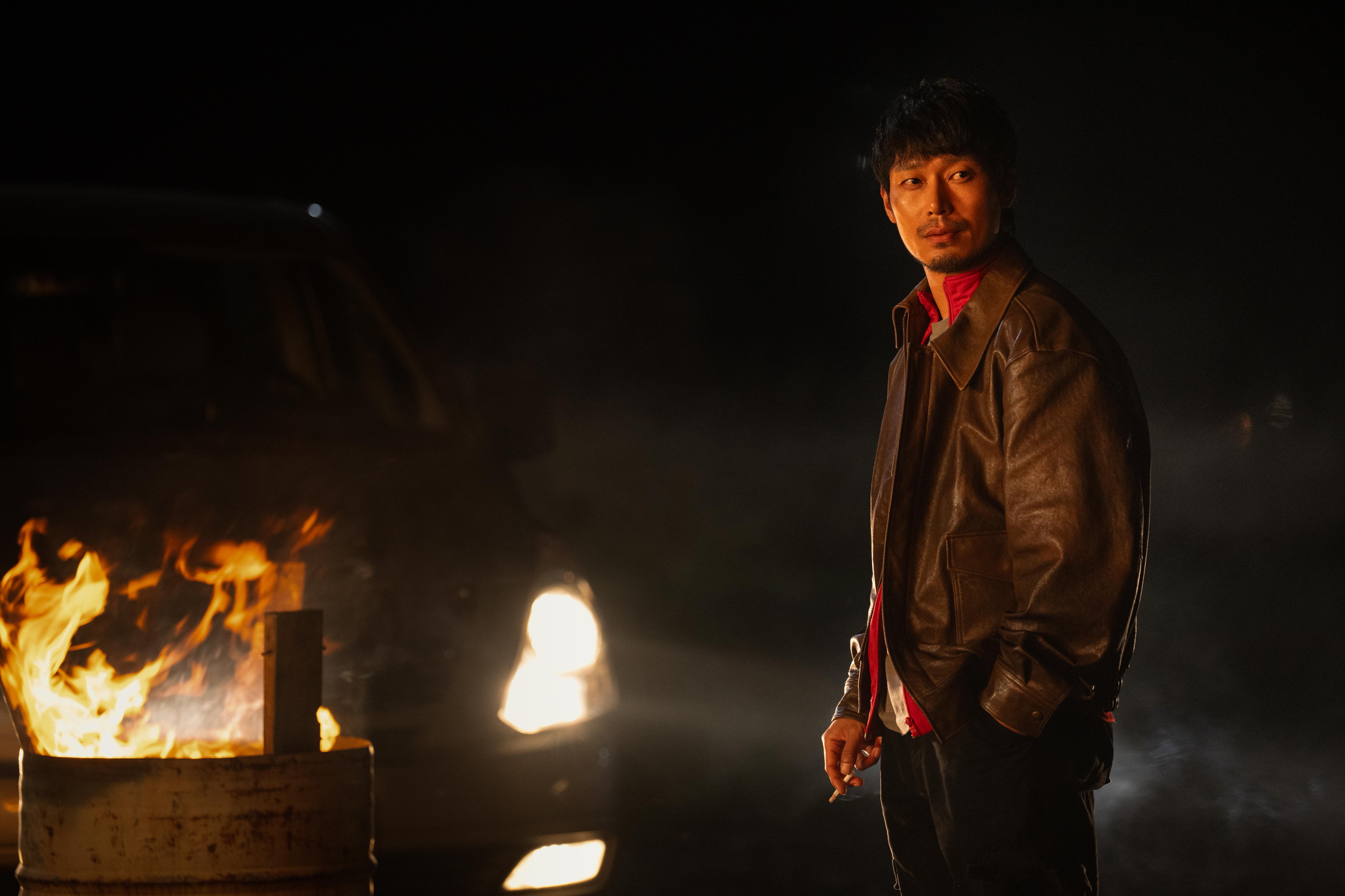
The school shooting: The school shooting is the most impactful case for me. All along, you see two teenagers being heavily bullied by their peers. The main character, Park Gyu Jin (Park Yoon Ho), endures the best he can. However, there’s a limit to what he can withstand. No one at school seems to care, teachers are oblivious and classmates either complacent or fearful to end up in the same situation. Outside the school is no better for Gyu Jin, as his bullies continue their harassment. Despite all that, the young student displays resilience and an impressive mental strength to resist such horror. On the day of the shooting, the drama takes us by surprise with an unexpected twist. It turns out that Park Gyu Jin hasn’t received any firearms – he just bought a BB gun and intended on using it to defend himself. However, his best friend received a gun. Contrary to Gyu Jin, he’s not capable to go through all that suffering. He’s resentful and wants revenge against those who bullied him without reasons. He’s the one who starts the shooting. He entices Gyu Jin as well by giving him a gun, but Lee Do manages to prevent him from shooting his bully. Despite the desire to do so, he contains his hatred like Lee Do did as a child. In this situation, characters’ pain is comprehensible. If I were to be bullied like them, I would probably want to kill others too. But that’s not how society works. The complexity of the show resides in its capacity to put you in characters’ shoes and think about your actions if you were them. Hence the roller coaster of emotions.
The scam that turned wrong: Lee Do’s father figure, Cho Hyun Sik, loses his daughter to a scam. She is deep in debt, has used up her father’s entire pension and thus commits suicide. The former police officer is devastated. He failed his daughter who was herself failed by the system. The scammers are still free and enjoying their lives. Meanwhile, Cho Hyun Sik’s daughter has drawn her last breath. Like the old lady before, Hyun Sik takes a gun and intends on avenging his beloved daughter. As a retired police officer, he knows that this is not the right thing to do. Moreover, he shares Lee Do’s view on firearms. Guns are not a solution, but a weapon of destruction. Still, his despair and grief are greater than his moral beliefs and convictions. In an open street, he aims at a drunken scammer, but can’t pull the trigger. This time, Lee Do tries to persuade him to let go of his gun, just like his father figure did for him. The situation escalates when Moon Baek makes an entrance and opens fire himself. People start running everywhere, they feel afraid and insecure which propels the debate around guns at the top of the discussions. The clash between pro- and anti-guns gets even bigger until the final climax in episode 10.
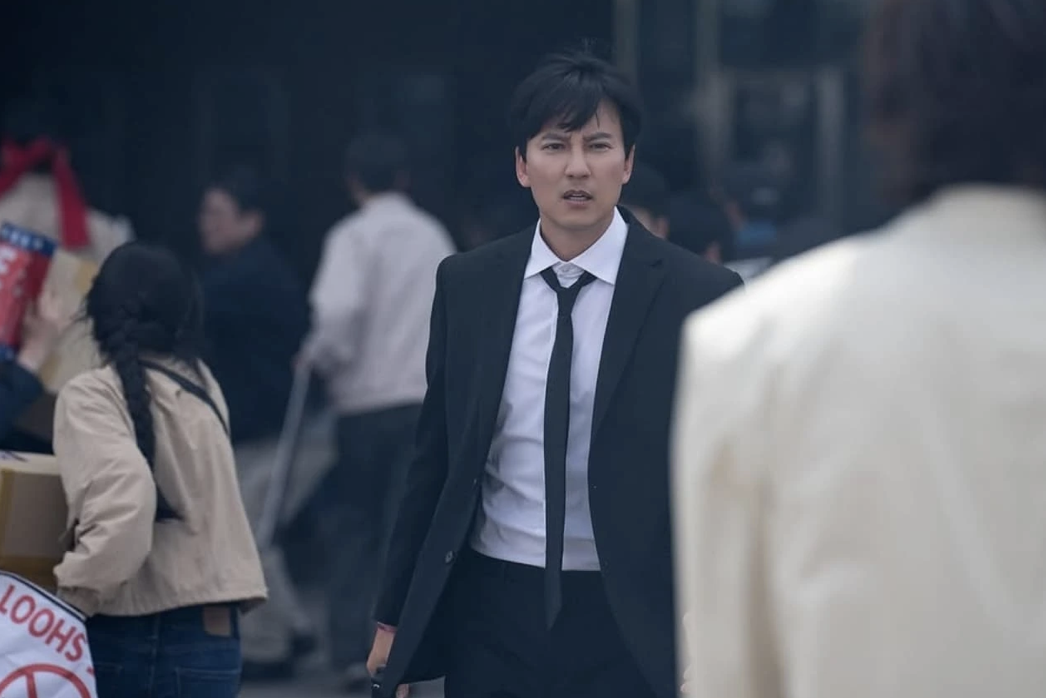
The final chaos: The last episodes of the drama display utter chaos in the South Korean capital. Pro- and anti-guns runs demonstrators gather on a public place in order to raise their voice against or for the use of firearms. Though the demonstration is supposed to peaceful, Moon Baek sees things otherwise. This event is the culminating point of his scheme. Using people’s anger as trigger, he brings a huge truck loaded with guns on the public square. His intention is to openly gift these weapons and see citizens’ tense reactions. Without exception, they all start to fight to get their hands on a firearm. Yet, no one dares use it against somebody else. That’s why Moon Baek decides to create an even more anxious atmosphere by releasing gas. This gas blurs people’s vision who are now unable to decipher movements and behaviors around them. The fear of the unknown and the possibility of being shot is what finally triggers the bloodbath. Once the first shot is heard, the entire situation gets out of control. People aim at the wind not knowing that their bullets are now piercing through other individuals’ body. Amidst this massacre, Lee Do and Moon Baek stand in front of each other. One is pleased with what’s he’s created, while the other is confused, upset and desperate to see the result of such madness. All along, he knew that firearms would eventually lead to that conclusion. Though he tried to stop it, his actions were not enough. There are 3 main consequences resulting from this pandemonium. One, Moon Baek has been shot. The creator of that mayhem has achieved his goal and can now leave behind the world that made him suffered. Two, Lee Do raises as the hero who used his body as shield to protect an innocent child amidst the raging fury. The video of his action spreads rapidly online propelling him as the symbol of humanity. Three, citizens who followed the event on TV are in absolute shock. This violence, the brutality of the scene are so emotionally disturbing and upsetting that it totally appeases their own feelings of anger, injustice and hatred. In a way, this massive shooting ruptured the tension giving way to a new wave of peace within the country.
The nurse: Civilians who followed the horror on TV are completely stunned. Among them, there’s a nurse bullied by her peers. She had also received a gun and was very close to using it. However, she gave up her hatred towards her colleague when she saw the terrifying result of guns. She works as a nurse, thus aims at saving people. If she were to use a firearm, this would mean that she would go against her own beliefs as a caretaker. In a way, I would say that the last pillar of society would’ve been destroyed had this chaos not unfolded. The young nurse would’ve pulled the trigger in the hospital, a place where people are supposed to be saved and not murdered.
The ending: At the end of the drama, Moon Baek receives a bullet amidst chaos. He’s transported to the hospital. He’s comatose between life and death. To the US organization he works for, he’s now become a liability. In the last scenes, his former boss sends an assassin to kill him. However, we don’t see her actually ending his life. Therefore, we can’t really say whether Moon Baek is dead or if he’s been saved by the US murderer. When it comes to the US and the criminals at the origin of the chaos, the drama shows Moon Baek’s boss discussing with his partners saying that the door is now open in South Korea. He’s also got a bullet on the his desk which is a sign that he intends on starting a new war as mentioned in the drama. This peculiar bullet is a symbol that the organization is coming. As for Lee Do, he’s lost his father figure but he’s overcome the crisis. Thankfully, the old lady has survived and he now takes care of her. Like every hero, Lee Do has lost a lot in the process. Nevertheless, he’s still standing and continues the fight.
Trigger: The word ‘trigger’ is a red thread in the show. There are several references to that word whether subtle or concrete. This concept is also linked to a good number of questions that are the foundation of the plot: Will victims pull the trigger? Who will pull it? How can pulling the trigger change your life? And how not pulling it can change events? All in all, these questions are answered in the drama and the word ‘trigger’ takes on its full meaning the more episodes you watch.
 Once Upon a Drama