Presentation
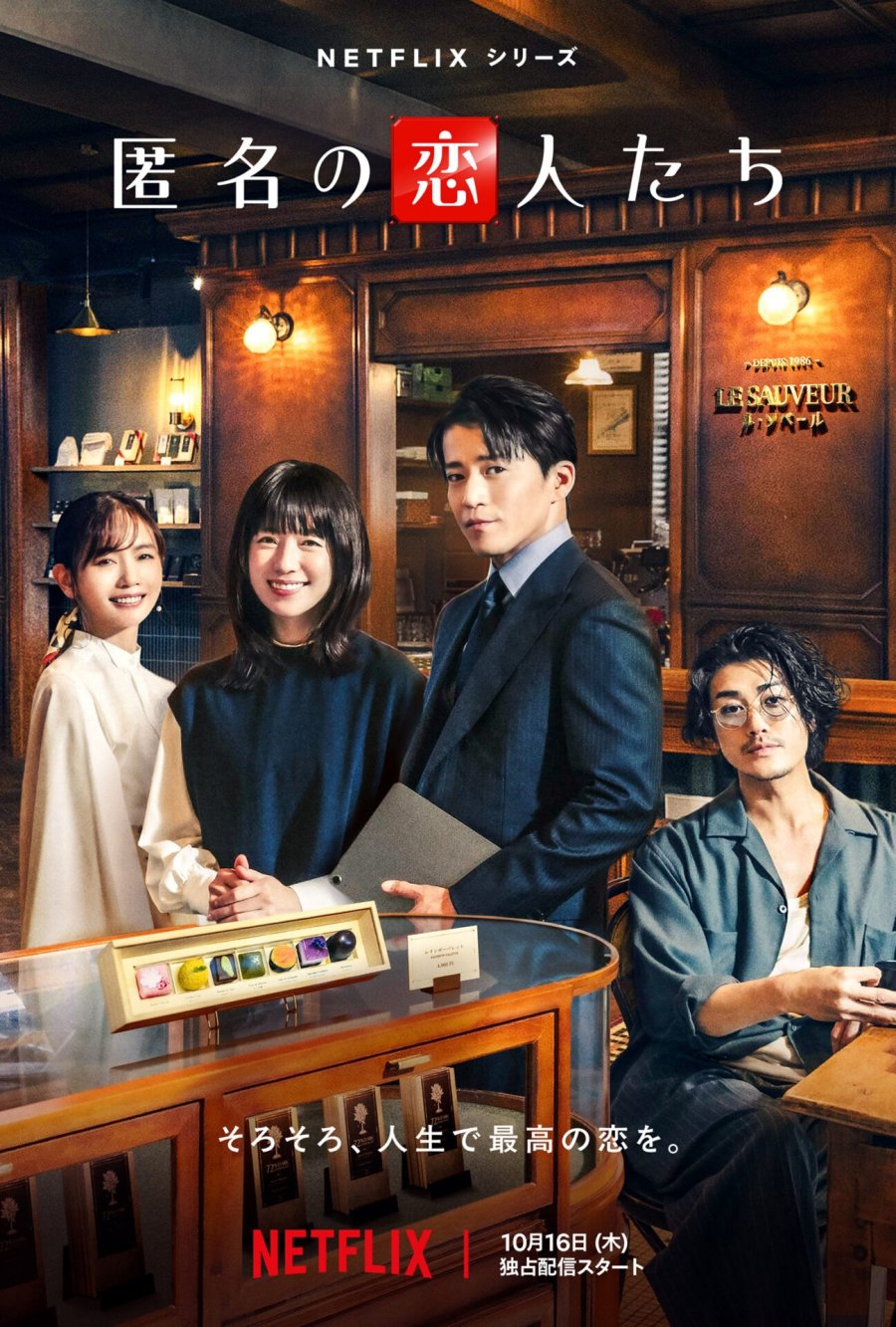
Japanese Title: 匿名の恋人たち
Aired in: 2025 (8 episodes)
Channel: Netflix
Grade: 10/10
Actors: Han Hyo Joo & Shun Oguri
For more…


Han Hyo Joo:
– Dong Yi
– W: Two Worlds
– Happiness
– Moving
Japanese/Korean dramas:
– What Comes After Love
Overview
Synopsis
Sosuke Fujiwara is the son of a confectionery manufacturer owner, who becomes the CEO of a chocolate store. Due to a trauma in his past, he suffers from mysophobia. Ha Na is a genius chocolatier, but has a phobia of making eye contact with people. Both meet by chance through chocolate and develop feelings for each other.
My Opinion (No Spoiler)
This drama is such a gem! First, I love the blend between Japan and Korea. Han Hyo Joo is extremely credible as this awkward Korean chocolatier who’s settled in Japan, the land of desserts. Plus, she speaks Japanese so well. As for Korean, it only popped up in the drama to spice up the romance, so it was right on point. Second, the plot is just awesome. It’s moving, authentic, quirky and heartwarming. Characters all have their issues (even secondary ones), but they’re trying to overcome them and leverage on the others’ presence to heal. Getting better truly depends on two things in the drama: people surrounding you and chocolate, of course. The cinematography of the show made it so mouth-watering. The cooking scenes are so appetizing and the meaning behind each and every chocolate the team makes is really poetic and beautiful. Every chocolate tells a story, allows characters to navigate tradition and modernity, brings them back to their childhood, helps them recover from past wounds or brings them together. The ending points out to a second season (hopefully). In the meantime, I can only recommend you watch this sweet drama right away.
Analysis
- Chocolate brings happiness
Rainbow Palette
Truffles Yuzu
Wasabi en Soie
Bonbon Sakura
Special Orangette
Two-Way Confiserie
Pure Kenji
Le Chocolat du Bonheur
Togetherness - Traumas, mental health and healing
Sosuke, touch
Ha Na, sight
Irene, love
Hiro, stability - Romance
Symbols - Cinematography
- The ending
Chocolate brings happiness: Romantics Anonymous is a drama full of poetry and warmth. Here, there’s a clear parallel between each chocolate of the palette sold by Le Sauveur, and a character’s story or a memory or the plot itself. Put together, these elements form a beautiful mosaic of life stories that bring nostalgia, comfort, but above, all happiness.
Rainbow Palette: The first episode introduces our leads and their back stories. Lee Hana (Han Hyo Joo) found a refuge in chocolate. She lost her mother early on in life and was all alone before she met Kenji Kuroiwa (Eiji Okuda) during a competition. The chocolatier recognized her talent and took her under his wings. He also respected her condition and always encouraged her to be brave and get out of her shell. Ha Na was just not ready yet. Nevertheless, she found solace in Japan, working as the anonymous chocolatier for Le Sauveur. Sosuke Fujiwara (Shun Oguri) works at his father’s confectionary manufacturing company. He ambitions to develop a new premium brand of chocolates, conscious that the group needs to enter new markets and change its image to thrive. But he’s met with reluctance, especially from his estranged father. Nevertheless, Sosuke believes in his project and in the power of chocolate. Like Ha Na, he was once comforted by this delicious sweet and carries happy memories with him that he wishes to share with everybody. In his plan, he also intends to involve Master Chocolatier Kenji Kuroiwa. Apart from their belief that chocolate brings joy and happiness, Ha Na and Sosuke have a few other points in common: both know Kenji and have been greatly influenced by him and his culinary art, both have their respective phobia and fears. The first episode is the start of a romance, but also of a project to save Le Sauveur and continue to spread its colorful palette of chocolates and of emotions to people.
Truffles Yuzu: This episode focuses on the sour, but also tangy taste of yuzu and of life in general. When it comes to relationships, Lee Ha Na pursues her crush on Hiro Takada (Jin Akanishi), the owner of the bar next to the shop. She feels her heart race in his presence, hides when he’s getting too close and imagines their blossoming romance alone in her room. Meanwhile, Sosuke experiences similar physical changes around Ha Na. He’s trying to understand why he can touch her and not others, as much as why he’s the only one Ha Na can look in the eyes. Though we’re only at the beginnings of his feelings, his growing interest in her doesn’t lie. Their encounter turns their lives upside down and adds some spice to their routine. Business-wise, Le Sauveur’s future is uncertain. Kenji Kuroiwa has passed away, leaving behind a fragile legacy that his pupils fight hard to protect. Sosuke has replaced the old master and is confronted with difficult partners, among whom the yuzu maker. This ingredient is indispensable to the Truffles Yuzu chocolate, so he and Ha Na embarks on a trip to win his favor back. Uncertainty, misunderstandings, skepticism, novelty, change and tickling feelings are at the core of that episode giving away a taste of bitterness, sweetness and tanginess, just like yuzu.

Wasabi en Soie: In this episode, the drama tackles a fundamental need for any business today: adaptation. Wasabi en Soie is the chocolate that is least appreciated by consumers. They are generally surprised by the strong taste of wasabi and can’t get over it. Negative feedbacks put the chocolate at risk, so the team decides to brainstorm in order to modify the recipe without destroying the original. Lee Ha Na proves once again that she’s a genius chocolatier by switching the logic of the recipe. It shows successful and the once threatened chocolate is now selling more than ever. This event shows that businesses, but also individuals, must adapt to new environments and setbacks and consider feedbacks too. It’s also a success story through a process of trial and error that is as much valid for human beings. Proof is that Ha Na and Sosuke are somewhat forced to confront their phobias – Ha Na by becoming a member of the staff at Le Sauveur and Sosuke by managing his physical reaction when someone touches him. They need to adapt. And what better way to do it than through trial and error? To overcome their challenges, the pair decides to ‘practice’ together, so that they feel more comfortable around others.
Bonbon Sakura: I think Bonbon Sakura was the most touching episode of the show. It also highlights the struggle of many who take over their families’ business. They wish to maintain tradition, but want to make the company thrive by adding their own touch of modernity. The pressure is heavy because you may jeopardize everything that your family’s built until now. This dilemma is perfectly embodied by one of Le Sauveur’s main partners. Her mother used to be at the head of a small successful empire. She represented the company, its values and image. When she passed away, her daughter took over. But she constantly feared that she was not up for the task, always afraid of destroying her mother’s hard work. When Sosuke and Ha Na visit her, she’s doubting so much that she’s thinking about quitting. However, she regains strength and hope when Sosuke shares his own struggles with his father, and Ha Na asserts that the slight change she’s made to the original recipe has only enhanced the flavor and made it better. The pressure to do good that weighs on descendants and the preservation of tradition in a modern environment are themes that are beautifully handled in that episode. It’s also an open door for Ha Na to better understand Sosuke and his feelings.
Special Orangette: As proven by the drama, chocolates are a link between childhood and adulthood. They are a door between present and past memories. In that episode, the team at Le Sauveur is asked to reproduce the taste of the Special Orangette from decades ago. Their client wishes to gift her sick sister the chocolate of her childhood as a way to remind her of all the good moments she’s had and the life she’s led so far. Expertise and knowledge are celebrated with that story, as Sosuke and Ha Na ask for the help of a chocolatier who used to work at the shop 20 years ago. This request embarks the client, her sister, the old chocolatier and characters on a journey that brings them back to their past. Sosuke even discovers why the recipe of the Special Orangette was changed in the first place. His brother was sick and couldn’t consume the good. So, their father ask Kenji to adapt the recipe to children, so that his son could also enjoy the taste of the sweet. Kenji realized that children actually digested that changed recipe better and thus kept it ever since. Nostalgia, memories, knowledge and the passing of time are the main themes of the drama.
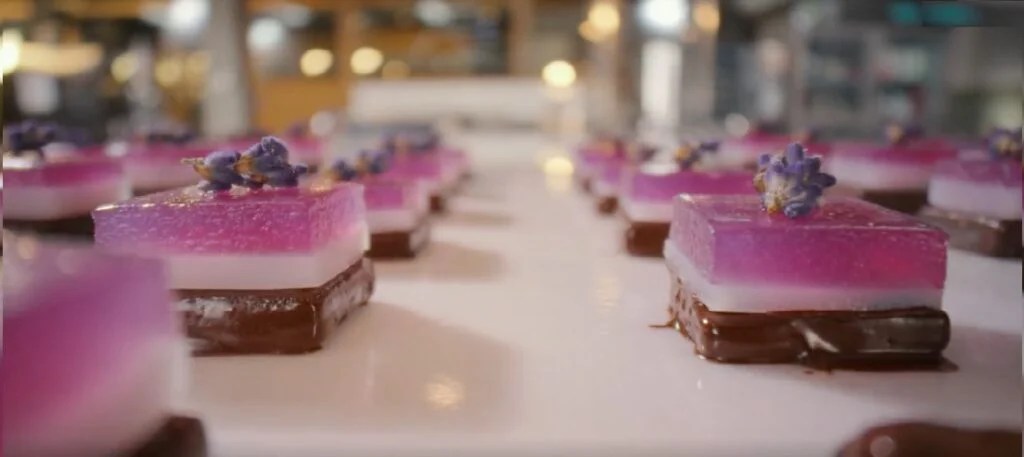
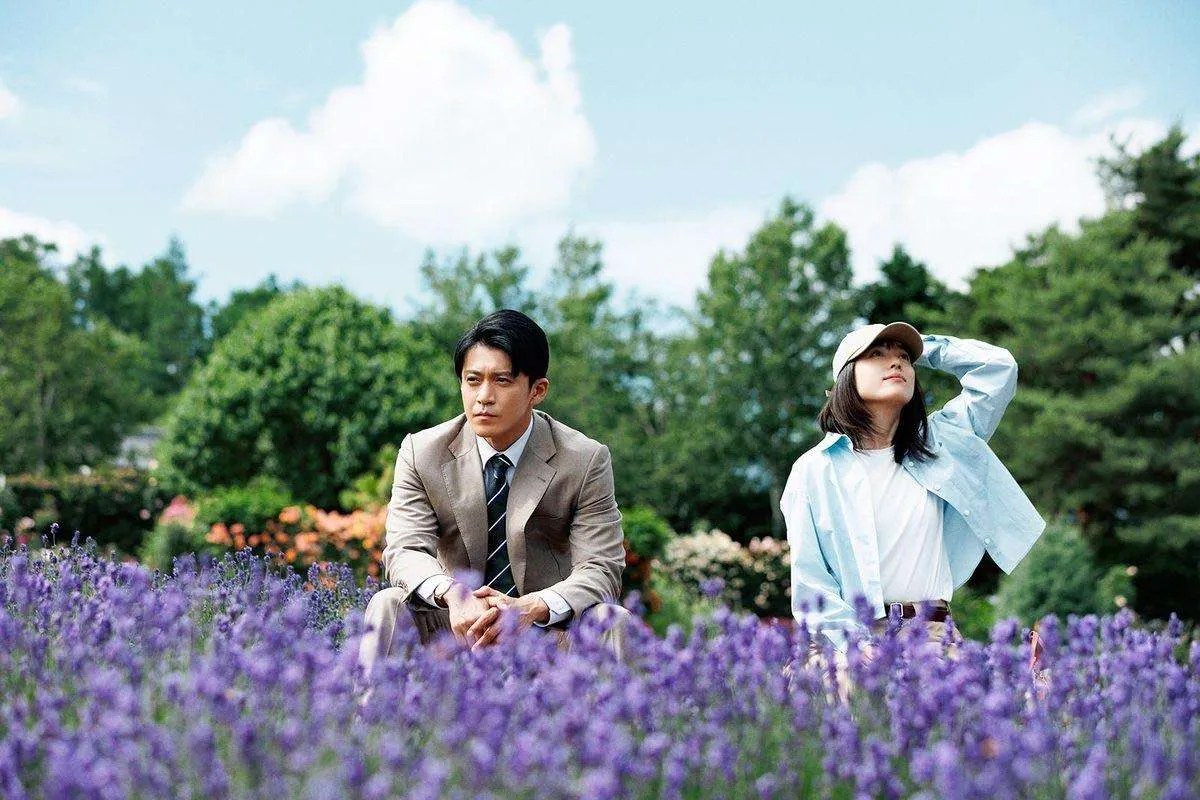
Two-Way Confiserie: Sosuke brings his entire team on a workshop in a lavender field where one of their partners produces this ingredient. Hiro joins as a driver what delights Ha Na, but clearly not Sosuke. Using that trip as an excuse, Hiro wants to get closer to Irene (Yuri Nakamura) who’s at a conference in the same hotel the team resides. The objective is to show that eating chocolate is a wholesome experience. Not only does the Two-Way Confiserie please the tongue and the eye, but it also enchants the nose. Smell is part of the experience. When it comes to romance, this short break is a way for Ha Na to let go of her unrequited love, but also to realize her feelings for Sosuke. Just like chocolates wake all 5 senses, their feelings for each other are revealed by the way they constantly look at each other, their need to be in the other’s vicinity, the worry and jealousy they feel, and their heart that beats faster in the other’s presence. Love is a wholesome experience too.
Pure Kenji: Pure Kenji is the chocolate made by the anonymous chocolatier aka Lee Ha Na. No one knows the recipe nor the identity of that mysterious figure. When Le Sauveur is threatened to close, Ha Na musters her courage and reveals that she’s the master behind Pure Kenji. She overcomes her fears in order to help the team reproduce her masterpiece and win a contest that could play in favor of the shop. This final chocolate of the palette is the main connection between Ha Na, her past, her skills, her relationships and Le Sauveur and its staff.
Le Chocolat du Bonheur: After her identity is uncovered, her colleagues are quite disappointed in Ha Na. They resent her for lying to them. So, Ha Na flees to Koita Republic where her former Master found Le Chocolat du Bonheur. Parallel to that, Sosuke learns that there’s nothing going on between Ha Na and Hiro. Better, Hiro confesses that Ha Na’s real crush is Sosuke and not him. He’s the stranger who saved her that day. All along, Ha Na got it wrong. This piece of information changes everything for Sosuke who believed his love was one-sided. He hops on a plane to Koita Republic to find Ha Na and bring her back. Together, they go to the plant Kenji visited a long time ago. They are told the story of Le Chocolat du Bonheur (‘Chocolate of Happiness’ in English). This anecdote highlights the fact that chocolate truly brings happiness to every single person involved in the process, from the people getting the cocoa to the people eating sweets. As said in the drama: ‘Giving someone chocolate is like giving a little bit of happiness‘. Sosuke and Ha Na were also brought together thanks to that and even managed to follow their own dreams: Ha Na by winning the Chocolate Championship; Sosuke by protecting Le Sauveur and his group.
Togetherness: In the end, it’s creativity, vision and partnership that save Le Sauveur from numbers, money and profit. Partners, clients and friends (Kenji’s widow included) gather together to buy shares and protect the chocolate shop and its legacy from Sosuke’s cousin for whom shares and results prevail. As shown, rational thinking is not enough to drive a company and make it successful. You should also listen to your heart and feelings. That’s exactly what Sosuke does by offering his cousin a seat at the table. They may have different management styles, but they balance each other. The mix of both worlds is what will protect the group and make it grow. Hence, Sosuke’s proposal to be co-CEO with his cousin.
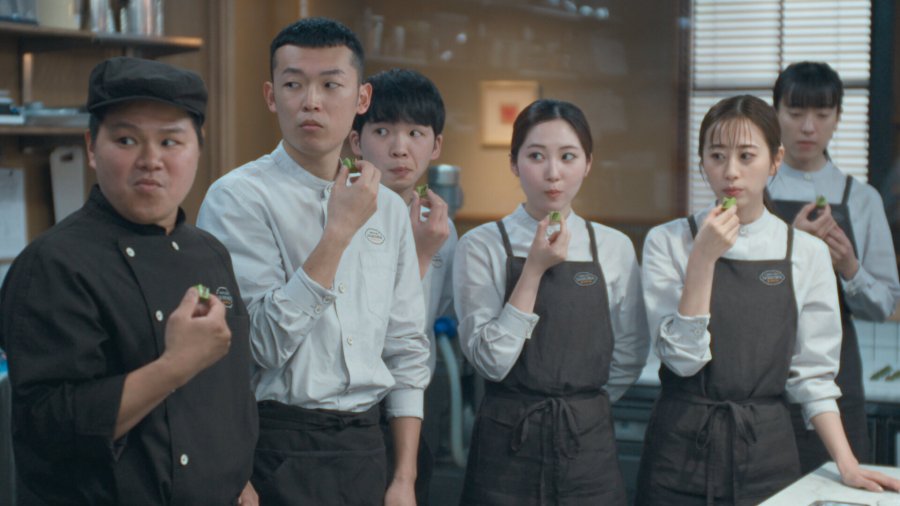
Traumas, mental health and healing: Each character has a trauma that prevents them from living their life/relationships properly and thus learns to overcome it. I really appreciated that they tackled that topic and emphasized the importance of seeking help from a professional (Irene is a therapist) and of surrounding yourself with the right people. These two elements are crucial if you want to get better and heal.
Sosuke, touch: Sosuke suffers from haphephobia which is the fear of physical contact. I suppose it’s also linked to another condition named mysophobia which is the fear of germs. When he was a kid, Sosuke’s older brother was sick. Though they were very close, their relationship was always hindered by his brother’s condition. One day, Sosuke entered his brother’s hospital sterile room, not knowing that he needed proper equipment and disinfect his hands. The contact with germs were fatal to Sosuke’s older brother who passed shortly after. Since then, Sosuke has felt dirty. He became scared of touching people and bringing harm to them. Any physical contact would result in an increased heartbeat, shortness of breath and an anxiety attack. At the end of the drama, Sosuke has finally started to ‘control’ his condition. He can touch Ha Na – for a mysterious reason – and reconciles with his estranged father. Indeed, the latter never truly understood the root cause behind his son’s condition. After his father’s collapse, Sosuke uses that moment to confess his feelings to him and touch him. Their handshake is a proof of love, showing that they’re willing to make an effort to overcome their own grievances.
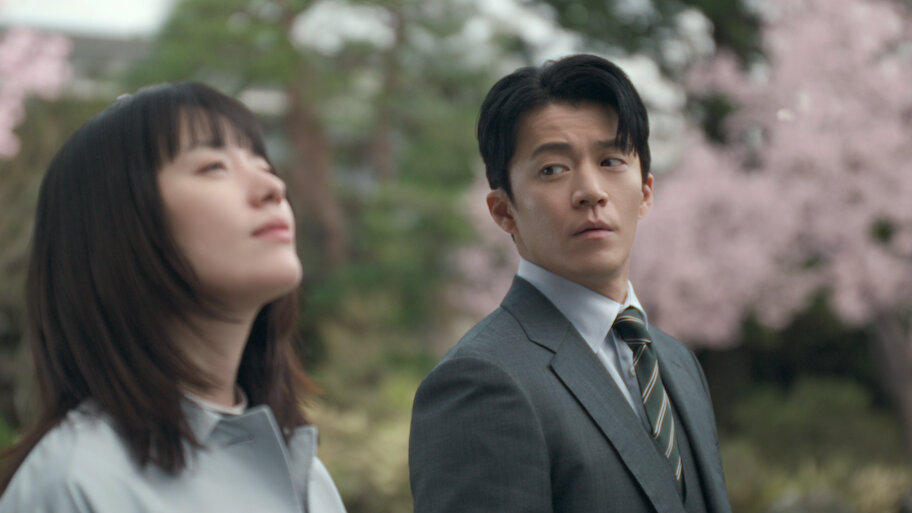
Ha Na, sight: Lee Ha Na suffers from scopophobia meaning that she gets anxious when people stare at her. Even looking at people in the eyes makes her uncomfortable. Her condition got worse after her mother’s passing which resulted in isolation and an increased fear. The only person she can actually look at is Sosuke. She doesn’t know why exactly, but he makes her at ease. Just like the male lead, Ha Na works hard on herself to overcome her condition that prevents her from living a normal life. She uses Sosuke to practice, consults a therapist to accompany her, and takes baby steps to heal. Her efforts pay off, as she manages to act more ‘normal’ with the staff and clients at Le Sauveur. She even succeeds in participating in a competition and win, while all eyes are set on her.
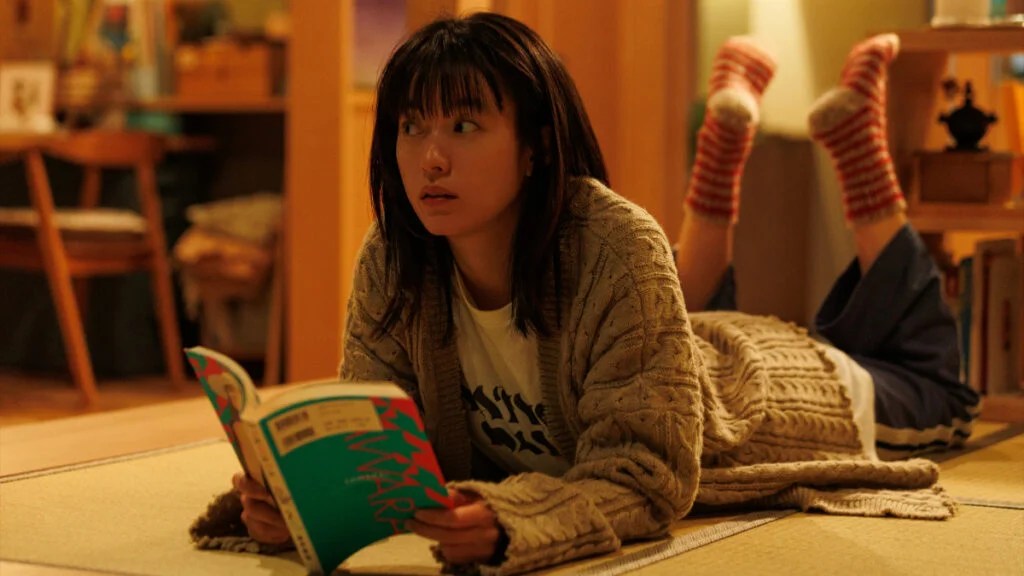
Irene, love: Though Irene is a therapist, she carries emotional wounds. As a child, she was traumatized by her mother’s behavior who was in love with love. She always needed the affection of a man and would try to kill herself every time she was rejected or dumped. She couldn’t live for herself and was not strong enough to stand on her own for her daughter’s sake. This deeply scarred Irene who grew up refusing to live like her mother. She’s so afraid to follow the same pattern that she pushes away everyone around. She wants to live for herself and not be dependent on a man. That’s the reason why her relationship with Hiro is so complicated. Though she loves him, she’s incapable of overcoming her fears and traumas. Hiro is understanding and patient, but can’t do much to heal her. Irene is conscious that she needs to receive treatment as well, if she wishes to start a sane relationship with the man she loves. What she does at the end by leaving to the US for a year. There, she confronts her traumas head on and eventually realizes that her insecurities are shackles from which she has to break.
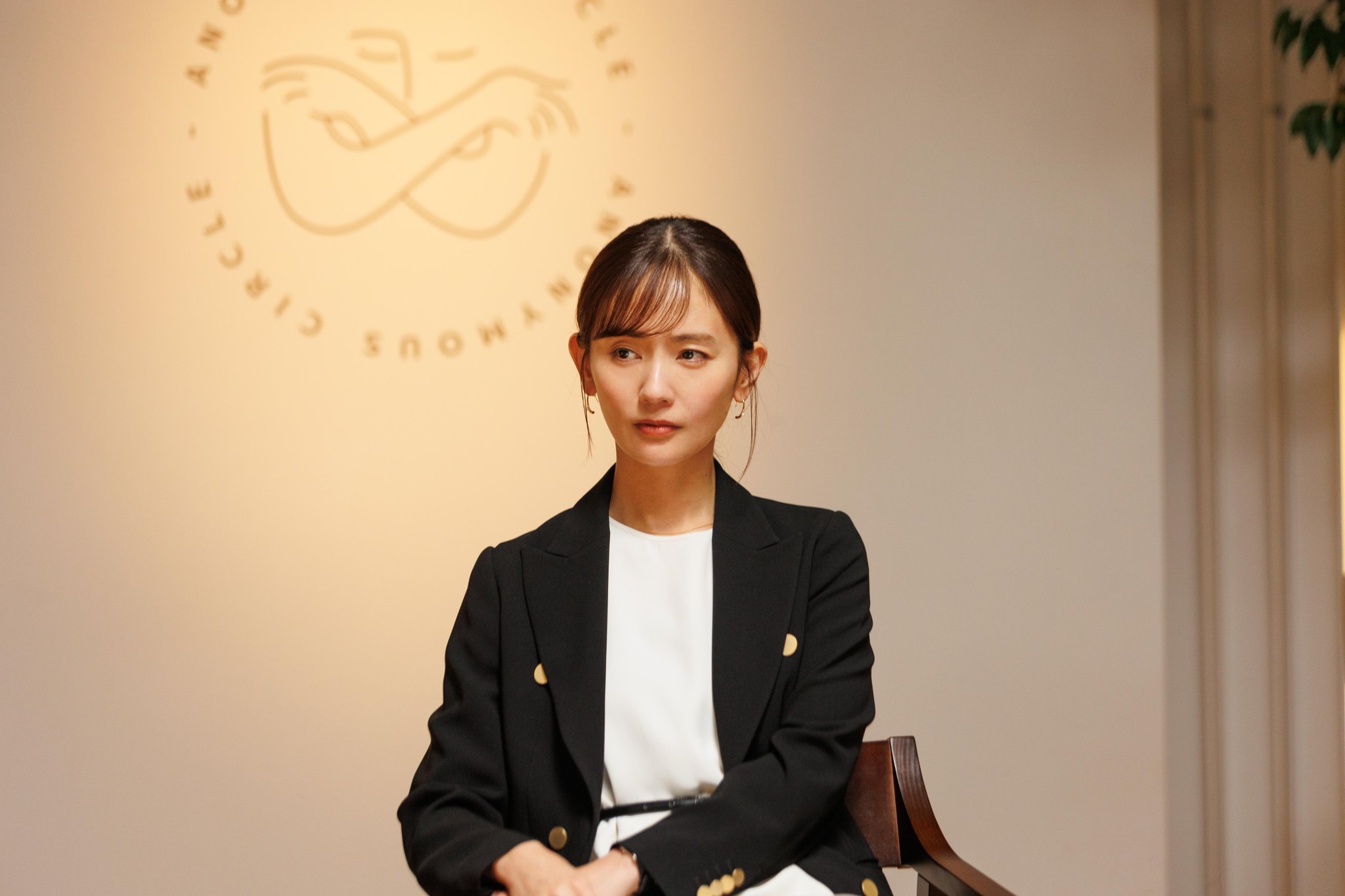
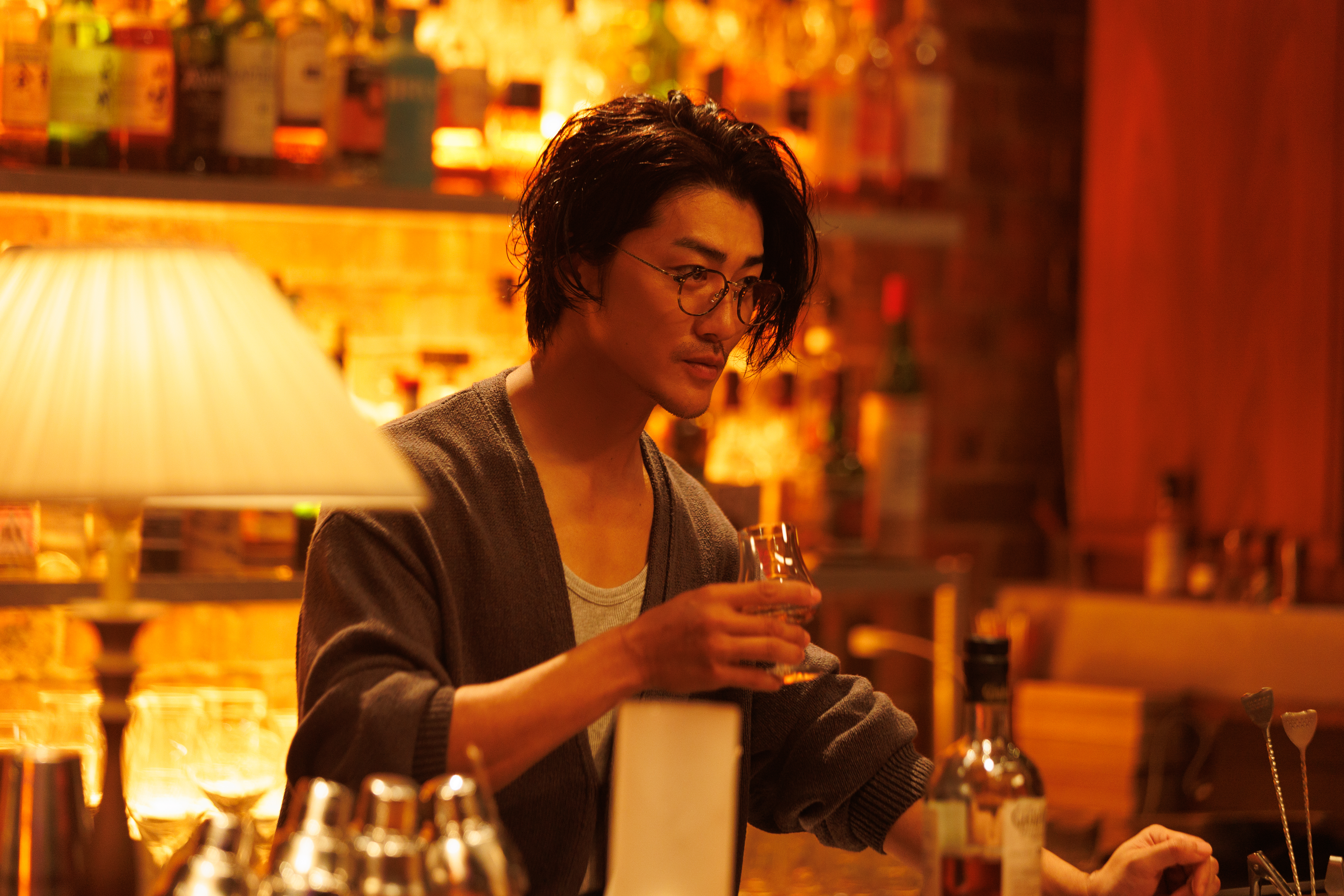
Hiro, stability: Hiro is the least complex character of them all. He doesn’t suffer from an actual condition like Sosuke or Ha Na, nor is hindered by his fears like Irene, but his family background is not a walk in the park. His mother was an alcoholic and his would father beat her up. This dysfunctional family pattern is ingrained in his memories. So, he refuses to get involved with someone who’s not ready. He’s looking for someone stable, who won’t play with his heart at the end of the day. Even if he chases after Irene for quite a while, he rapidly understands that she can’t receive his love yet. So, he gives her space and lets her go. He’s reunited with her at Sosuke and Ha Na’s wedding. Now that they’re both ready, their relationship can start and blossom.
Romance: Whether it’d be the lead or the secondary couple, the romances in that drama are absolutely fantastic. They all rely on the help, comfort, love, affection and assurance each can bring to the other. The leads are soulmates who manage to heal one another. Their fateful encounter was just the beginning of a beautiful journey during which both Sosuke and Ha Na grew and healed. As for Irene and Hiro, they follow the same logic. They had one passionate night, but needed time to date. I also loved the entanglements between characters. Sosuke and Hiro are long-time friends, Hiro and Irene are lovers, Irene is Ha Na’s therapist and helps Sosuke with his condition. She’s his confident and knows everything about that mysterious woman who’s stolen her friend’s heart. Hiro’s bar is located next to Le Sauveur. Hiro yearns for Irene, Sosuke is falling for Ha Na, who has a crush on Hiro and the cycle starts again. It was funny to see everything fall into place and witness characters’ reactions upon discovering the truth.
Symbols: There are some important symbols in the drama that I think deserve some attention. These are either words or objects that emphasize characters’ entanglements and love. For example, Sosuke talks to Irene about Ha Na by calling her ‘Miracle Touch‘. Ha Na uses Korean words to express her emotions towards Sosuke. She insults him by calling him ‘Ssagajji‘ which means ‘jerk’ in Korean or confessing her love by saying ‘Saranghae‘ (‘I love you’ in Korean). Even Sosuke ends up voicing these words reinforcing his feelings and bond with Ha Na. Finally, Hiro is a sort of ‘coat-keeper’ in the drama. When Irene gets drunk, she stays at his apartment. When she wakes up in the morning, she runs away forgetting her coat behind. Hiro will use that cloth in order to keep the contact with Irene through the episodes. At some point, he even ends up with Ha Na’s coat, creating confusion and misunderstandings.
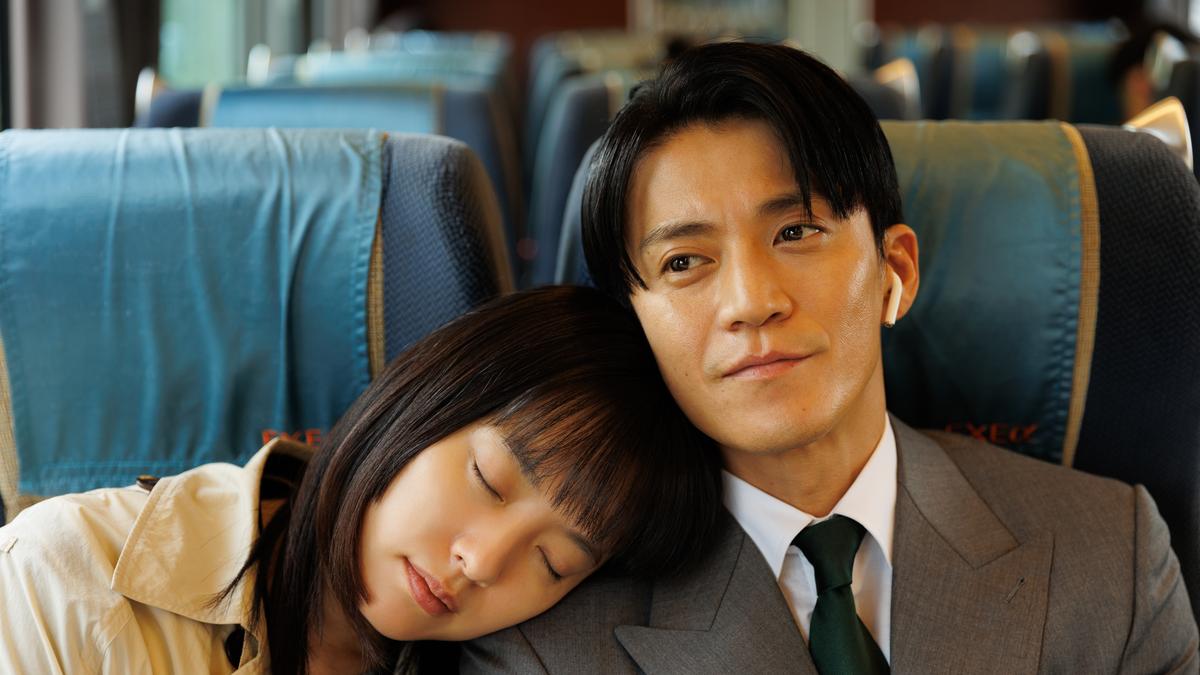
Cinematography: I can’t tell you how beautiful the cinematography of the drama is. You will need to see with your own two eyes. Between the Japanese landscapes and the cooking scenes, there’s just so much to appreciate!
The ending: One year after the events, Sosuke and Ha Na get married, while Hiro and Irene start over together. The drama ends with Irene introducing her replacement at group therapy played by Kentaro Sagakuchi. In the final scene, a new patient (played by Korean actor Song Joong Ki) makes an entrance. These cameos are enough to make me hope for a second season with these two actors as the main protagonists. Fingers crossed, it will happen sooner than later!
 Once Upon a Drama