Presentation

Japanese Title: イクサガミ
Aired in: 2025 (6 episodes)
Channel: Netflix
Grade: 10/10
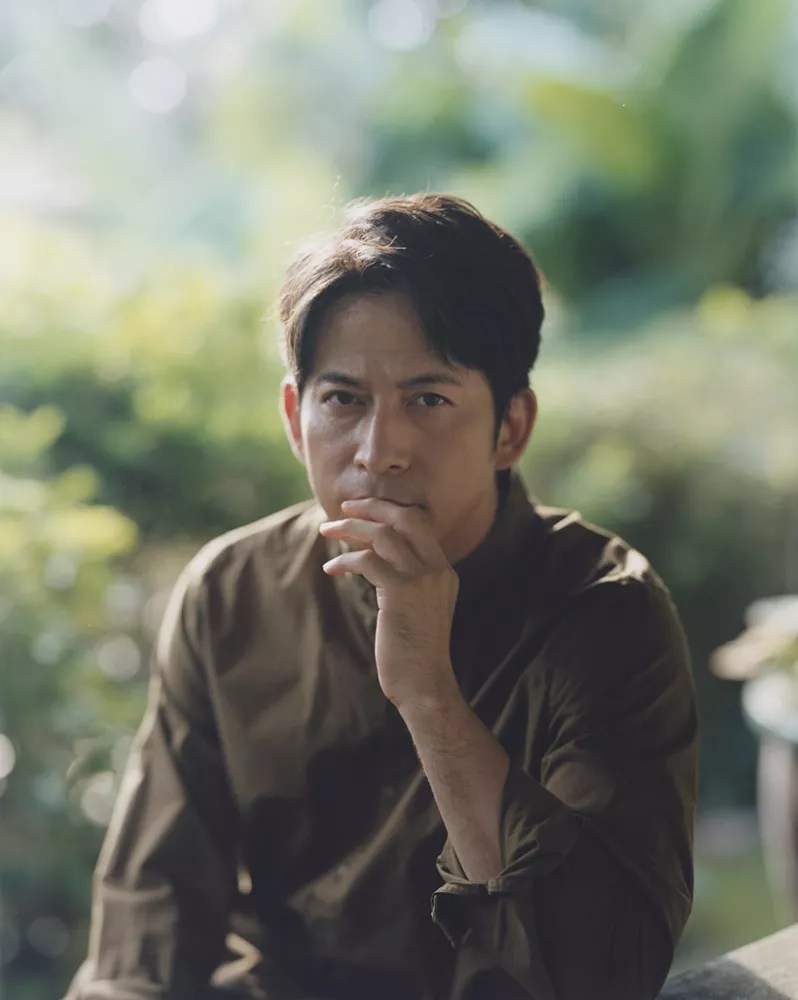
Actors: Okada Junichi, Higoshide Masahiro & Kiyohara Kaya
For more…
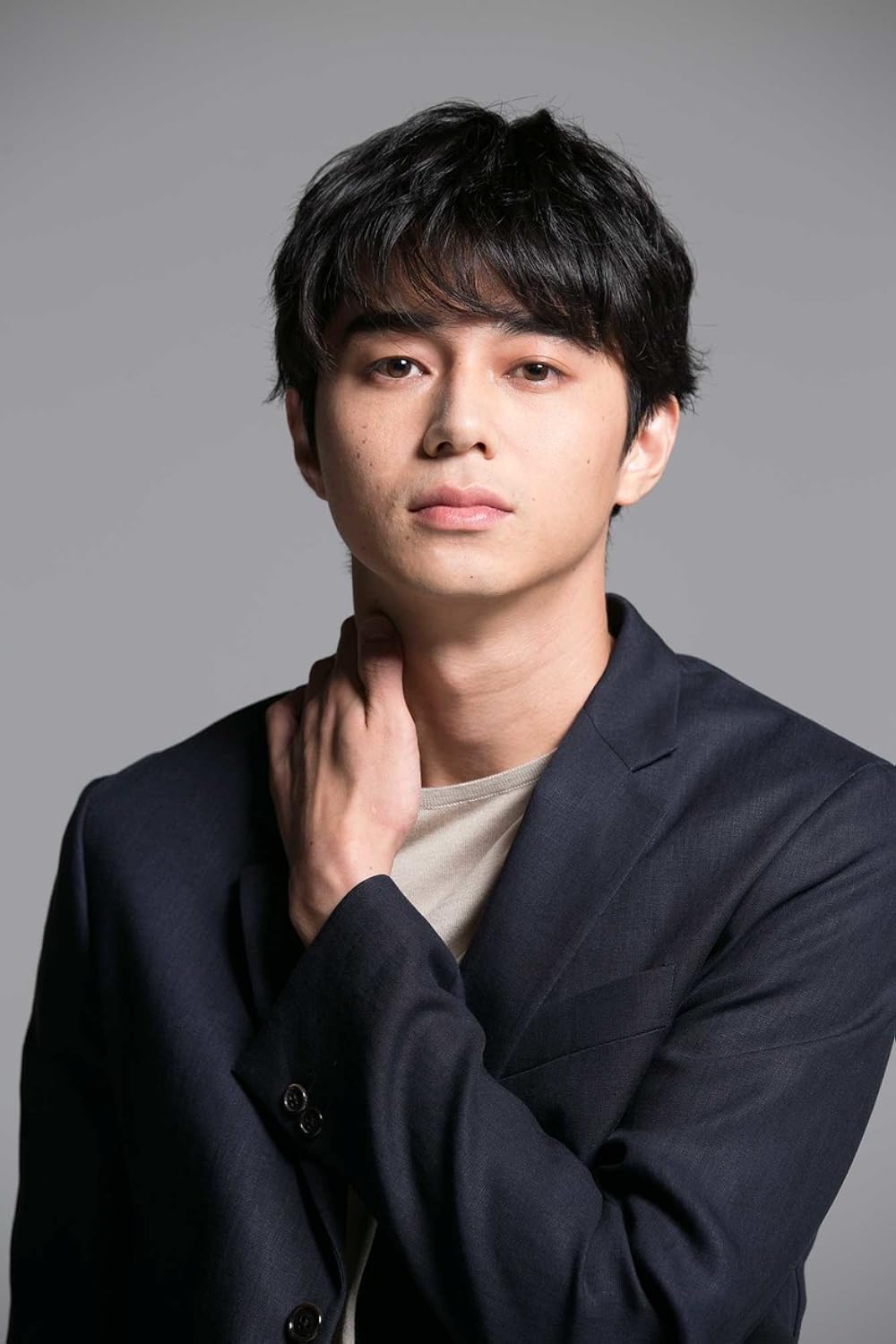

Higoshide Masahiro:
– Seirei no Moribito
– Death Note: New Generation
– Confidence Man JP
– Keiji to Kenji
J-Dramas with deadly games:
– Alice in Borderland
Overview
Synopsis
At the end of the 19th century, 292 warriors gather in Kyoto to participate in a deadly game with a price of 100 billion yen. To win, players have to reach Tokyo with wooden tags stolen from their peers. Among them stands Saga Shujiro who needs the money to save his sick wife and son.
My Opinion (No Spoiler)
This is such a fantastic drama! The Last Samurai Standing perfectly mixes political scheming, historical eduction and action in 6 episodes only. Characters are quite intriguing and I really liked that they deep dived into most of them to give us an understanding of their actions, but also of the political context they’re part of. We’re indeed at a crossroads between the old world with swords and samurais and the new one with guns and politicians. The concept of a deadly game – like we have in Battle Royale or Squid Game – made the story even more gripping. You root for characters you like, but you also distrust everyone. Finally, the cinematography is amazing! Fight scenes, and especially their choreographies, are spectacular. You have no reason not to watch that drama, it’s a gem! I would however recommend you get a bit information on the History of Japan at the end of the 19th century before, if you want to properly understand all the issues. Otherwise, you may miss precious insights.
Analysis
- Political, cultural and social contexts
The Edo Period
The Boshin War
The Meiji Restoration
The Satsuma Rebellion
The constant dichotomy
The powerful zaibatsu
The Ainu people
Other important terms - The game – Kodoku
2 views on politics
Tokyo - Characters
Saga Shujiro
Katsuki Futaba
Kinugasa Iroha
Tsuge Kyojin
Kanjiya Bukotsu
Sakura - Cinematography
- Season 2
Political, cultural and social contexts: According to the historical elements mentioned in the drama, the story should take place around 1878. This is about 10 years after the Boshin War in which Saga Shujiro (Okada Junichi) participated and shortly after the Satsuma Rebellion. This time period is also concomitant with the cholera pandemic that hit Japan between 1877 and 1895. The different waves of the disease ravaged the country, leaving the population penniless and desperate to survive.
The Edo Period: The Edo Period, also known as the Tokugawa Shogunate, lasted from 1603 to 1868. For centuries, the nation relied heavily on samurais, their skills and influence. These warriors would fight with swords, live for honor, and die with dignity and respect. Many samurai families controlled politics and waged war on their enemies. However, the end of the 19th century brought about their downfall. They belonged to an old world that many started to challenge and abhor.
The Boshin War: The Boshin War is the catalyst of that friction between the old and the new worlds. Known as the Japanese Civil War, it opposed the forces of the ruling Tokugawa Shogunate to the partisans of the Imperial Court from 1868 to 1869. Mid-century, Japan became more and more pressurized by Western countries to open its ports. Forced to give in to these demands, the Shogunate was heavily criticized by dissidents who coalesced into a radical movement rallied to the young Emperor Meiji. The tension between both sides exploded in 1868. A year later, the Shogunate was abolished, Emperor Meiji became the political center of Japan, and many reforms were introduced.
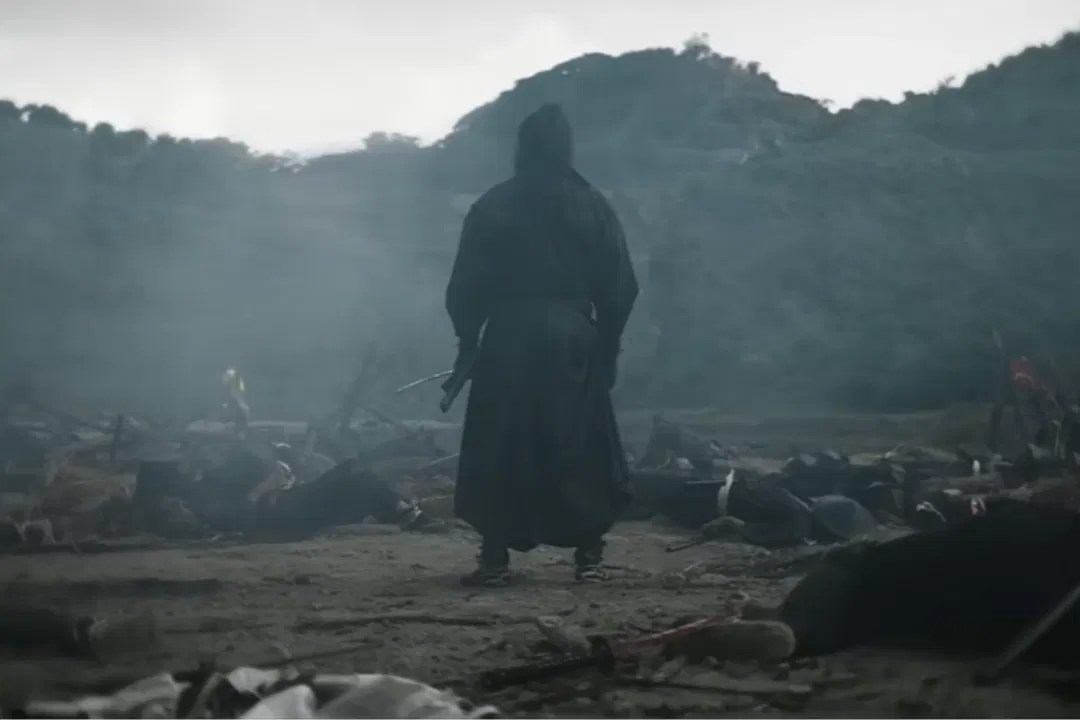
The Meiji Restoration: The Meiji Restoration was established in 1869 following the victory of the Emperor during the Boshin War. It would serve as a foundation of the Empire of Japan until the end of World War II in 1945. This new era is synonymous with modernization and industrialization. It also inflicted a blow to the samurai class, as it abolished the old currency and the domain system, prohibited swords, reorganized classes in society and got rid of the class position of the samurai. Instead, it favored guns, Western ideas, economic developments and diplomacy with foreign powers.
The Satsuma Rebellion: The Satsuma Rebellion, also referred to as the Seinan War, occurred in 1877. Its name stems from the Satsuma domain, home to many disaffected samurai who suffered from the Empire’s military reforms abolishing their privileges. Led by Saigo Takamori, the rebellion was eventually crushed by the imperial modern army and confirmed the Meiji’s government control over a new, modernized, centralized and reformed Japan. In the drama, Bukotsu Kanjiya (Hideaki Ito) is thrown into prison as punishment for the role he played in the Rebellion. He will only be released to join the deadly games.
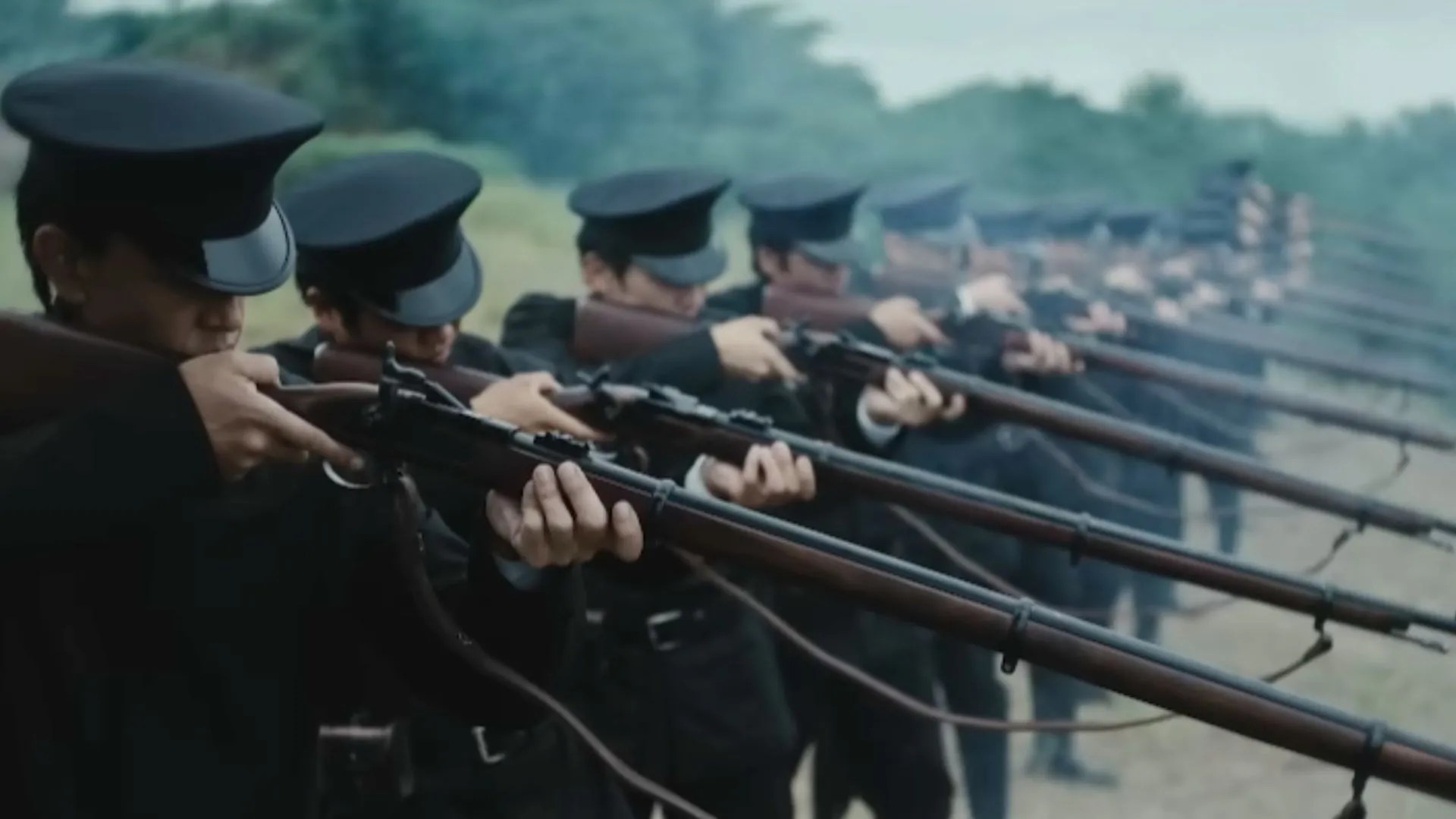
The constant dichotomy: The drama displays a constant back and forth between the old world and the world. In the first one, swords are the main weapon. The country is ruled by the Shogunate, samurai is a prestigious title, warriors fight and die with honor. In the second one, the Empire controls the Nation. Modern artillery like guns and cannons have replaced steel. Politicians make decisions and prioritize their power and influence over the archaic values. This dichotomy is particularly hard to navigate for samurai stripped of their rank, their privileges and even their swords. They don’t have a purpose anymore nor do they have a role in this new society. The transition is even more challenging for the remnants of the Shogunate who either survived the Satsuma Rebellion or don’t wish to get involved politically.
The powerful zaibatsu: Zaibatsu are a business structure specific to the Empire of Japan that controlled the economy from the establishment of the Meiji Restoration in 1868 until the end of World War II. These are conglomerates, owned by a single family, and composed of various industrial and financial subsidiaries (like a bank for instance). Zaibatsu are the equivalent of the “Chaebol” in South Korea. Here, the drama displays the ‘Big Four’ that are the most powerful zaibatsu of the period (Mitsui, Mitsubishi, Sumitomo and Yasuda). Their leaders helped organize the game and bet on the winning contestant. They don’t fear retaliation from the government in place as they know that their power, wealth and grip over the economy shield them from any kind of punishment.
The Ainu people: The Ainu are native people residing in Hokkaido, located north of Japan. They are also present in the southern Sakhalin, and the Kurils which are territories that belong to Russia. They were forced to assimilate to the Yamato culture since the 18th century which dominates Japan. Under the Meiji Restoration, new and stricter assimilation policies chased the Ainu people away from their lands, obligated them to give up their religion and language, as well as their traditional ways of living (hunting and fishing). This people is embodied by Kamuykocha (Shota Sometani) in the drama. His clothes, his large bow and skills in archery, topped with his respect for human life (especially kids’ and animals’) make him stand out from the rest of the group.
Other important terms: Apart from the historical events above-mentioned and the terminology previously explained, I think you should be aware of these terms if you want to understand the drama properly:
Shizoku: Social class made up of former samurai that existed under the Meiji Restoration from 1869 to 1947.
Kokushu: ‘Executioner’ or ‘Manslayer’ – that’s how Shujiro is addressed by the others.
The game – Kodoku: Though it’s still unclear to me what the term ‘Kodoku’ means, its rules are quite simple. In this game, the 292 registered participants are each given a wooden tag. A tag is equal to one point. Players start their bloody journey at Tenryuji Temple in Kyoto and need to reach Tokyo in a limited amount of time. But they first need to pass through other cities along the way. To enter these places, they need to have a certain number of points, meaning that they must kill other participants and retrieve their wooden tag. On top of that, there are some other vital rules you need to follow: First, you must use a sword. Second, you are not allowed to remove your tag and run away. If you do so, you are immediately executed by the soldiers overseeing the game. Third, you can’t talk about the game to anyone such as the police. Here again, soldiers will execute you. At first, the objective of the game is unclear. So is the identity of the mastermind behind it. Little by little, the drama reveals that the Police Bureau, led by Toshiyoshi Kawaji (Gaku Hamada), organized the game to get rid of the last samurai that caused instability in the country following the Satsuma Rebellion.
2 views on politics: Once Kawaji’s plan is unveiled, it becomes clear the the government is plagued with political clashes between two sides. Although Kawaji and Toshimichi Okubo (Arata Iura), the current chief of government, both wish to make Japan a stronger nation, their methods are in complete opposition. The creator of the game would rather use violence against cruel and brutal samurai. He’d rather kill these liabilities for the good of the people – and thus avoid another civil war – than try to coexist with them. Reversely, Okubo preaches peace, harmony and cohabitation. He’d rather use politics, laws, and negotiation to protect the people from bloodshed. Considering that the ruling government (the head) and the Police Bureau (the hands) are at odds, it seems like samurai don’t really stand a chance in that game. They are the collateral damage of this transitionary period.

Tokyo: Right from the start, participants are told that Tokyo is their final destination. To enter the capital, there is however one important requirement: You need to have 30 points. This means that you must kill and/or steal from 30 people. If you do the math, only 9 players can enter the city. But there can only be one winner. This leaves us with quite a good number of questions as to how the competition will unfold in Tokyo. Will the final players fight against each other in an arena? Will the Police Bureau organize duels like for gladiators? Will the winner ever get the prize money? Will there be a survivor? And so many others.
Characters: The drama does an excellent job at deep diving into the background of most characters using flashbacks at beginning of each episode.
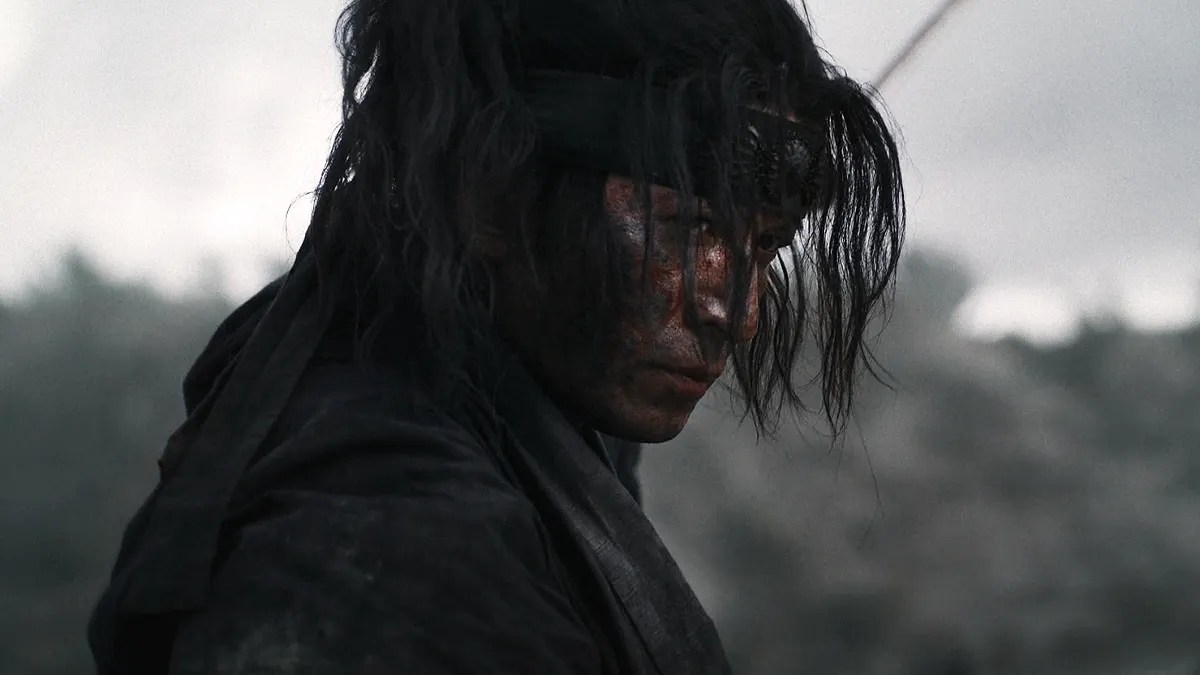
Saga Shujiro: Shujiro decides to take part in the Kodoku to save his sick wife and son. His daughter recently died of cholera and he doesn’t have enough money to buy medicine for the rest of his family. The winning prize is his chance to protect them. In his past, we discover that he used to be a great warrior known as ‘Kokushu’, the Manslayer. He led the samurai attack during the Boshin War, but was betrayed by his own side. Standing victorious in the middle of the battlefield, cannon balls started to fall from the sky and to rip his fellow brothers apart. Since then, he’s never touched a sword anymore and has been suffering from PTSD (Post-Traumatic Stress Disorder). Every time he’d touch his weapon, his hand would shake. This physical reaction obviously changes in the game when Bukotsu threatens to kill the kid he protects. Later on, we get more insights on his youth. His skills are the result of years of training at the best martial arts school alongside 7 other siblings. They grew up together and went through everything as one. When the Master tells that that only one can survive, Shujiro refuses to comply and runs away. This triggers a series of complications for the remaining siblings who are forced to flee as well, while being chased by the Master. The latter is indeed afraid that his pupils would reveal the secrets of the school. So, he intends on eliminating each of them. Within the game, Shujiro reunites with Kinugasa Iroha (Kaya Kiyohara), one of his former siblings. They reconcile and join hands to survive together. Personality-wise, Shujiro is an upright character who values human life. Every time he had to kill, it was for a reason (an enemy threatened him, the war…). He rarely uses his sword to kill innocent players in the Kodoku. He’s loyal, empathetic and forgiving. But his main personality trait is his father instinct. Hence his desire to protect Futaba (Yumia Fujisaki) who’s too young to be mixed with the horrors of the adult world.
Katsuki Futaba: Futaba is a teenager who, like Shujiro, was drawn to the game by the prize money. Her mother and the children she shelters are all sick with cholera and she wants to help. On that point, she’s very similar to her protector. In the Kodoku, Futaba is immediately helped by the lead protagonist. He defends her at Tenryuji Temple and takes care of her during their journey. To me, this young character is the perfect example of innocence. She’s a child whose intentions are pure. She may be defenseless, powerless and weak. Yet, she’s very humane. She hasn’t been tainted by wars, corruption, betrayal, hatred and resentment. To her and her family, survival means saving others. Hence her participation in the game. The display of that inherent humanity is clearly visible when she decides to give Sosuke (another player) one of her wooden tags, so he can move on to the next city. Contrary to her companions who were willing to let the young boy die, Futaba teaches them a lesson and reawakens their compassion for others. She emphasizes that you don’t know what tomorrow is made of, but if you can help someone today, you should do it. What you believe to be a lost cause could become a victory in the future. This makes me think that this small gesture will be of use later on in the story. Sosuke might be the one saving the group in the future.
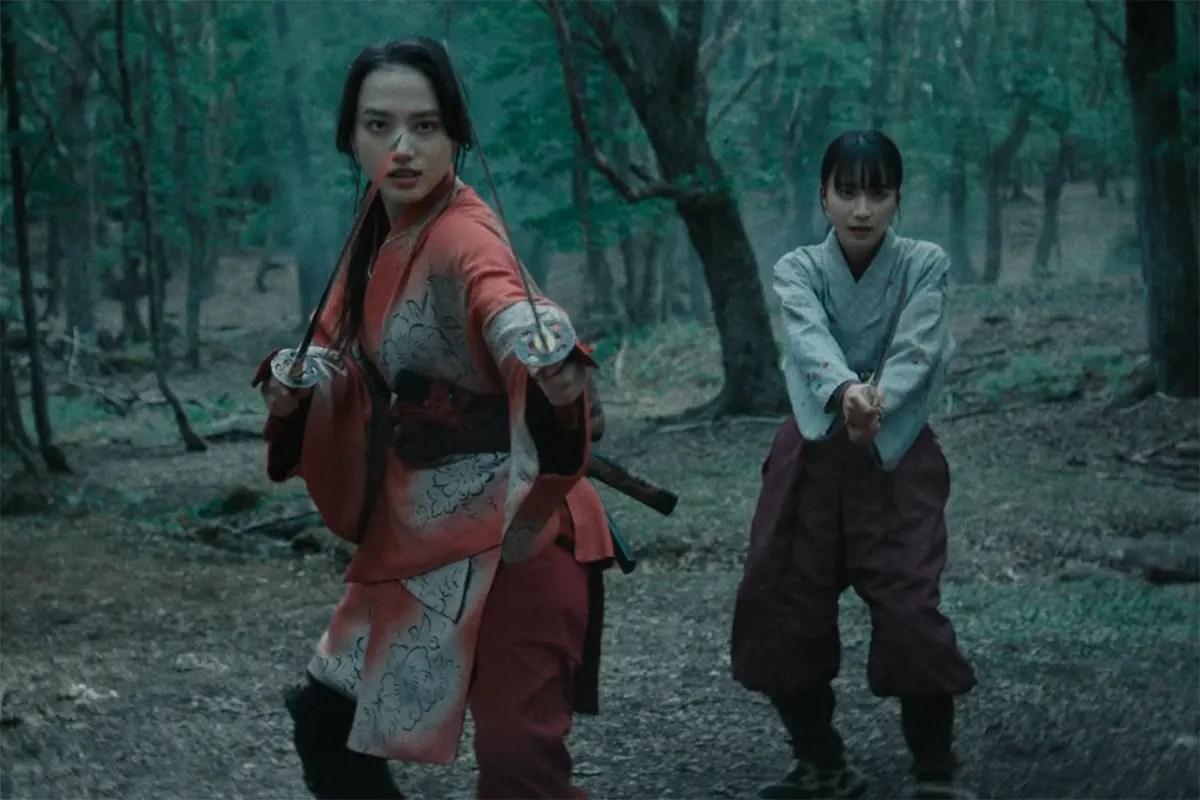
Kinugasa Iroha: Iroha is the only female warrior of the drama. She was raised with Shu-nii (Shujiro) at the same school and suffered from his coward departure. She resented him for forcing her to wander around and lose her purpose. She’s spent her life on the run from their former Master, Gentosai (Hiroshi Abe), and was obligated to hide. As a woman in a patriarchal society, life was not easy. She was not allowed to become a soldier, go to war, or even wield a sword. Her only option was to join a troop of artists and create a throwing knives show. She was belittled and disrespected by men. Not only is the Kodoku a way for Iroha to redeem her honor, but also the perfect occasion to kill Gentosai and regain her freedom. She’s Futaba’s role model, an older sister who shares the kid’s humanity and Shujiro’s desire to protect her. I think her years of solitude made her wish for the only one thing she’s ever known: brotherhood with her siblings. That’s what Iroha wants to recover: her family.
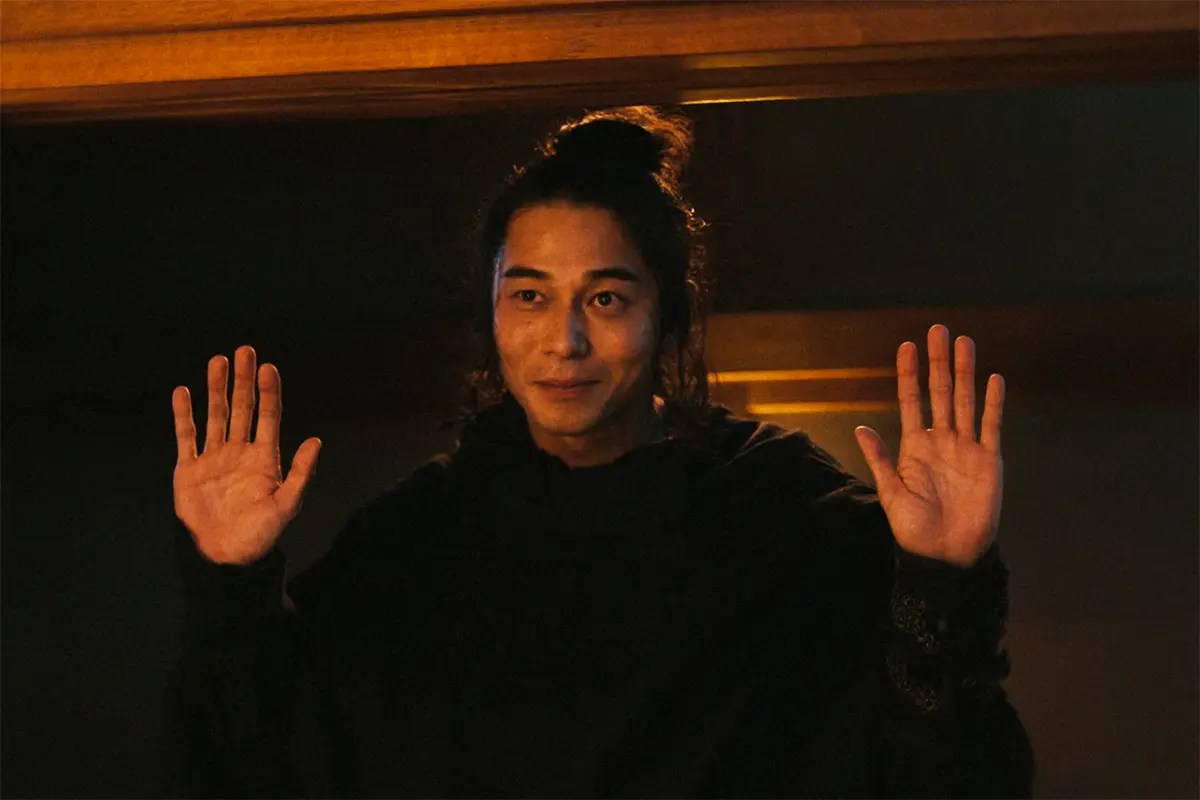
Tsuge Kyojin: Kyojin (Masahiro Higashide) is the most interesting and most enigmatic character because we don’t really know his intentions. Right from the start, this schemer insists on making an alliance with Shujiro. Though he pretends he wants to uncover the bigger conspiracy behind the game, he’s always many steps ahead, making it hard for us to entirely trust him. He’s a born strategist, extremely skilled and agile. His past is not explained in the first season contrary to other characters which increases the mystery. At the end of the show, we find out that Kyojin is working hand in hand with Gentosai. He’s been giving him information regarding the last pupils of the school, hoping the old Master would eliminate them. Why? What are his intentions? What’s his end game? Is he working with the organizers? Or is that a strategy to ensure his place in Tokyo? Why did he approach Shujiro in the first place? Hopefully, we’ll get some details in the next season.
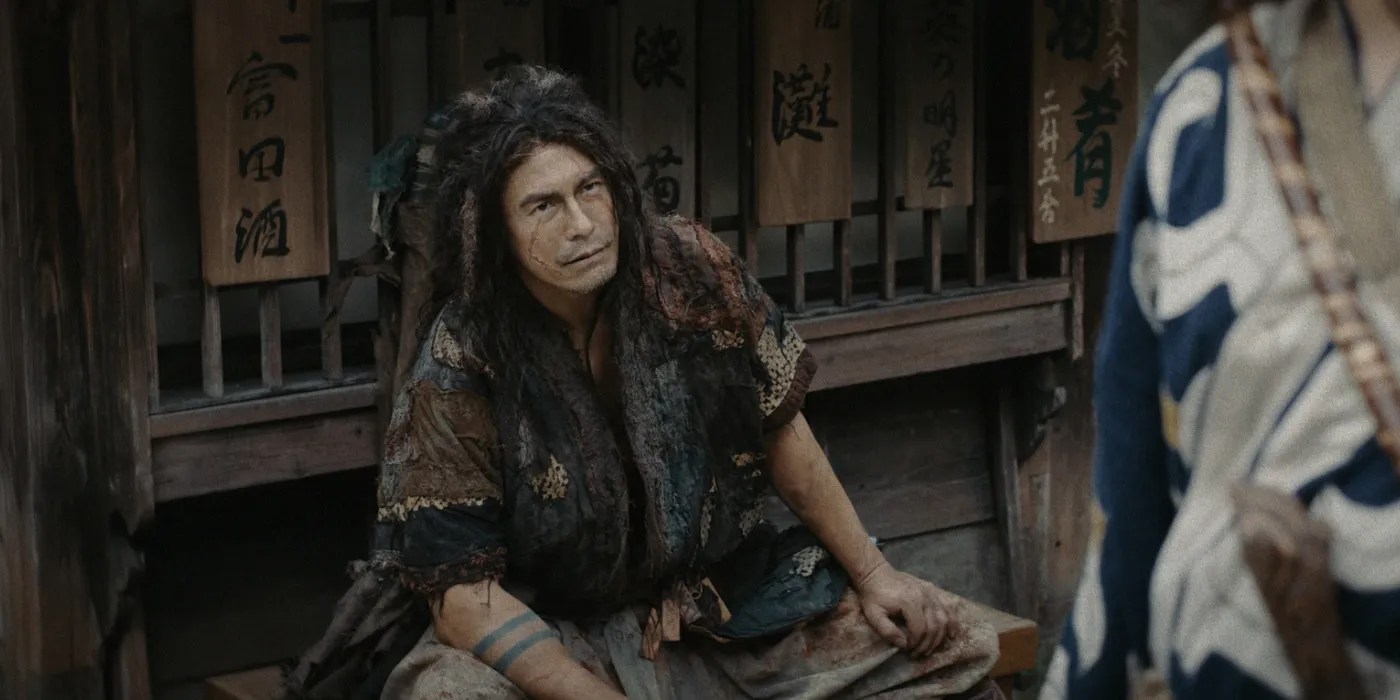
Kanjiya Bukotsu: Bukotsu is a warrior who fought the Boshin War alongside Shujiro. His entire life revolved around swords, war and fighting. So after the war, he refused to admit that the days of samurai were actually over. He spent a decade wandering around without a purpose. It seems like he also participated in the Satsuma Rebellion leading him straight to prison. When he’s offered to participate in the game, he can’t refuse his last chance to be a samurai. My guess is that Bokutsu has been robbed of his chance to die on a battlefield like a true warrior. He survived the wars and the Edo period was abolished. He got lost in this new modern world where his role was obsolete. In the game, he projects all of his resentment against the world towards Shujiro who managed to adapt. Their past relationship makes him the perfect candidate for Bukotsu to finally die with honor, like a true samurai. He draws his last breath after crossing swords with the Manslayer in an epic battle.
Sakura: Sakura (Yasushi Fuchikami) used to be a samurai who also fought the Boshin War with Shujiro. Contrary to Bukotsu, Sakura found a new role to play in the modern world. He switched his sword for a gun and joined the ranks of the Police Bureau. To survive, he adapted to this new environment and was forced to betray his former brothers. I think Sakura is a very interesting character that represents the dilemma of many who live through the transition between two periods. Some die in the process, others learn to blend in. Even his new name, Sakura, is symbolic. It stands for cherry blossoms that is generally synonymous with spring and rebirth. It’s also quite ironic considering that it sounds very sweet and innocent, when the character doesn’t hesitate to ruthlessly kill others.
Cinematography: The fight/battle scenes are spectacular! I would particularly applaud the breathtaking sword choreographies. My favorite one is by far the duel between Bukotsu and Shujiro. The antagonists cross swords in a middle of a crowd, then in a small kiosk that catches fire, before running into the nearby river. The war sequences are also visually stunning. The aesthetics of the show are just on another level.
Season 2: The finale of the show announces the end of Chapter 1. Obviously, this means that a Chapter 2 (a second season) should be on its way quite soon. This would make perfect sense considering that characters are halfway through their journey in episode 6. Many questions remained unanswered regarding 1/ individuals like Kyojin or Kamuykocha 2/ new characters like Toya (Ryusei Yokohama) 3/ the political instability following the murder of Okubo and 4/ what awaits players in Tokyo. So, I can’t wait to have some great news about this show!
 Once Upon a Drama