Presentation
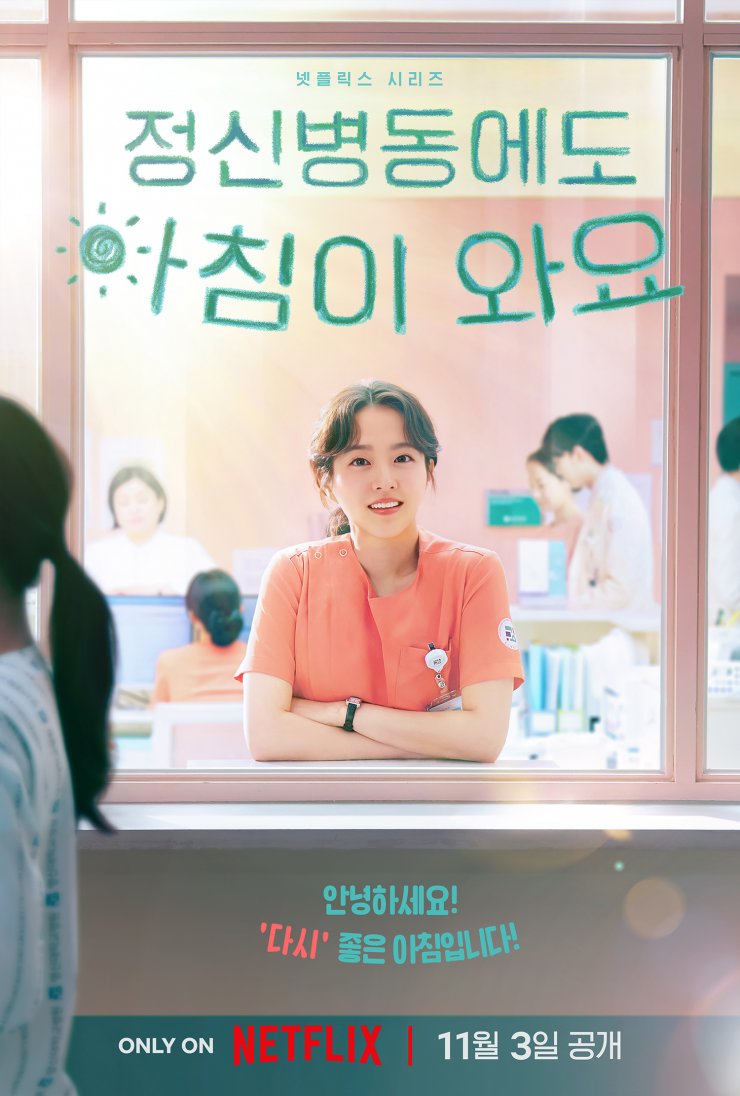
Korean Title: 정신병동에도 아침이 와요
Aired in: 2023 (11 episodes)
Channel: Netflix
Grade: 10/10
Actors: Park Bo Young, Yeon Woo Jin, Lee Jung Eun & Jang Dong Yoon
For more…


Park Bo Young:
– Oh My Ghostess
– Strong Woman Do Bong Soon
– Abyss
– Doom at Your Service
Yeon Woo Jin:
– My Shy Boss
– Queen for 7 Days
– I Wanna Hear Your Song
– Thirty-Nine
Jang Dong Yoon:
– School 2017
– The Tale of Nokdu
– Oasis
– Like Flowers in Sand
Overview
Synopsis
Jung Da Eun is a nurse. One day, she is transferred to the neuropsychiatric ward where she tries her best to do her job with the help of Head Nurse Song Hyo Jin. Dong Go Yoon works as a doctor. He starts developing feelings for Da Eun. Song Yoo Chan is Da Eun’s friend. He seems bright, but hides a lot of pain.
My Opinion (No Spoiler)
Daily Dose of Sunshine is such a gem. I simply loved it! Generally speaking, I would admit that I am a huge fan of dramas that tackle mental health. So, it was obvious that I would watch this one. And I am not disappointed at all. The different mental illnesses are depicted with respect and a lot of empathy. You feel for the patients and for the nurses. You also root for them to get better. I actually learned a lot with this drama. Characters are also super heartwarming and moving. Da Eun is a ray of sunshine, Go Yoon is the best support you can dream of, and Yu Chan an excellent friend to rely on. All of them were well-intended and showed that anyone can suffer from a mental illness; but you shouldn’t be stigmatized for it. As for the romance, there are enough fluffy love stories to keep you entertained. All in all, the drama is soft and educational at the same time, so I highly recommend you take a look at it.
Analysis
- Episode 1, the opening
- Episode 2, the impact of others on you
- Episode 3, panic attacks
- Episode 4, money can’t buy happiness
- Episode 5, burn out
- Episode 6, life is no illusion
- Episode 7, grief
- Episode 8, the point of no return
- Episode 9, accepting help
- Episode 10, recovery
- Episode 11, prejudice
- Episode 12, start anew
For this review, I have decided to adapt my analysis to the format of the drama. Indeed, each episode sheds light on a specific case, a patient and a mental disorder that is interesting to talk about. Moreover, characters’ personalities and situations are also tackled episode after episode.
Episode 1, the opening: The drama opens with nurse Jung Da Eun (Park Bo Young) who’s been recently transferred to the psychiatric ward. There, she meets her first patient: a woman of 43 years old. Though she seems to be fine on the outside, she has developed bipolarity because of her mother’s constant control of her life. Indeed, the patient has always been suffocated by her mother, who even decided the food she should like (in that case it’s grapes). This resulted in the patient not feeling an ounce of freedom in her life, and having her self esteem to plummet to 0. Her eccentric and expressive behavior (she starts dancing naked in the ward) is a way to express her buried freedom before going back to her usual reserved self. At first, the mother doesn’t want to accept that she’s responsible for her daughter’s disorder, but eventually gives in when Da Eun tells her that, just like her own mother does with her, she knows she loves her child and wishes her good. However, this can sometimes have a negative effect on the adult person. At the end of the episode, the mother brings a fruits salad to her daughter, so she can decide what food she likes. This is a first step towards healing. This first episode reunited for me all the necessary ingredients to introduce the drama. Firstly, you have Jung Da Eun who’s kind and empathetic. From the get-go, it’s clear that she wishes the best for her patients and wants to help them heal. However, her kindness can also appear as a weakness, as being too kind will eventually result in her giving in to her emotions. Second, the drama shows the devotion and dedication of the staff towards their patients. Though each nurse has her own way of dealing with patients – Da Eun demonstrating a cooler and more humane approach – they all have at heart their well-being. Third, our first patient immerses you directly into the universe of the drama. As a viewer, you rapidly understand the ups and downs that each episode will provide you with. Innocence and naivety have been ripped off as fast as a band-aid, and reality strikes us and the main character even harder. Finally, this first case is a good entry into the psychiatric world. Nurses and doctors working in that unit often see the consequences of patients’ actions and behaviors, but they need to dig deep to understand the root of everything. And very often, that root is people. Whether it’d be your family, your colleagues, your friends, your boss, or anyone else; people and their behaviors greatly impact our lives and can make us hit rock bottom if external actions are perceived as threats that destroy the self.
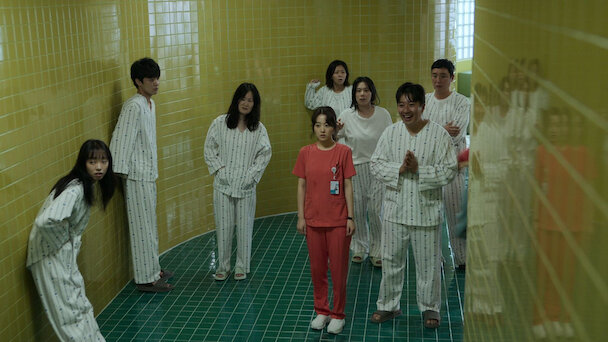
Episode 2, the impact of others on you: The second episode focuses on a man who’s been bullied for months by his new boss. For months on, he humiliated, despised, harassed and denigrated him to the point that the patient’s self-esteem hit rock bottom. His mental state and constant anguish worsened and reflected in his performance at work. Over time, he developed a social anxiety disorder and started fearing people’s looks on him. Seen as the scapegoat, no one truly stood up for him nor tried to defend him. On the contrary, he developed a certain paranoia, as he believed that his colleagues (and people around in general) were taking about him and criticizing him, just like his boss would do. Isolated and on the verge of breaking down, he found solace in his pet companion Captain Hook, a cat who would listen to him, show love unconditionally and would be unable to talk behind his back. Seeing how broken her patient is, Jung Da Eun tries her best to lift his spirits up. She has several heartfelt conversations in which she tells him to stop saying sorry for others’ mistakes – what his boss would force him to do – because making mistakes is human and he’s not responsible for everyone else’s. By hearing that, he starts realizing that she’s right which is a first step towards healing. Though the episode demonstrates how much impact people can have on your mental health – whether it’d be negative (boss) or positive (Da Eun) – it also sheds light on the difficulty of Da Eun’s job, as one slip of tongue or behavior can be misinterpreted and lead the patient to enter a crisis. Hence, the rule that forbids medical staff to bond too much with patients and become emotionally involved with them. As an example, Da Eun’s patient goes rogue when he hears that his cat has been kind towards others (here Da Eun). He feels betrayed by the only emotional support he had left, and misjudged Da Eun’s actions as ill-intended. Trust me, lesson is learned: Always keep in mind that what you say and do can indirectly hurt others deeply.

Episode 3, panic attacks: The third episode focuses on Da Eun’s best friend Song Yu Chan (Jang Dong Yoon). Again here, the root cause of his mental disorder is work and the pressure this environment brings with it. In parallel, we follow the journey of a young male nurse, named Ji Seung Jae (Yoo In Soo), who is doing his training at M.U.M.C. Psychiatric Unit. Both Yu Chan and Seung Jae suffer from panic disorder that they pain to cope with. In Yu Chan’s case, his excellent performance at work resulted in people giving him more and more work with very tight deadlines. Over time, he felt like he was drowning in his tasks and suffocated. He started seeing himself surrounded by water during his panic attacks, and simply incapable of breathing. This ultimately led him to quit his job and successful career, as he couldn’t survive like this anymore. Neither his parents nor his friend understood his choice, because he didn’t share any information. For the trainee nurse, the circumstances of his panic attacks are slightly different. He doesn’t really know the cause. But the impact on his life is just the same. He asks to go to the toilets many times a day, just so he can breathe at the window. This disorder is a huge challenge in his work, because he needs to be available and ‘sane’ to deal with unstable patients at all times of the day. Once again, Jung Da Eun takes matter into her own hands. When she stumbles upon Seung Jae having an attack, she decides to have a conversation with him. Similarly, Yu Chan is approached by Dong Go Yoon (Yeon Woo Jin), a proctologist working at Da Eun’s hospital who has a crush on her – and also his own disorder. In both discussions, Da Eun and Go Yoon emphasize on the fact that it’s possible to live with panic disorder and work, you just need to surround yourself with people that make you comfortable and at ease, who will help you breathe. I couldn’t agree more with this statement. We don’t often realize the impact that people have on us, but it’s important to open up to those who can listen whenever you feel the need. Never underestimate the power of others, whether it’s good or bad. Da Eun and Go Yoon played their role perfectly in that situation. They ‘de-dramatized’ the disorder and rationalized patients’ fear of having a panic attack which causes even more harm, as anticipation increases the stress and the risk of actually having an attack. By doing so, they managed to calm down both patients and to prove that not feeling overwhelmed and powerless can be solutions to live with your disorder.


Episode 4, money can’t buy happiness: Moving on to our next case. In this episode, a young woman has been scammed and lost all her money. Her guilt and the feeling of betrayal resulted in her developing a psychosis. When she arrives at the psychiatric ward, she seems rather harmless. Yet, she has a tendency of accusing people of theft. This hectic behavior makes other ‘residents’ agitated, as she starts screaming and throwing objects around her. Jung Da Eun is assigned to this patient. Though the relationship seems to start off well, it rapidly deteriorates. The patient convinces herself that Da Eun has stolen from her and harasses her to get it back. The harassment turns into threats, and it becomes difficult for Da Eun to continue the patient’s treatment, while not worrying for herself. Parallel to that case, the episode focuses on the nurse named Min Deul Re (Lee E Dam), who’s in a bind financially. Her mother is a gambling addict and has thus squandered her money and her daughter’s savings. Worse, she comes back to her child every time she’s in need and begs for more. When we first see Min Deul Re, she looks cold and arrogant from the outside. She’s built herself a hard shell in order to protect herself from others. She distrusts everyone – starting with her mother – and fears relationships, as hers have always brought her pain and worry. Therefore, she deals with her problems on her own and rejects people – even well-intended ones. Among them stands a fellow colleague doctor, Hwang Yeo Hwan (Chang Ryul). He’s a wealthy man coming from a powerful family of doctors. Moreover, he’s also sweet, kind and warmhearted. He’s fallen head over heels for Min Deul Re and tries his best to approach her and conquer her heart of stone. The evolution of their relationship is an interesting side story in the drama. To be entirely honest, I loved how they learned to rely on one another, despite all the hurdles on the way. It was really comforting to see Deul Re receive affection and selfless love from Yeo Hwan. They do make a fine pair!


Episode 5, burn out: The next episode focuses on a working mom whose daughter is being bullied at school. After a moment, she realizes that she, herself, is unwell after having accumulated a lot of stress and anxiety due to her work. She’s got insomnia, stresses over many things among which her daughter’s bullying, and is on the verge of a mental breakdown. Indeed, she finds out that she’s got some hallucinations and a mild depression. The most unexpected twist of the episode is that the plot diverges from the daughter to the mother’s problems. The mother was unaware that she’d been burning herself out for years and that she was barely holding it together. I really liked this episode to be honest because it’s proof that everyone can be subject to mental breakdowns and disorders, even unknowingly. Sometimes, you tend to turn a blind eye to your own issues, while focusing on others’ or on your work, tasks, etc… However, you must not forget that your own mental health is important and that you need to learn how to take care of yourself. Otherwise, you’re risking too much for the result you get. Moreover, the drama does a perfect job at putting in parallel patient’s cases with the staff’s lives. In this episode in particular, overworking and its consequences also impacts nurses, especially Park Soo Yeon (Lee Sang Hee). Indeed, she juggles between her unhelpful husband, her young toddlers and her demanding job. All of that together can prove to be draining and requires a lot of mental strength and determination to avoid spiraling down. Other nurses are pushed to their limits when it comes to balancing work and personal life. I thought this parallel was totally on point, as we tend to forget that those who take care of patients also have their own issues and may be having a hard time without us knowing it. Though the drama centers on patients at first, a huge part of the story is dedicated to the doctors, nurses and helpers who make life bearable for these people. As part of this working mom’s therapy, writing a diary relating important moments of her life and highlighting the negative emotions is a way to confront herself with her depression. By shedding light on the negative in her life, she becomes totally aware of her feelings and how badly they impacted her daily routine. Little by little, she manages to transform these negative feelings into positive moments that bring her joy, satisfaction and hope. A good start to overcome her depressive state of mind. You also need to see the glass half full and absorb the small joys in life.
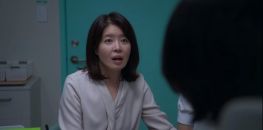

Episode 6, life is no illusion: Mid-drama, the plot centers around a patient named Kim Seo Wan (Roh Jae Won) and his relationship with Jung Da Eun. Though we had already seen bits and pieces of him, this character plays a crucial role in the later development of the female lead. Seo Wan lives in an illusion. He passed the civil servant exam 7 times, but continuously failed. He worked hard night and day, memorizing all the questions and learning everything he could to prepare. Yet, his efforts never paid off. This led him to develop a disorder that caused him to change his reality. He gradually convinced himself that he was living in a world full of dragons, knights and quests. This world comes straight out of the video games he used to play to decompress. He enclosed himself hard in this new reality because he was incapable of confronting himself with the real world. He couldn’t accept failure anymore, not to mention the low sense of self, low self-esteem and self-confidence he had following these 7 years of hard work. Despite all that, Seo Wan proves to be a kind and quiet patient (most of the time). He gets along really well with Jung Da Eun whom he considers as an important player in his fictitious world. She also appreciates him and even takes part in his game. Unlike others, she doesn’t judge him or try to make him understand that what he believes is reality actually isn’t. Hence, their close relationship. Da Eun bonds with him – which is generally dangerous when you’re working with patients. Unfortunately, this bond is also what drags her down afterwards. She let herself get emotionally attached and the consequences hit her like a tidal wave. Seo Wan starts a new treatment and shows progress. He slowly comes back to his senses and the reality he lives in. Jung Da Eun notices that improvement and informs his doctor. The latter then decides to discharge him. Instead, he’ll get back to his normal life, but will still regularly check up with his doctor on appointments. His parents will also need to help him get used to the reality outside and support him, so that he doesn’t fall back into his old ways. Though the prognosis is optimistic at first, Seo Wan is confronted with his past demons the minute he goes out. He chooses to try for the civil servant exam again, before realizing that he’s failing (again). In an attempt to fight against a fictitious dragon in his imaginary reality, he jumps off a roof and kills himself. This action has dire consequences on his family, the medical staff that feels guilty for not saving him, and more importantly on Da Eun for telling him out to the doctor and accelerating his discharge. He was maybe not ready to go out of the hospital yet.

Episode 7, grief: On episode 7, the drama starts to deep dive more into the serious themes associated with mental health. Until then, cases used to be punctual in the drama and only involved patients. Seo Wan’s death is a turning point for Da Eun – and the intrigue – as the grief that follows spreads to all characters. In the meantime, a new patient arrives at M.U.M.C. Psychiatric Unit. His baby suffered from the infant death syndrome and his wife committed suicide after their baby’s abrupt death. He then developed schizophrenia and refused to speak. He feels extremely guilty and responsible for not being able to save his baby and his wife when she was still alive. The guilt eats him away and shatters his state of mind. This new side story sheds light on one of the ways to deal with grief which is crumbling down under the weight of guilt and sadness. Now, if we focus on Jung Da Eun, it’s clear that the drama aims at demonstrating a second type of reactions when people are confronted with death: Denial. The loss is so tough and the shock is so intense that the brain simply shuts down and erases the event as a way to protect itself from the overwhelming emotions. In the first case, the patient is able to free his speech by sharing his story with people in similar situations as him. Through group therapy, he’s able to express his deepest feelings of regret and pain, but also ‘de-dramatize’ what happened. He’s not alone; there are other people out there who can understand his heavy heart. And these same people managed to get their lives back, to get back to ‘normality’ and overcome their respective tragedy. In the second case – Da Eun’s – the treatment is a bit more complex. Indeed, she buries her emotions and puts on a mask. She pretends that she’s ok by dissociating. Yet, the shock is even bigger when doctors remind her of what happened. Guilt comes crushing again and starts pulling her down.


Episode 8, the point of no return: Despite her unstable mental health, Jung Da Eun keeps on working and caring for patients. No one is really aware that she’s suffering deep inside. She meets a young patient who suffers from borderline personality disorder which causes her to desire the love and affection from others. When she doesn’t receive any, she goes to extremes and even tried to end herself several times. As a response, Da Eun advices her to start with loving herself first, before expecting others to do so. On a personal note, Jung Da Eun is collapsing more and more mentally. She has entered a depressive state, refuses to eat or sleep and spends hours in her bed. Her mother is helpless, as much as her best friend Yu Chan. Both are out of options. Dong Go Yoon also gets wind of the situation rapidly. He and Da Eun had promised to meet again one month after his confession – he confessed his feelings to her on the day she learned about Seo Wan’s death. When they finally see each other again, Da Eun is completely out of it. Go Yoon tries to make her understand that she needs to see a doctor, that she’s unwell. But Da Eun’s mother refuses until her daughter escapes from death after trying to cross a road full of driving cars. She’s miraculously saved by Dong Go Yoon and taken to the hospital.
Episode 9, accepting help: The following episode is like ‘Inception’ in the sense that the nurse who usually takes care of patients in the psychiatric hospital is now one of them. Da Eun is on the other side of the mirror this time. Hence, her reluctance to accept that she has indeed a disorder that requires treatment. So long as she refuses to accept she belongs with the patients, she can’t get better. While we witness Da Eun’s descent into Hell mentally, Min Deul Re is going through the same psychologically. Her gambling mother has come back to extort money from her and her wealthy boyfriend. This puts her and her relationship in a tense situation, as her poor background has always made her feel inferior and ashamed.
Episode 10, recovery: Light follows darkness in episode 10. Jung Da Eun is now conscious that she has depression and is recovering slowly. She wishes to get back to work, but fears her colleagues’ reaction if they were to know she had been receiving treatments. This fear is rational in my opinion and well explained in the drama. Many people tend to stigmatize, criticize and judge people who have mental disorders (from depression to more serious and complex ones). They fear that it may be contagious and/or that patients won’t be able to lead an ordinary life after. What they fail to understand is that these biases and stereotypes are exactly what prevent patients from getting back to normal. One example is the Head Nurse who has a schizophrenic sister. People in the new apartment complex she moves in are scared of her sibling. Therefore, they are against them moving in. Her sister, like many other current or former patients, are very often being ostracized and disregarded, when they should be supported and encouraged. They bravely overcame their fears and are ready for new adventures; they’re not different from others, they just got lost along the way. Patients need to learn how to live with their disorders and how to talk about them. Dong Go Yoon embodies this kind and embracing figure who comforts Da Eun by telling her that being sick doesn’t mean she can’t be a nurse anymore. She likes her patients and is good at her job, so she should not give up. Same for Song Yu Chan who decides to get back to work despite his panic attacks. Meanwhile, Min Deul Re decides to abandon her mother. In spite of her fear of rejection and abandonment, she’s the one who lets go first and frees herself from her toxic relationship.


Episode 11, prejudice: Jung Da Eun returns to work. Unfortunately for her, patients and staff get wind of her situation after she’s encountered a former patient of her in the hospital where she was receiving treatment. Quickly, guardians team up in order to oust her, justifying their action by saying she’s not fit to take care of people when she ended up as one. The episode focuses on prejudice that people have regarding patients and how bad it can affect them. Despite all that, doctors and nurses stand as one behind Da Eun and against patients’ families. Little by little, a majority of them come to their senses and understand that what they are doing to Da Eun is exactly what others are doing to their loved ones. Instead of being supportive and understanding, they adopt the same position as others. Thankfully, the drama demonstrates that there’s light at the end of the tunnel and that patients, indeed, can recover and move forward.
Episode 12, start anew: The last episode offers a good ending to all characters who have suffered until now. Da Eun and Go Yoon are in a happy and sane relationship after she’s managed to accept that she’s been through a rough patch. Min Deul Re finds a job that she’s interested in. Indeed, she became a nurse in order to pay off her debts, but never really felt like this job was her passion. By the end of the drama, she starts over as a cruise staff present to entertain the clients during dinners. Of course, she remains in a long-distance relationship with Dr Hwang who encourages her to pursue her happiness. He’ll wait for her comeback, and whenever she feels ready, he’ll welcome her with open arms. At work, Min Deul Re is replaced by the nurse played by Yoo In Soo that we had followed through his panic disorder. He’s finished his training and can cope with his panic attacks better. Song Yu Chan goes back to work which proves to be a challenge for him, as he was falling prey to his old habits. However, he chooses to take the bull by the horns this time. He informs his superior that he would leave at 6PM (on the dot) and won’t be overworking. He also intends of better managing his tasks by saying no when need be. Once he explains to his boss where he comes from, he and Yu Chan’s colleagues show full support. The scenes at the office are a great way to show that communicating and talking about your weaknesses can be freeing in some situations. The last patient we meet is a young woman with a mental disorder who dreams of becoming a pilot. But she hurts herself and can’t access her dream job. So instead, she finds another solution: She may not be able to work inside of a plane, but she decides to work with planes at the airport. All in all, characters of the drama seem to have turned a new leaf and gone through massive change to free themselves from their own insecurities. They are excellent epitomes of courage and perseverance. Things don’t always get your way, but you will always find an alternative solution to satisfy you. The drama ends with the following sentence: ‘We all stand at the border between normal and abnormal’. This is a reminder that all of us can also fall at some point in our lives and hit rock bottom. The most important lesson is to stand back up and move on. When life gives you lemons, just learn how to make lemonade.

 Once Upon a Drama
Nice review. I can’t believe I read it all I’m still on episode 4. It’s so easy to read and I love your review. Keep up the good work
LikeLike
Thank you so much for the warm words, I’m really happy that you liked my review! I also hope that you’re enjoying the drama; it’s comforting, though sometimes heart wrenching, but it’s really worth the watch 🙂
LikeLike