Presentation
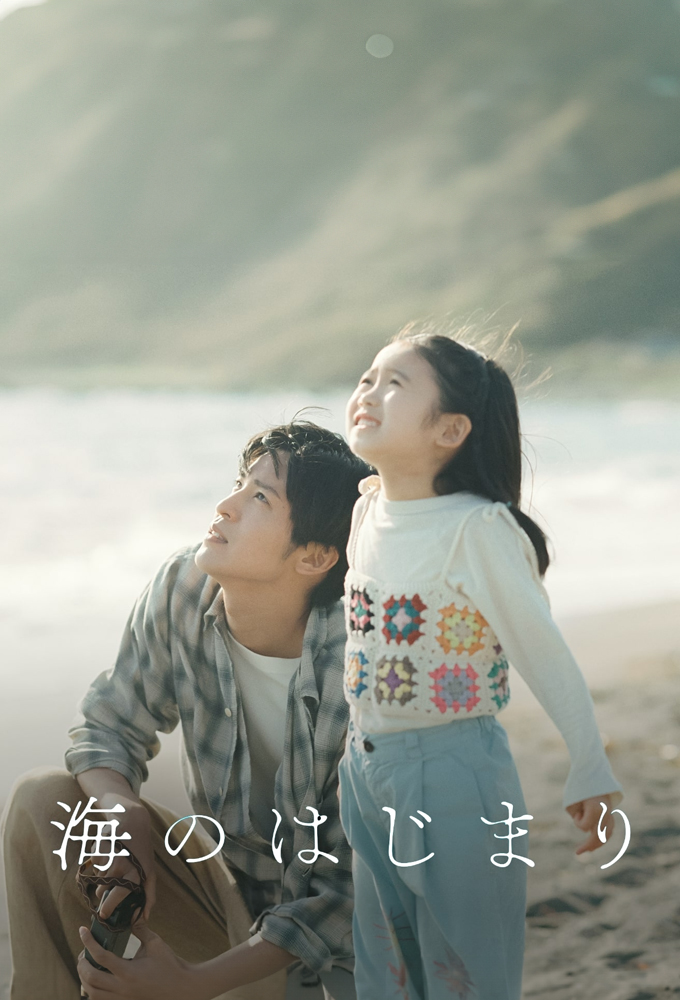
Korean Title: 海のはじまり
Aired in: 2024 (12 episodes)
Channel: Fuji TV, Viki
Grade: 9.5/10
Actors: Ren Meguro & Kasumi Arimura
For more…



Kasumi Arimura:
– Meet Me After School
– Ishiko and Haneo: You’re Suing Me?
– Life’s Punchline
– Beyond Goodbye
Ren Meguro:
– Love Mix Up
– Silent
– Trillion Game
– The Royal Family
Melodramatic stories:
– Beyond Goodbye
Overview
Synopsis
When he was in college, Natsu Tsukioka met Mizuki Nagumo. Everything was going well until Mizuki suddenly disappeared. Years later, Natsu learns that she’s passed away, leaving behind her daughter Umi. Turns out he’s her father.
My Opinion (No Spoiler)
This drama is a hidden gem. It was so beautiful, painful, melodramatic and poetic. I can’t tell you how many tears I’ve shed. And that’s normal because the show tackles some tough and serious themes like death and grief, as well as how the loss of one person impacts everybody around like parents, children, friends, distant acquaintances and even strangers in this case. Despite the tragic of the situation, the drama depicts Natsu’s journey as he learns to become a father. He’s confronted with choices, makes mistakes and discovers parenthood all at once. I loved how no character is to blame. Natsu, Mizuki, Yayoi and even Umi make their own choices that obviously have consequences. Yet, they always take the time to analyze and reflect upon the situation before making life-changing decisions. The atmosphere is not that of emotional outbursts and rash actions. On the contrary, everything is thought about, deeply introspected and carefully done. Characters respect each other and the pain they carry. But the best part was to see how loved and cared for Umi is. The link between the sea and the plot is also so well explained, but my biggest surprise was the connection between Mizuki (Natsu’s ex) and Yayoi (his present girlfriend). It moved me so much! Where Does the Sea Begin is a must-see, but prepare tons of tissues!
Analysis
- Parenthood
Fatherhood
Motherhood
What it means to be a parent? - Serious themes
Grief
Abortion
Choosing (for) oneself - Symbols
- Where does the sea begin?
Parenthood: Parenthood is at the core of the drama and is explored through various configurations in the story, each associated with a character.
Fatherhood: Tsukioka Natsu (Ren Meguro) is a quiet and reserved man who doesn’t express his feelings much. He’s always let life or others choose for him, never making life-changing decisions. But his peaceful existence and nonchalant way of life are turned upside down with the arrival of his 7-year old daughter Umi (Rana Izutani). Her appearance comes up with loads of new responsibilities requiring assertion, confidence and courage. He now has to become a father and learn how to deal with a child’s emotions (like grief), fears and insecurities. Though he has no experience in that field, Natsu is an upright, honest and resilient man who accepts the challenge. He was not there for Umi and his mother, Nagumo Mizuki (Kotone Furukawa), for 7 years, so he wishes to make amends and have a part in his daughter’s life. The drama follows his transformation from an ignorant, laid-back and candid man to a mature and willful father who prioritizes his child over everything else – even his love life. Parallel to that, we also have glimpses of his relationship with his own father, absent most of his life. Even when his parent was there, he was quite unsupportive and aloof, always afraid of caring for his son alone. This behavior led to his parents’ divorce. Thus, we can only suppose that Natsu doesn’t want to repeat the same pattern with his child. He has suffered from his father’s absence, so he won’t inflict the same wound to his daughter. Apart from Natsu, I think we can also mention Mizuki’s father and even Haruaki Tsuno (Sosuke Ikematsu) to showcase fatherhood.
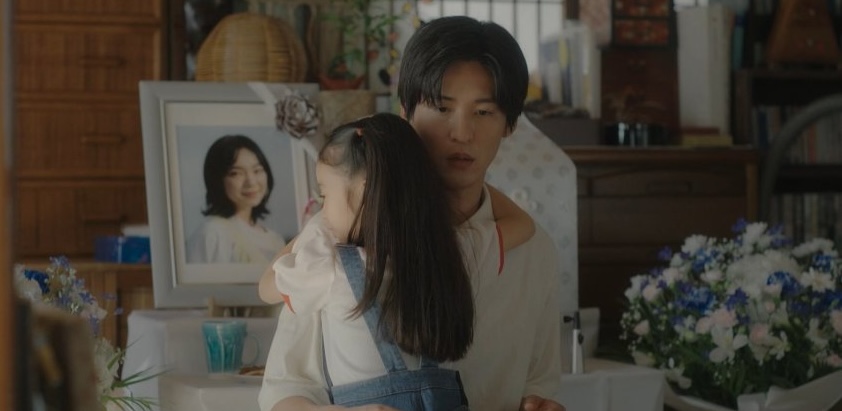
Motherhood: There are three, if not four, characters we can talk about to depict motherhood. The first one is obviously Mizuki who’s taken the responsibility to raise her child alone. Despite the challenges and criticisms, she never regretted it. She loved Umi unconditionally and protected her until the end. Mizuki is the spokesperson of single mothers. Then, there’s her mother who yearned for a child for years and finally had Mizuki after few rounds of IVF. She stands for woman suffering from infertility, but also for ‘older’ mothers, as she got pregnant at age 40. Third, you have Momose Yayoi (Kasumi Arimura). She got pregnant seven years ago, but chose to abort due to the lack of support from her family and partner. She didn’t feel ready to take care of a child. However, she deeply regretted her decision and now dreams of being a mother again. She embodies all the women who had to go through abortion, but also those who desperately wish to be mothers. Finally, I would mention Natsu’s mother who had to care for her son and rebuilt their life following her difficult divorce. These four characters portray strong and resilient women who didn’t have it easy and had to deal with societal judgements for being alone, not wanting children, not being able to or ‘destroying’ their own home. I liked how the drama shows the difficulties faced by women today, but always showing that they are first and foremost mothers who prioritize their children and/or act for their good, while refusing to sacrifice themselves.
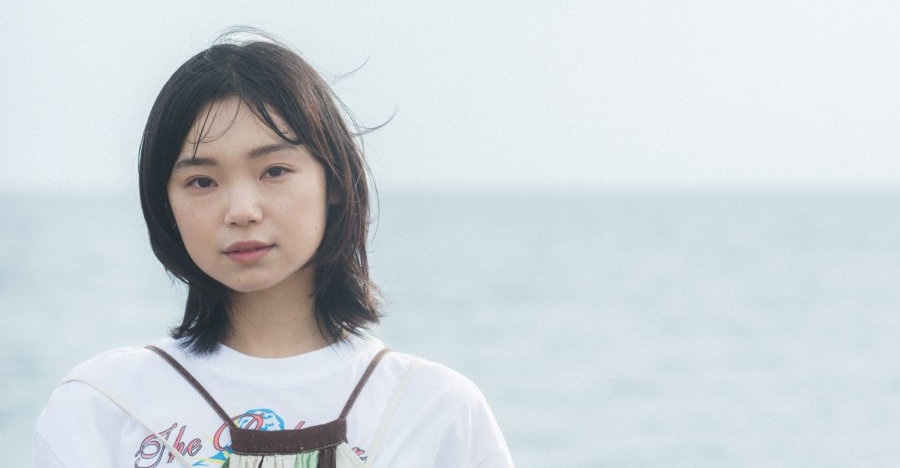
What it means to be a parent? My personal conviction is that blood only doesn’t make you a parent. Love, care, support, concern are all emotions that come with parenthood. This is what truly creates a bond between the parent and the child. That’s exactly what suggests the drama. Natsu has no experience as a father and yet, he nurtures his relationship with Umi and accepts her as his daughter. Momose has a similar behavior. She’s a stranger to the Nagumo family, but she likes and treats Umi like her own. Another great example is Tsuno. As Mizuki’s colleague, he’s been in the child’s life for years and deeply cares for her. He grew attached and adopted the role of a paternal figure over time. He may not be related by blood or on paper, but we can’t deny the bond that exists between them. He’s a parent, hence his pain when Mizuki dies and Natsu appears to take Umi away.
Serious themes: Each episode focuses on one specific theme such as loneliness, grief, or a character’s story and emotions. In that broad spectrum, I would highlight the following items.
Grief: Grief is the second big topic of the drama. Like a virus, it spreads and impacts everyone around. Mizuki leaves behind a void impossible to fill for Natsu. She also remains as a latent presence in Umi’s life which makes it hard for Momose to compete against her ghost. The drama shows how loneliness gradually enters settles in after Mizuki’s death – for some it’s immediate, while it takes time to resurface for others like the grandparents following Umi’s departure. Not only the close family, but also acquaintances and distant characters feel grief. I would definitely mention Tsuno whose despair profoundly touched me and Momose. She ends up as collateral damage and is forced to leave Natsu for her own sake.
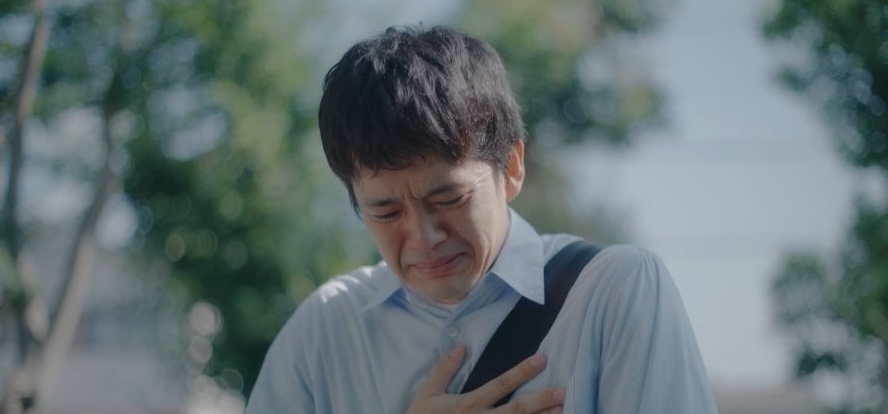
Abortion: Mizuki and Momose have a special bond. 7 years ago, they both got pregnant and were confronted with a choice: keep the child or abort. Yayoi had no support from her then partner – on the contrary, he felt relieved she’d abort – and her mother told her she’d be on her own if she decided to keep it. Yayoi felt pressed against the wall and thus incapable of assuming such responsibilities. So she chose to abort, but deeply regretted it. She felt like she’d made a mistake and now had to live with it for the rest of her life. Over time, she developed a deep maternal desire that manifested even more with Umi’s appearance. Back then, Mizuki was also about to abort, but chose not to do it. She carried on with her pregnancy and never regretted having Umi in her life. On the contrary, she felt blessed and somehow left a part of herself behind for others to remember her. Her sudden change of decision was influenced by a message left behind by a woman who had aborted at her clinic. She was emphasizing how much she regretted her choice which opened Mizuki’s eyes. This woman was Momose. Her despair and sadness somehow convinced Mizuki to keep Umi. With a few words, Momose protected the child’s life. Later on, fate strikes again by reuniting Umi and Momose as if it were a special gift to thank her for her sacrifice that led to Umi’s existence.
Choosing (for) oneself: Life doesn’t always go as we want it to. After 3 years of relationship, Natsu and Momose were far from imagining that they would be separated by a 7-year old child. And yet, she came along and turned everything upside down. At first, Umi seemed like a second chance to Momose. She could finally fulfill her desire to be a mother. However, Mizuki’s absence – and overwhelming presence – suffocated her. She doesn’t have the power to compete and feels like a stranger at odds with the memories shared by the father and daughter. So, she leaves to protect herself and her happiness. She’d rather be alone, brokenhearted, but able to breathe than to live a lie with them while drowning inside. The same way her message left a mark in Mizuki’s life, this time it’s Mizuki’s final letter that convinced her to choose (for) herself. In a way, both women helped each other at difficult moments of their lives. The drama highlights the importance of making decisions for oneself. Mizuki has always been hell-bent on doing so without having to compromise with anybody and also wishes her daughter to live as such. She doesn’t want her grandparents or Natsu to decide whether she has to transfer school, move into Natsu’s apartment… Umi must be the sole decision-maker in those circumstances. That’s how she, but also all characters around, can enjoy their free will.
Symbols: The drama is filled with meaningful symbols here and there. You have Umi’s favorite stuffed animal, a dolphin, that participates in the sea imagery. You have the messages left by Momose at the clinic and by Mizuki at the end (the letters) to reinforce their bond. There’s the necklace of ashes Natsu makes for Umi, so she can keep a part of her mother close to her heart. And the list goes on.
Where does the sea begin?: There’s a clear parallel between the opening and ending scenes, where Umi runs on the beach with one of her parents behind – Mizuki at the beginning and Natsu at the end. Though the adult is different, the response to Umi’s question is the same: ‘I’ll be right here‘. This single line contains the entire meaning of the drama: a parent will always be looking after his child, even from afar. This message is heightened by the presence of the sea which is a red thread throughout the show. It is mentioned in the title, it connects Umi and Mizuki through their names (‘Umi‘ means sea and Mizuki uses a water radical), it can be seen as a symbol of the immense love Mizuki and Natsu have for their daughter – as vast as the ocean – and ‘where does the sea begin?‘ is an actual question asked by Umi to her mother at the beginning. It is, by all means, a real existential question. I guess we can understand it as a question about origins and thus translate it by ‘where does parenthood begin?‘ What links a child to his parent (blood or something else)? If the sea has no start, then so has parenthood. Like the waves tossing us from side to side, being a parent is full of ups and downs, but you always get back on your feet (on the beach). Water is also the symbol of birth and new beginning which can represent Umi and Natsu’s new chapter together. They move on as one big block (of water) and leave behind all regrets and negative moments to be washed away by the sea. Finally, the sea can be seen as the metaphor of life. It is never-ending and so is the cycle of life. Life continues and people need to move on from their grief, just like the sea will always come back to the shore. This is a clever title that plays on the blurry answer we can give to that question.
Sorry I couldn’t find a proper teaser for this drama 😦


After I read your review I will watch it
LikeLiked by 1 person